Tag Archives: Orthodox Church

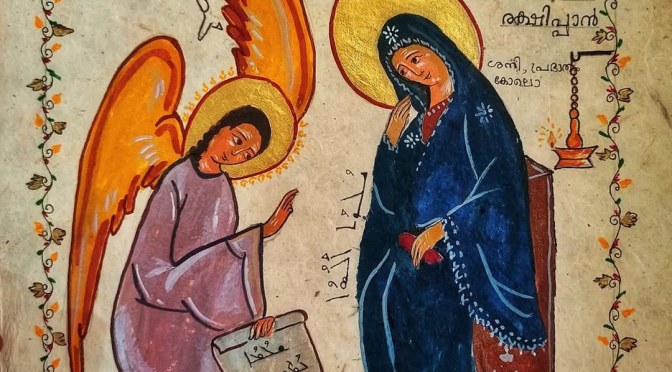
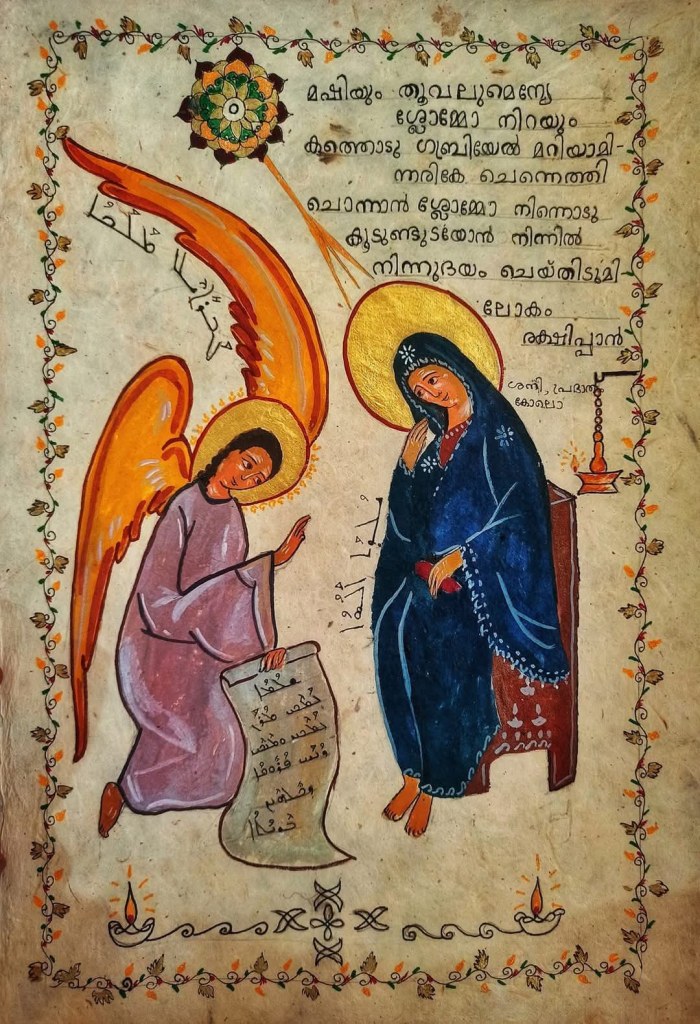
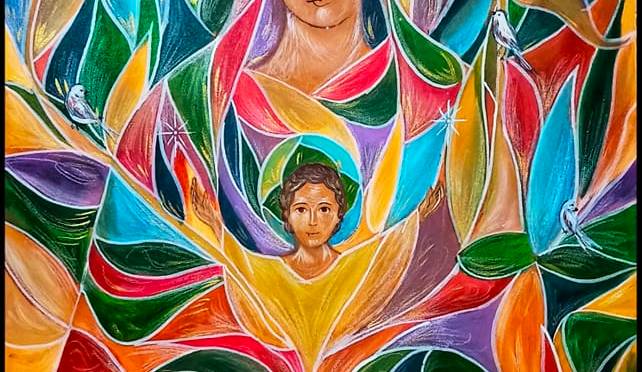
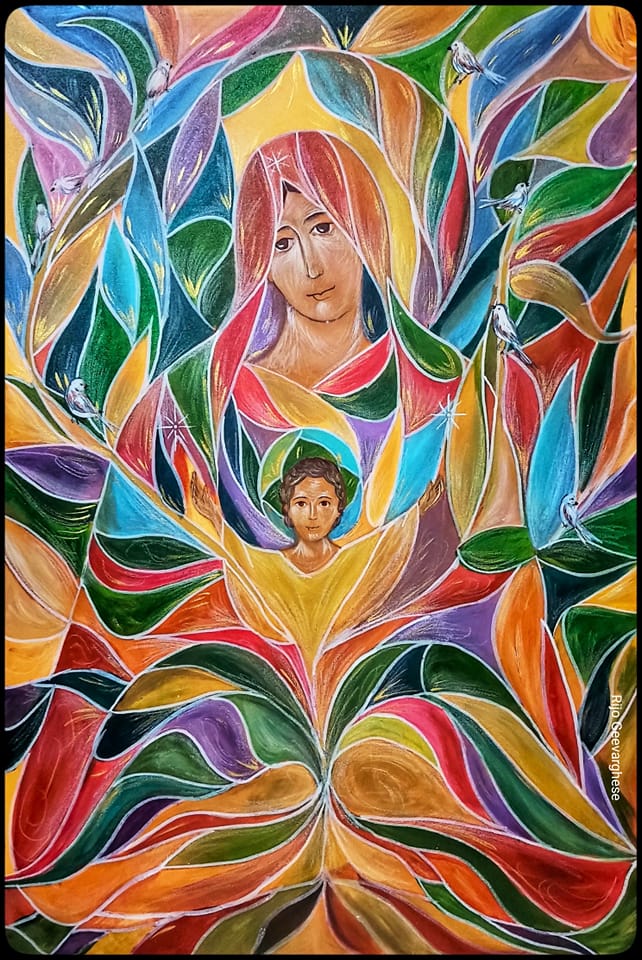
Illuminated Icon of Annunciation

Illuminated Icon based on Qolo, Saturday, Morning

English :

“Without – pen and without ink – Gabriel – brought a le-tter

full of peace and came to– Mary and said:

“Peace – be with you the Lord – is with you – and the Sa-vior

Of Creation shall come – forth from you.”

Malayalam:

മഷിയും തൂവലുമെന്യേ ശ്ലോമ്മോ നിറയും കത്തോടുഗബ്രിയേൽ മാറിയമിന്നരികെ ചെന്നെത്തി

ചൊന്നാൻശ്ലോമ്മോ നിന്നോടുകൂടുണ്ടുടയോൻനിന്നിൽ നിന്നുദയം ചെയ്തിടുമീ ലോകം രക്ഷിപ്പാൻ

The Annunciation reveals a moment where eternity touches time—where divine humility meets human openness.Gabriel’s greeting becomes the doorway through which salvation enters the world. In Mary’s quiet “yes,” creation finds hope, and the long-awaited Redeemer steps into history.

This illuminated icon seeks to reflect that sacred wonder.

This icon is done on a Hand-made Batik sheet, it’s an illuminated-text Icon by the unworthy hands of

Fr Rijo Geevarghese Diocese of Ahmedabad.

Channel: https://youtube.com/channel/UCKbdLPq5LDLk4IknB5fdDqQ

Instagram page: https://www.instagram.com/rijogeevarghese?igsh=a29vMmN3bmtwa2th

https://projectgraphe.in/

Priest, Raised from the Dust of the Earth

Priest, Raised from Dust of Earth

A Visual Contemplation on Priesthood from a Liturgical Reading

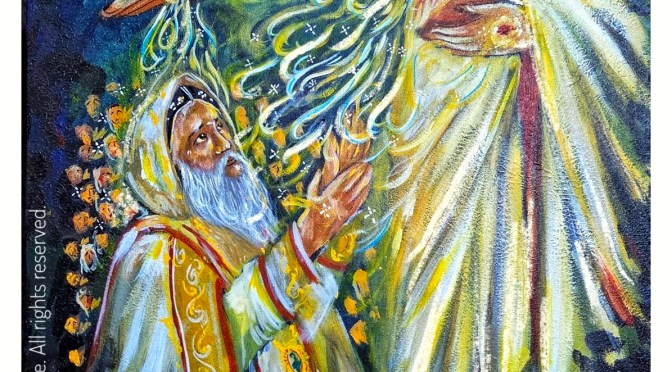
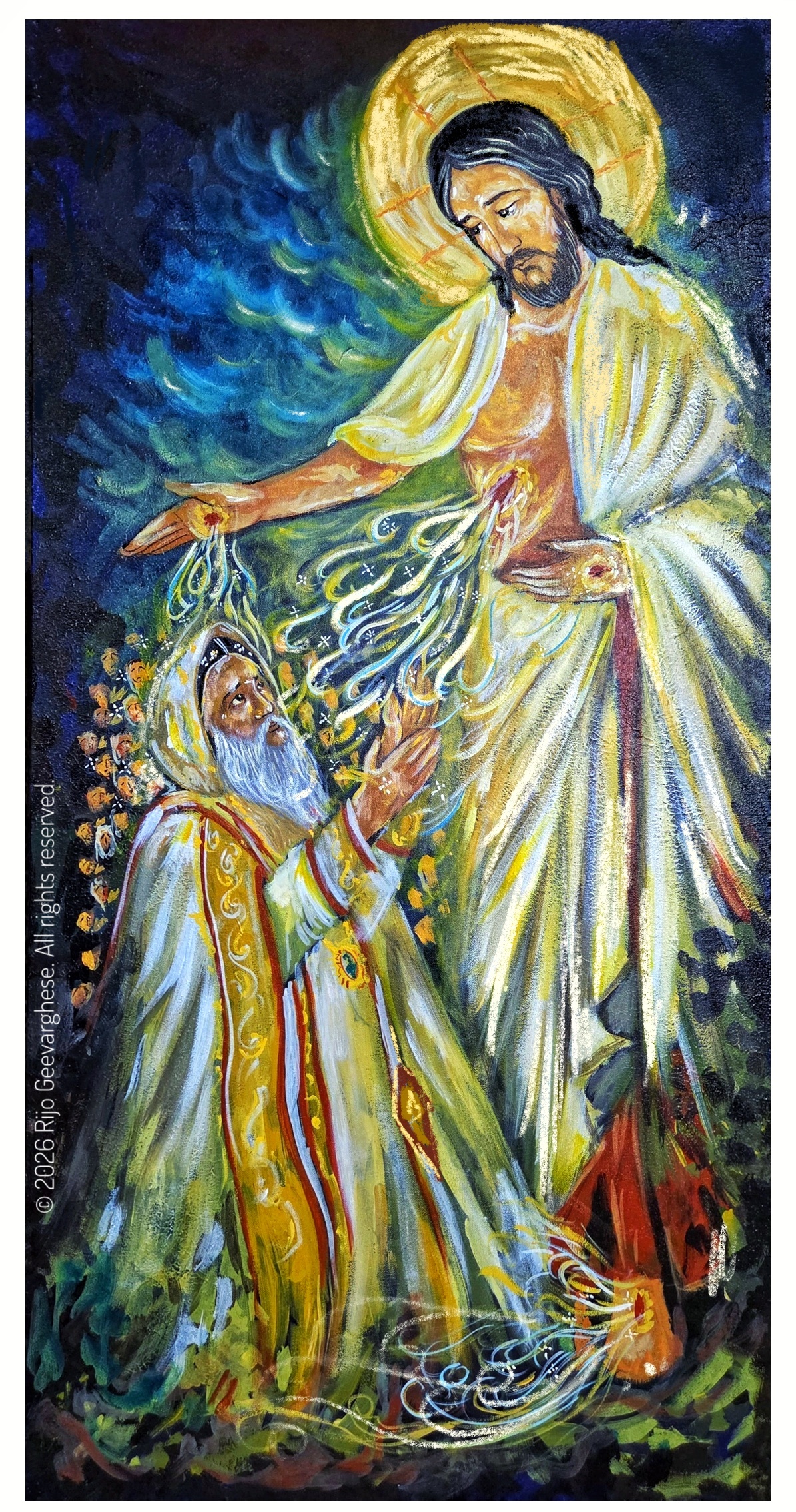
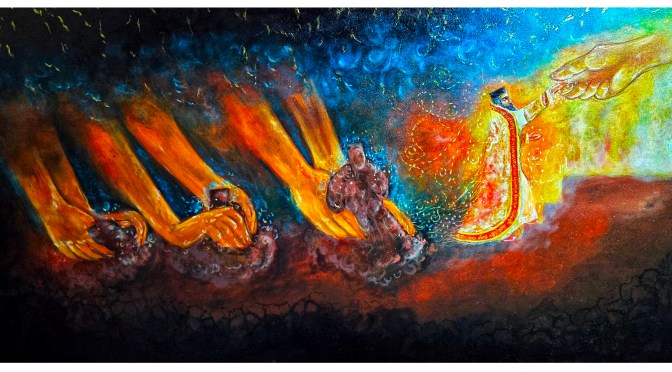
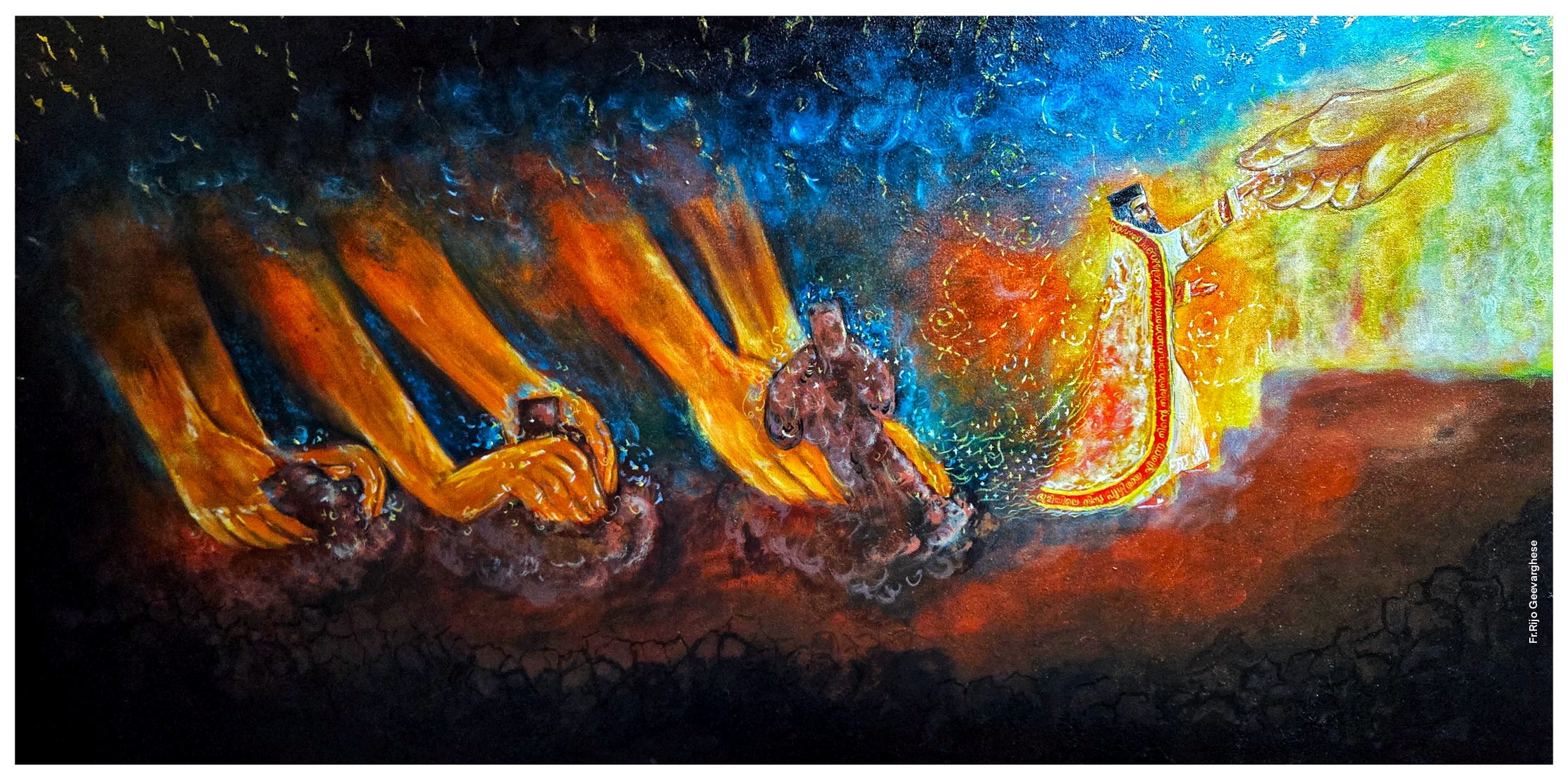
The priest stands at the altar clothed in light, yet at his very core he remains the fragile dust of the earth. This paradox – dust and glory, earth and heaven – lies at the heart of the Orthodox vision of priesthood. The painting “Priest, Raised from Dust of Earth” seeks to visually contemplate this mystery through the lens of liturgical texts: the Sedro reading from the Holy Qurbana Taksa, the Funeral Service of Priests, and a Qolo from the Friday Evening (Ramsho) prayers.

1. The Dust of Creation and the Hands of God

On the left side of the painting, we see the divine hands gathering the dust of the earth, forming the first human being. This recalls the hymn from the Funeral Service of Priests:“From the four directions the Lord took dust in His hand and created Adam in His own image.”

This tradition resonates both with the Syriac liturgy and with the Midrash Rabbah on Genesis, which tells us that God gathered dust from the four corners of the earth so that every place might claim humanity as its own. The image proclaims that the priest, like Adam, is drawn from creation itself, embodying the fragility and the universality of the human condition. He is nothing but dust – yet dust touched and shaped by the very hands of God.

2. Priesthood as New Creation

The right side of the painting shifts the focus to the priest clothed in vestments, his hands stretched toward the heavenly hand that pours forth divine grace. This visual echoes baptism, where water is drawn from the four corners of creation to sanctify and renew. As St. Paul writes, “If anyone is in Christ, he is a new creation” (2 Corinthians 5:17).

Here, the act of God shaping Adam from dust parallels the act of God renewing humanity through sacramental grace. The priest himself becomes a participant in this mystery – not merely as an officiant, but as one who has himself been reshaped and reborn in Christ.

The liturgical Sedro(eighth) captures this paradox:“You have raised me, a despicable dust of the earth, to enter the dwelling of Your divine mysteries, and lifted me to the Holy of Holies of Your Majesty.”

3. Priesthood Between Dust and Glory

The Qolo from Friday Evening (Ramsho) deepens this tension:“You created me and placed Your hands upon me…” (സൃഷ്ടിച്ചെന്മേൽ നിൻ കൈവെച്ചു).

The imagery affirms that priesthood is not self-derived but wholly a gift. It is God who fashions, raises, and sanctifies the human being from dust, clothing him with the radiant vestments of service. Even in death, as proclaimed in the Funeral Service of Priests, the priest is remembered as one who bore the imprint of both creation’s frailty and heaven’s glory.We are dust – yet in Christ, dust is raised into glory.

Fr Rijo Geevarghese

Diocese of Ahmedabad

Sopana Orthodox Academy

Icon of Theotokos : The Mother of the Light

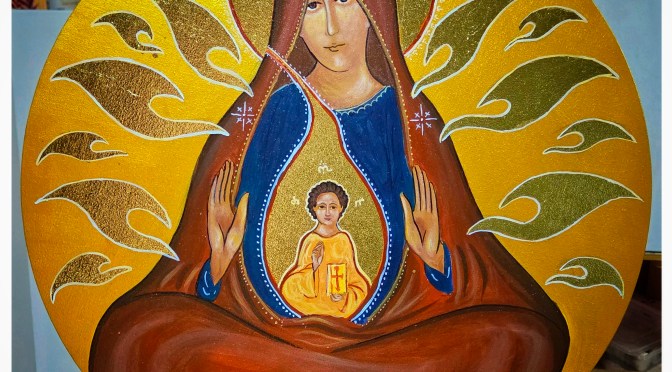
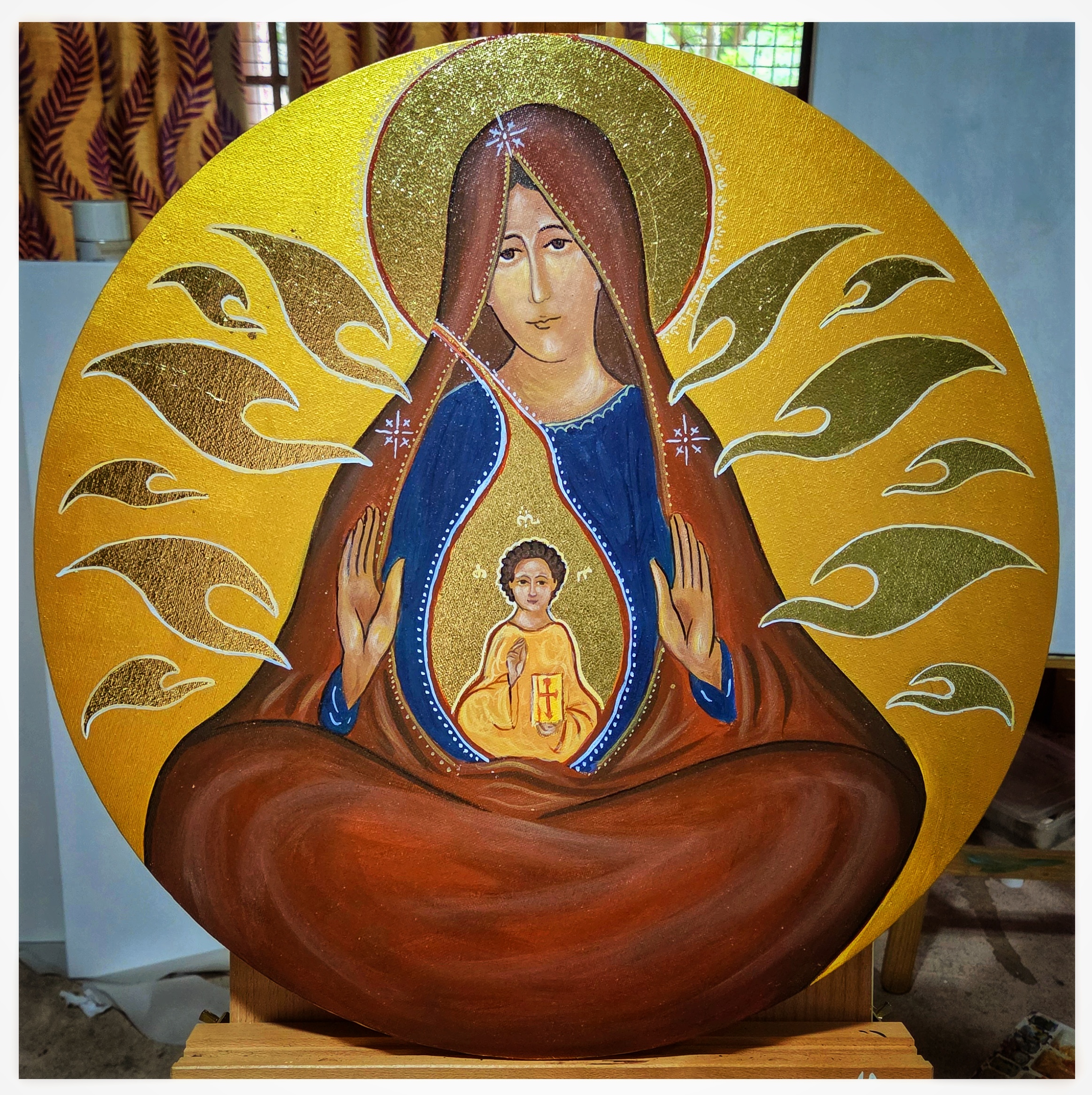
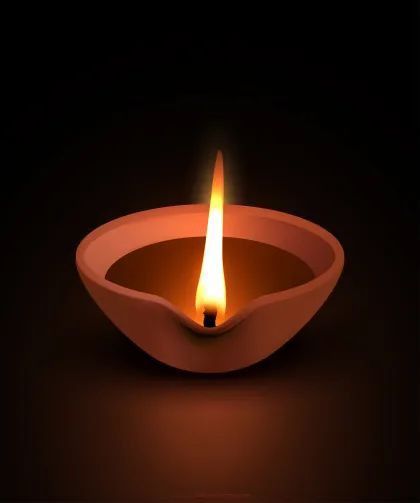
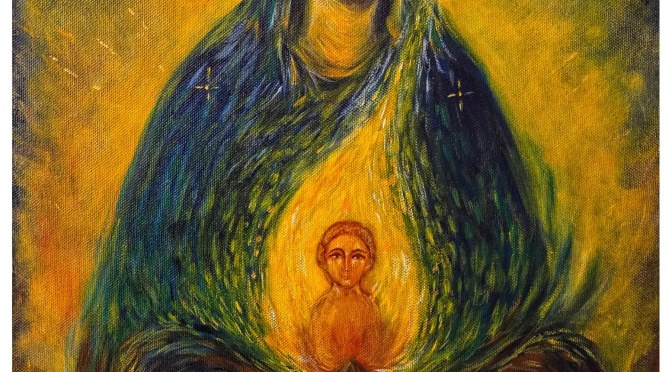
This icon titled “Mother of the Light” (Emme d-Nuhro or Emme d’nuhro) presents Mother Mary as a serene, luminous figure. From within her radiates the eternal flame of Christ, depicted here as a “diya” or “deepak”, the traditional oil lamp of Indian culture.

The flame within her is not merely a source of illumination but becomes the source of her own radiance. It reflects the profound theological truth that the holiness of the saints (symbolized by the halo) is not separate from Christ but born of Him. Mother Mary’s light is Christ’s light, dwelling within her, transforming and glorifying her.

According to St. Ephrem, the more light that enters the eye, the more the eye is enabled to see (Which is basis of optics). He applies this to the inner eye, for which faith takes the place of light: the greater the faith, the more the interior eye perceives the spiritual world. In the case of Mary, it is Christ Himself—the Light—who enters her:St Ephrem writes,

As though on an eye,the Light settled in Mary,it polished her mind,made bright her thought,and pure her understanding,causing her virginity to shine. (Hymns on the Church)

This theological vision resonates with the imagery of this Icon. The deepak’s glow is not external but proceeds from the divine Light who dwelt within her. As St. Jacob of Serugh beautifully proclaims:

“O Mary, you are the house of beauties and the storehouse of treasures, the Mother of the Sun, who generates unlimited light.”

In this image, the light of the deepak rises and extends outward, forming a radiant glow that encircles her—a visual testament to the intimate mystery of the Incarnation, where the uncreated Light takes flesh within her, making her truly the Mother of Light.

Fr. Rijo Geevarghese, Diocese of Ahmedabad Sopana Orthodox Academy

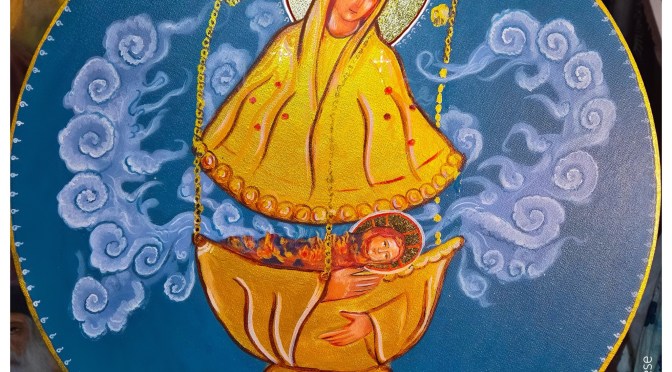
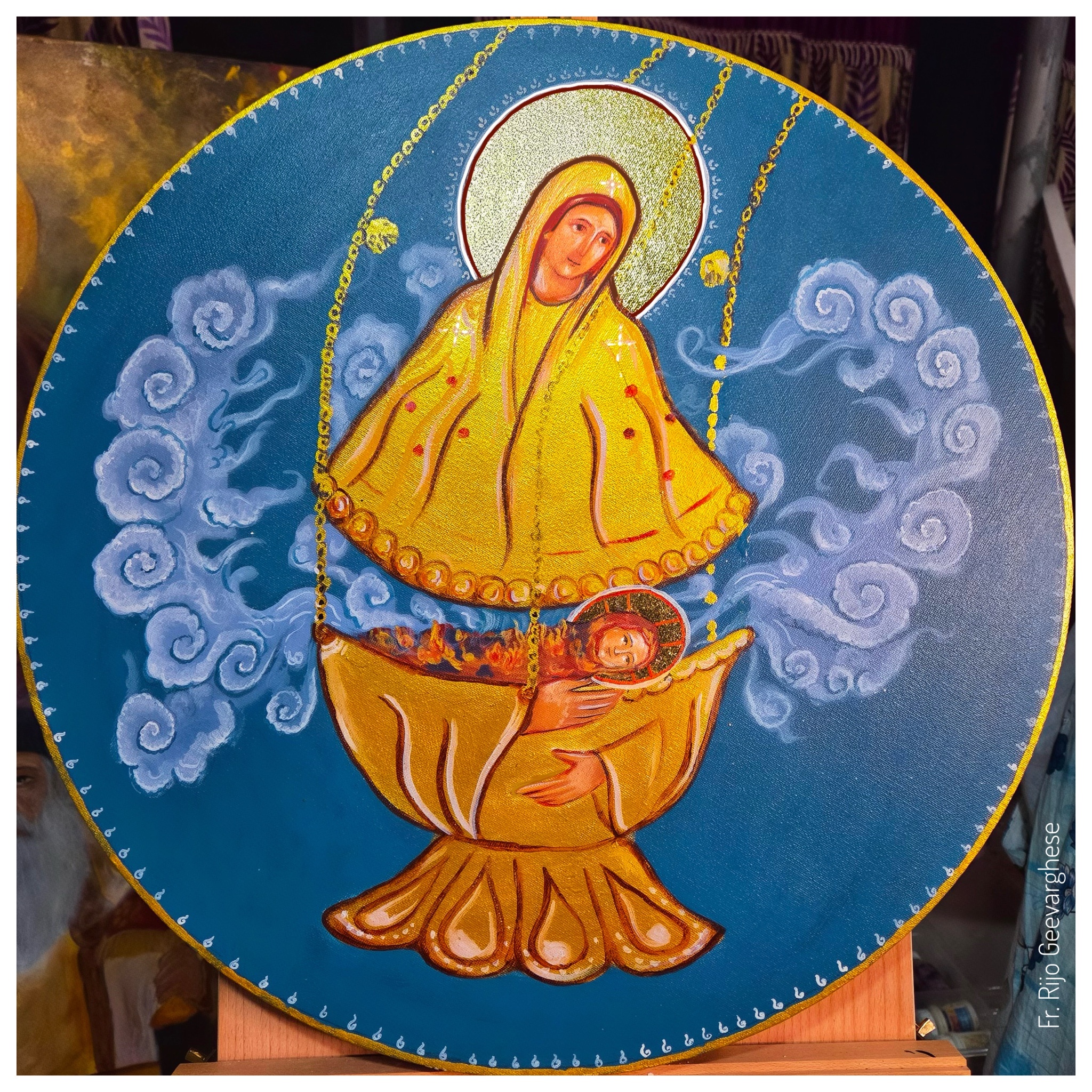
Theotokos, the Golden Censer

In Orthodox tradition, Mother Mary and the virgin birth of Christ are expressed through rich typologies in Christian tradition. I earlier tried to cover some of them in my Channel (link below).

Each typology reveals an aspect of the mystery of the Incarnation.One profound typology is that of Mother Mary as the Golden Censer. Sharing an Icon of Mother as the Golden censer. Her womb is called the holy censer because it bore the living burning coal —Christ Himself.

Though its a familar typology in Orthodox church, I found this imagery recently in the readings of Feast of Dormition.

Here are three of them,Malayalam: “നിർമ്മലകന്യകയുടെ പരിശുദ്ധ ഗർഭപാത്രമാകുന്ന പാവനധൂപകലശത്തിൽ വയ്ക്കപ്പെടുകയും”.

English: Christ was placed in the holy censer, which is the pure womb of the VirginEvening Ethro , Dormition of Mother Mary

Another one says,

“സംയോജിപ്പിന്റെ ധൂപമായിത്തീർണ സ്വർണചെപ്പേ”.“O golden censer, who became the incense of union…” (Night Sedra, Dormition of Mother Mary)

Another connect her with the High Priesthood of Christ.

സ്വർഗീയ മഹാപുരോഹിതന്റെ നിർമ്മല ധൂപകലശമേ! സമാധാനം”.

English:“O pure censer of the heavenly High Priest! Peace.” (Sedra reading, Dormition of Mother Mary.)

This icon of Theotokos as the Golden Censer proclaims Mary not only as the vessel but also Christ as the fragrance of life (msheeho, reeho hayutso)

As St Ephrem says, When eaten as the Bread of Life, Christ pervades whole of the believer’s being. When inhaled as the Fragrance of Life, Christ again penetrates throughout the believer.(Thoughts from Hymns on Nativity and Virginity) ജീവൻ്റെ സുഗന്ധമായി ശ്വസിക്കുമ്പോൾക്രിസ്തു വീണ്ടും വിശ്വാസിയിലുടനീളം വ്യാപിക്കുന്നു.

So too, in contemplating Mary as the Golden Censer, we see her not only as the vessel of divine fire but as the one who offers Christ, the life-giving fragrance, to the world.May this image invite us to breathe in Christ, who fills all creation with the fragrance of life.

Fr. Rijo Geevarghese

Diocese of Ahmedabad

Sopana Orthodox Academy

Mother of Light

This liturgical painting titled “Mother of Light” (Emme d-Nuhro or Emme d’nuhro in Syriac) presents Mother Mary as a serene, luminous figure. From within her radiates the eternal flame of Christ, depicted here as a diya or deepak, the traditional oil lamp of Indian culture.

The flame within her is not merely a source of illumination but also becomes the source of her own radiance. It reflects the profound theological truth that the holiness of the saints (symbolized by the halo) is not separate from Christ but born of Him.

Mother Mary’s light is Christ’s light, dwelling within her, transforming and glorifying her. As St Jacob of Serugh writes:O Mary, you are the house of beauties and the storehouse of treasures,the Mother of the Sun, who generates unlimited light.

In this image, the light of the deepak rises and extends outward, forming a glow that encircles her, a visual testament to the intimate mystery of the Incarnation, where the uncreated Light takes flesh within her, and in doing so, makes her the Mother of Light.

Fr. Rijo Geevarghese

Diocese of Ahmedabad

The Blessed Shoot Who sprang forth and came up out of the Thirsty Ground

𝐓𝐡𝐞 𝐁𝐥𝐞𝐬𝐬𝐞𝐝 𝐒𝐡𝐨𝐨𝐭 𝐖𝐡𝐨 𝐬𝐩𝐫𝐚𝐧𝐠 𝐟𝐨𝐫𝐭𝐡 𝐚𝐧𝐝 𝐜𝐚𝐦𝐞 𝐮𝐩 𝐨𝐮𝐭 𝐨𝐟 𝐭𝐡𝐞 𝐓𝐡𝐢𝐫𝐬𝐭𝐲 𝐆𝐫𝐨𝐮𝐧𝐝. മറിയാമെന്ന വരണ്ടഭൂമിയിൽ നിന്നു മുളച്ചു വളർന്ന അനുഗ്രഹിത സസ്യം.

This liturgical painting is a reflection from the sedro reading of the preparatory service (Thuyobo), which states:

“We worship and thank You, O Creator of the worlds and the Framer of creation, the Blessed Shoot who sprang forth and came up out of the thirsty ground, Mary, and by the scent of Whose glorious sweet fragrance the whole earth was filled, and Who dispelled the foul odor of paganism from all the regions by His glorious teaching.”

Malayalam: ലോകസ്രഷ്ടാവും സൃഷ്ടികളെ ക്രമീകരിക്കുന്നവനും, മറിയാമെന്ന വരണ്ടഭൂമിയിൽ നിന്നു മുളച്ചു വളർന്ന് തന്റെ മഹനീയ സൗരഭ്യത്താല്‍ ഭൂമിയെ മുഴുവനും നിറയ്ക്കുകയും തന്റെ വിശിഷ്ടോപദേശം മുഖാന്തരം സൃഷ്ടിയുടെ എല്ലാ ഭാഗത്തു നിന്നും തിന്മയുടെ ദുർഗന്ധത്തെ അകറ്റുകയും ചെയ്ത അനുഗ്രഹിത സസ്യമായുള്ളോവേ! നിന്നെ ഞങ്ങള്‍ വന്ദിച്ച് സ്തുതിച്ച് സ്തോത്രം ചെയ്യുന്നു

This prayer reflects on the mystery of the Incarnation, drawing us to the image of Christ, the life-giving Shoot, who emerged from the pure womb of the Virgin. In His humility, He came forth from the barrenness of a fallen world, bringing life, hope, and salvation. His presence fills the earth with the sweet fragrance of grace, dispelling the foul odor of darkness.

Similarly, St. Ephrem the Syrian writes:

“Greatly saddened was the Tree of Life when it saw Adam stolen away from it; it sank down into the ‘virgin ground’ and was hidden, to burst forth and reappear on Golgotha. Humanity, like birds that are chased, took refuge in it, so that it might return them to their proper home. The Chaser (hunter) was chased away, while the birds that had been chased now hop with joy in Paradise.”

I am unsure if the Thuyobo prayer was adopted from this passage, but in this poetry, St. Ephrem expresses how the Tree of Life, which was hidden in the “virgin ground” after Adam’s fall, mirrors Christ being hidden in the womb of the Virgin Mary. He is then revealed through His birth and, ultimately, through His crucifixion on Golgotha. The imagery ties the role of Mother Mary in salvation history with that of the Tree of Life, suggesting that just as life was lost through Adam, new life comes through Christ, who is born of the Virgin.

Mother Mary, the “virgin ground,” stands at the center of this cosmic mystery. Just as the Tree of Life gives refuge and joy to birds, so too does Christ, born of Mary, become the refuge and hope of all humanity. Her role as Theotokos (God-bearer) is intimately tied to the restoration of life, underscoring her unique participation in the divine plan of salvation.

Fr Rijo Geevarghese
Diocese of Ahmedabad
Sopana Orthodox Academy

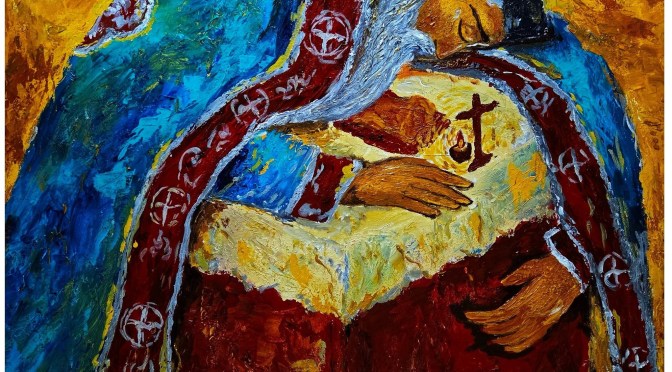
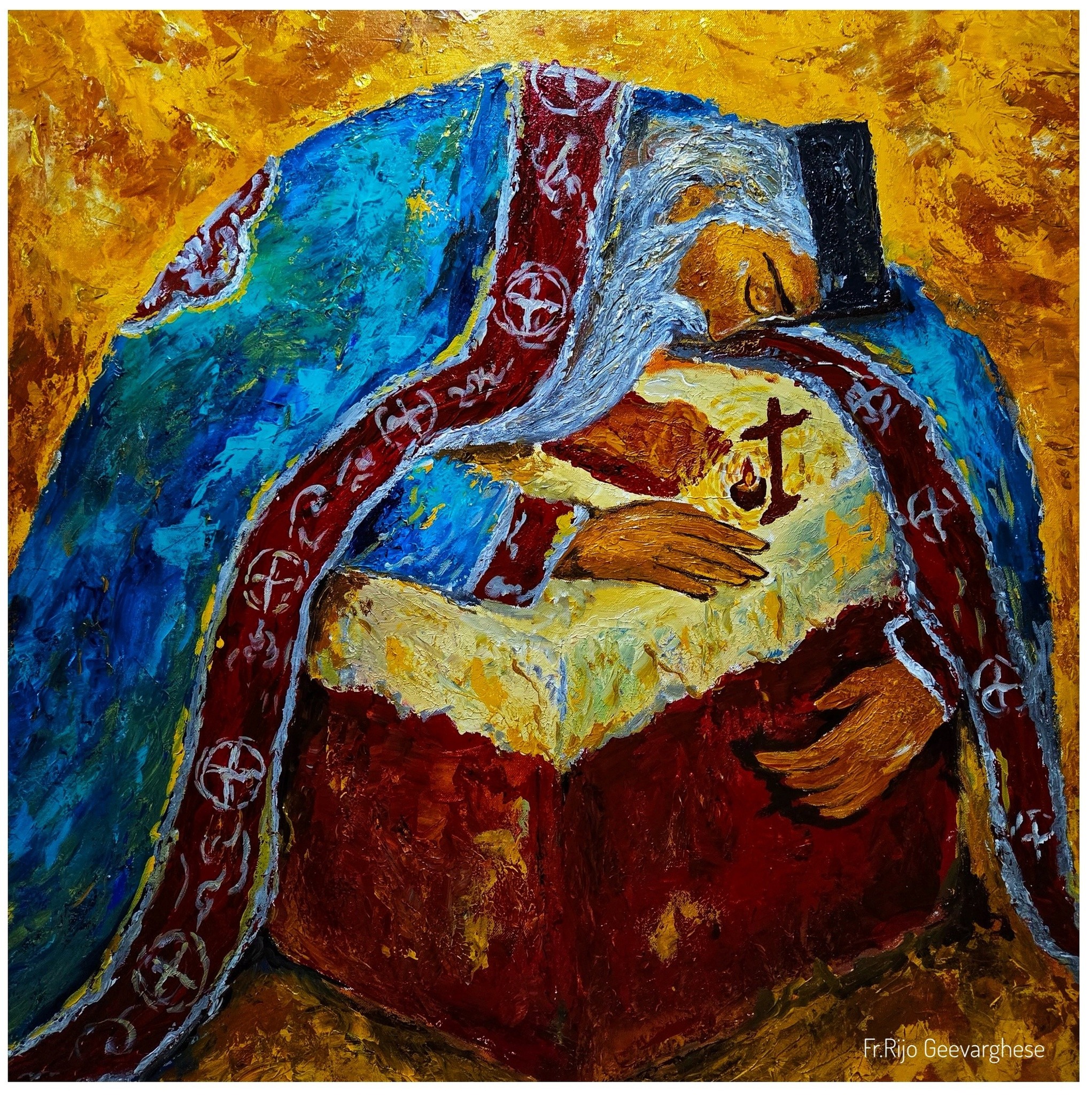
The Final Farewell: Liturgical painting Priest offering his final kiss to the Holy Altar

“Remain in Peace, O Holy Altar”
“പരിശുദ്ധമായ ബലിപീഠമേ! സമാധാനത്തോടെ വസിക്കുക.”

This liturgical painting, “The Final Farewell,” is a visual contemplation inspired by one of the most intimate moments in the Orthodox liturgy — the priest’s final farewell to the Holy Altar. It is a moment filled with sacred emotion and mystical significance, where the celebrant, having completed the Holy Qurbana, leans upon the altar, offering it a final kiss, a last farewell.

In the Orthodox tradition, as preserved in the Malankara Orthodox Syrian Church, the priest recites a farewell prayer that embodies both personal humility and eschatological hope:

“Remain in peace, Holy Altar of the Lord, for I do not know whether I shall return to you again.”

Malayalam:
കർത്താവിന്റെ പരിശുദ്ധവും ദിവ്യവുമായ ബലിപീഠമേ! സമാധാനത്തോടെ വസിക്കുക. ഇനി ഈ സന്നിധിയിലേക്കു ഞാൻ വരുമോ ഇല്ലയോ എന്ന് എനിക്ക് നിശ്ചയമില്ല.

In this painting, I have attempted to capture this sacred farewell as the priest embraces the altar (Thronos). This gesture might not be rubrically seen, but it is a personal contemplation of what this moment signifies.

Here, the altar — a symbol of the Cross and the Tomb, the Table of Life, and the Throne of God — becomes both a companion and a silent witness to the priest’s life and ministry.

The final words of the priest profoundly express the living reality of the altar, which continues to intercede for the priest:

“Remain in peace, Holy and Atoning Altar… beg for me from our Lord Jesus Christ that my remembrance may not cease from you henceforth and forever.”

Malayalam:
ജീവന്റെ മേശയാകുന്ന പരിശുദ്ധ ബലിപീഠമേ! സമാധാനത്തോടെ വസിക്കുക. ഇനി എന്നെന്നേക്കും എന്റെ സ്മരണ നിന്നിൽ നിന്ന് മാഞ്ഞുപോകുവാനിടയാകരുതേ. കർത്താവേശുമിശിഹായോട് എനിക്കുവേണ്ടി പ്രാർത്ഥിക്കണമേ.

I simply adore the beauty and depth of the Orthodox faith, where even a farewell to the altar becomes a mystical meeting place of love, memory, and eternal hope.

Fr. Rijo Geevarghese
Diocese of Ahmedabad

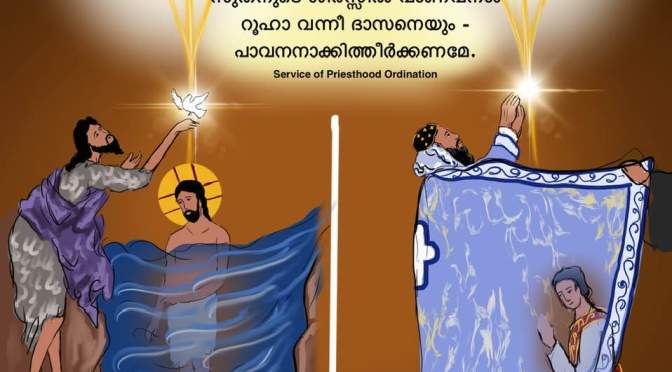
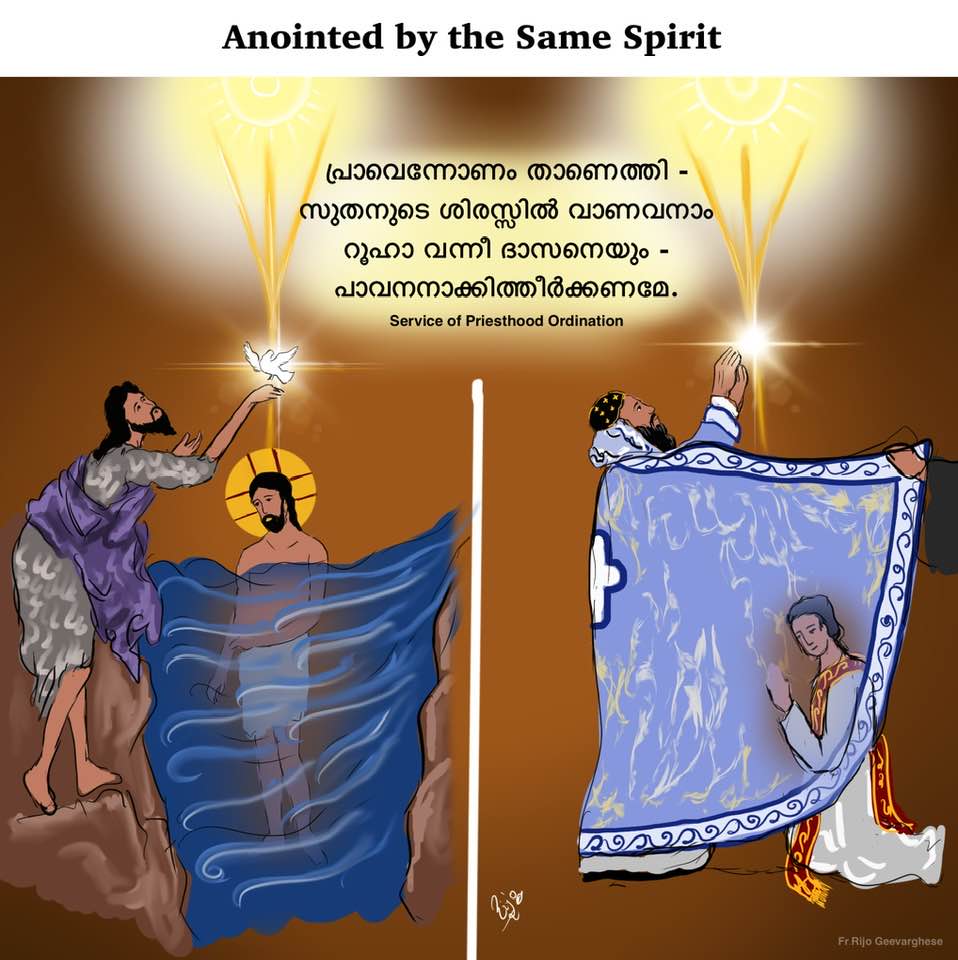
Anointed by the Same Spirit

A Visual Contemplation on the Ordination service and the Epiphany

Every time I witness the moment when the Holy Spirit descends upon a candidate during the Service of Priesthood Ordination—as the congregation sings “Parakalitha Roha Vannethi” (“May the Holy Spirit come”) and the celebrant priest waves his hands like the fluttering of a descending dove—my mind is drawn to the icon of the Epiphany: Christ standing in the waters of the Jordan, and John the Baptist extending his hand in the role of the priest.

In that moment through the icon of Epiphany, I see a mirror of every priestly ordination.

This connection is not coincidental, it is deeply embedded in the liturgical and theological tradition of the Orthodox Church.

Here I have attempted to express this contemplative vision through this illustration, inspired by the ordination hymn:

പ്രാവെന്നോണം താണെത്തി
സുതനുടെ ശിരസ്സിൽ വാണവനാം
റൂഹാ വന്നീ ദാസനെയും
പാവനനാക്കിത്തീര്‍ക്കണമേ

O Spirit, Who like a dove
Descended upon the Son,
Come and dwell on this servant,
Sanctify him by Your grace.

The same Holy Spirit who descended upon Christ in the Jordan now descends upon the servant at the altar. This continuity is not merely poetic or symbolic—it is apostolic. It flows from the hands of John the Baptist through the generations, as sung in the Kukilion for departed clergy:

“Moses and Aaron received
The priesthood which was passed down
It went to Zachariah
Then it was given to John
John then gave it to our Lord, and Lord to all his Dsiciples…”

Thus, the priestly lineage flows unbroken, and in every ordination, the heavens open once again. The Spirit descends. The servant is sanctified. And the Church beholds anew:

This is My beloved Son… This is My chosen servant…

Fr. Rijo Geevarghese
Diocese of Ahmedabad

#Liturgical_Illustration
#AnointedByTheSpirit#HolyOrdination#EpiphanyAndOrdination#LiturgicalArt#VisualTheology#OrthodoxTradition#MysteryOfPriesthood

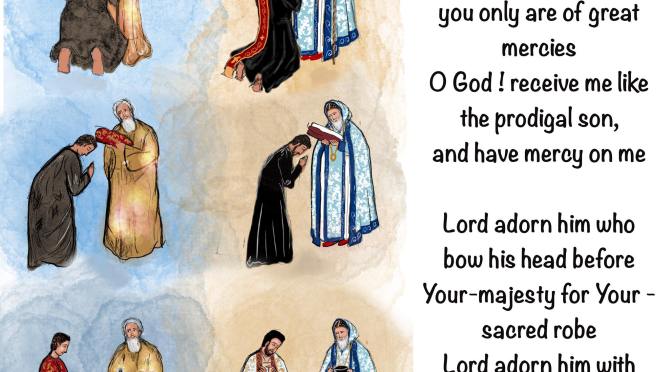
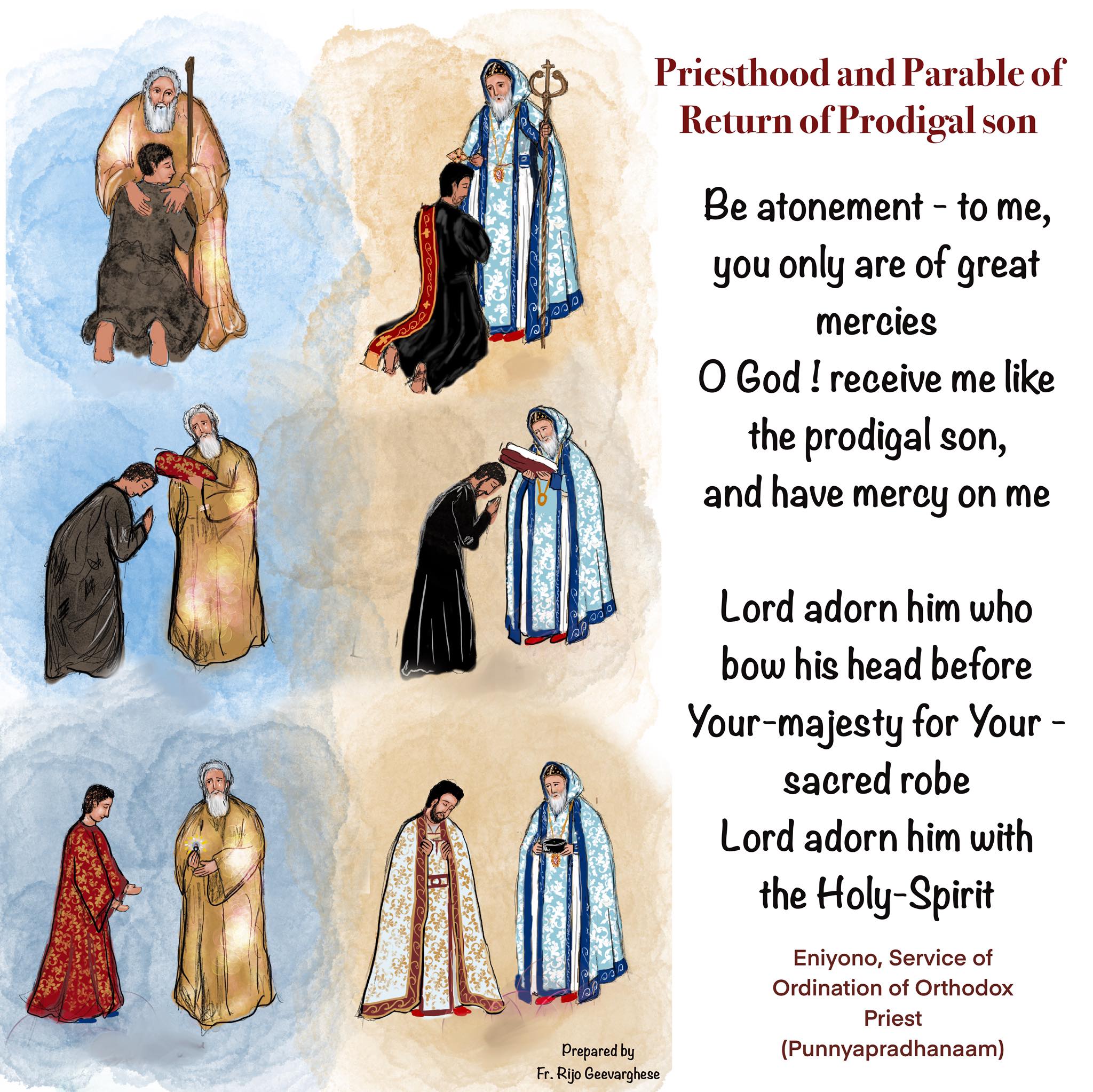
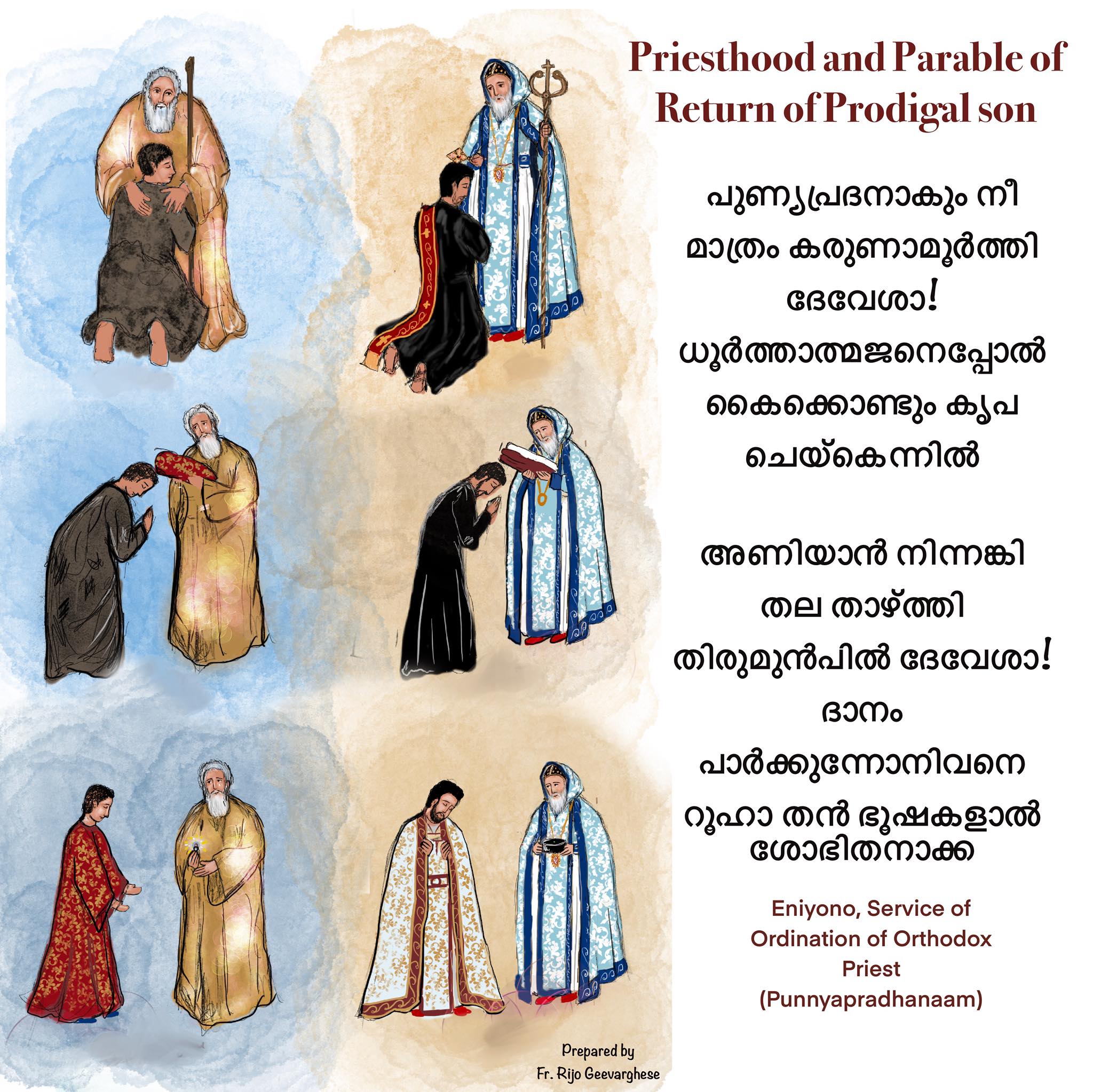
Priesthood and Return of Prodigal son

#OrthodoxPriest

A contemplative illustration of Ordination and Return of the prodigal son. This illustration is based on the two stanza of Eniyono in the Service of Ordination.

Malayalam:

പുണ്യപ്രദനാകും നീ മാത്രം കരുണാമൂർത്തി ദേവേശാ!

ധൂർത്താത്മജനെപ്പോൽ കൈക്കൊണ്ടും കൃപ ചെയ്കെന്നിൽ

അണിയാൻ നിന്നങ്കി തല താഴ്ത്തി തിരുമുൻപിൽ ദേവേശാ!

ദാനം പാർക്കുന്നോനിവനെ റൂഹാ തൻ ഭൂഷകളാൽ ശോഭിതനാക്ക

English:

Be atonement – to me, you only are of great mercies O God ! receive me like the prodigal son, and have mercy on me.

Lord adorn him who bow his head before Your-majesty for Your – sacred robe Lord adorn him with the Holy-Spirit.

One parable which strikingly reflects Priesthood is the parable of the return of the Prodigal Son. The parallels between the two are striking — the son/candidate kneels in humility and repentance before the father/bishop, who embraces, blesses, and clothes him. The prodigal is adorned with the best robe, and the newly ordained is vested with sacred garments, both acts symbolizing restoration, acceptance, and a new beginning in the Father’s house.

I have used two prototypes for this illustration one is the painting by famous artist Rembrandt “The return of the prodigal” and the other is the gesture of the Bishop and Candidate(Full deacon) during the ordination of the Priest.

#graphē_illustrations#Ordination#ProdigalSon

Looking forward to making more children friendly illustrations based on #OrthodoxFaith. #IndianOrthodoxy#Artist

Fr Rijo Geevarghese

Diocese of Ahmedabad

For learning content visit:

website: projectgraphe.in

Graphē Channel: https://youtube.com/channel/UCKbdLPq5LDLk4IknB5fd

AI vs. Human Craftsmanship in Sacred Art

These days, discussions are ongoing about OpenAI allowing users to recreate images in the iconic style of Studio Ghibli. I find this deeply disrespectful to the art of creation itself and the dedication poured into it by artists. Art is not just aesthetics; it is a deeply human act of faith, devotion, and struggle—something that cannot be automated.

Similarly, I recently noticed some churches using AI-generated images within their altar. AI-generated images introduce artificiality into worship, lacking the depth and sanctity of true sacred art.

In the Orthodox Church, icons, murals, and carvings or any sacred art form within the church—especially in the altar—are to be created by human hands. This is not a mere tradition but a theological- liturgical necessity. As Exodus 31:2-3 recounts, God called Bezalel to create sacred art through human craftsmanship. But why insist on human craftsmanship? Human craftsmanship is essential because it reflects the very nature of our creation. As being made in the image and likeness of God, the creator. This creative capacity is not just a skill, it is the reflection of the divine image within us. Human craftsmanship in sacred art honours this divine gift of creativity. Fathers like John of Damascus and Theodore the Studite emphasized that icons are not mere images but spiritual windows, crafted with prayer. I remember my teacher once telling me to consider each brushstroke as a prayer.

AI-generated images, in contrast, are mechanical products devoid of spiritual intention or grace. They disrupt the sacred continuity of Orthodox tradition, reducing sacred art to mere data manipulation. The rise of AI in art risks stripping away the human effort, reducing creativity to mere data processing. This is not just about preserving tradition, it is about protecting what it means to be human.

While technology, like AI, can serve a purpose, it can never replace the real, lived experience of faith. Likewise, AI-generated images should never replace prayerfully created sacred art. The Church, as body of Christ, should be the last place where artificiality replaces authenticity.

Fr. Rijo Geevarghese
Diocese of Ahmedabad

SacredArt #TheologyOfArt #OrthodoxTradition #HumanCreativity #FaithAndArt #ArtIsHuman #KeepArtSacred