Tag Archives: jesus

Priest, Raised from the Dust of the Earth

Priest, Raised from Dust of Earth

A Visual Contemplation on Priesthood from a Liturgical Reading

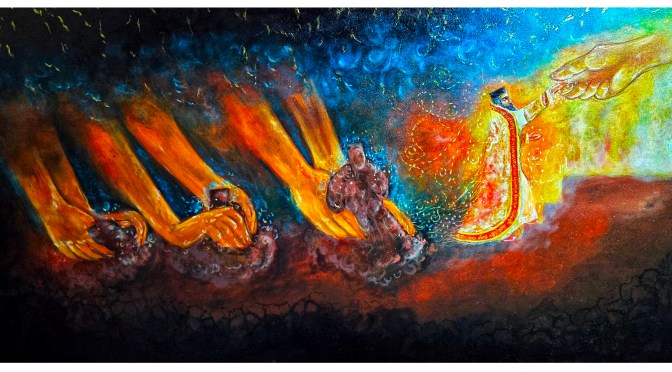
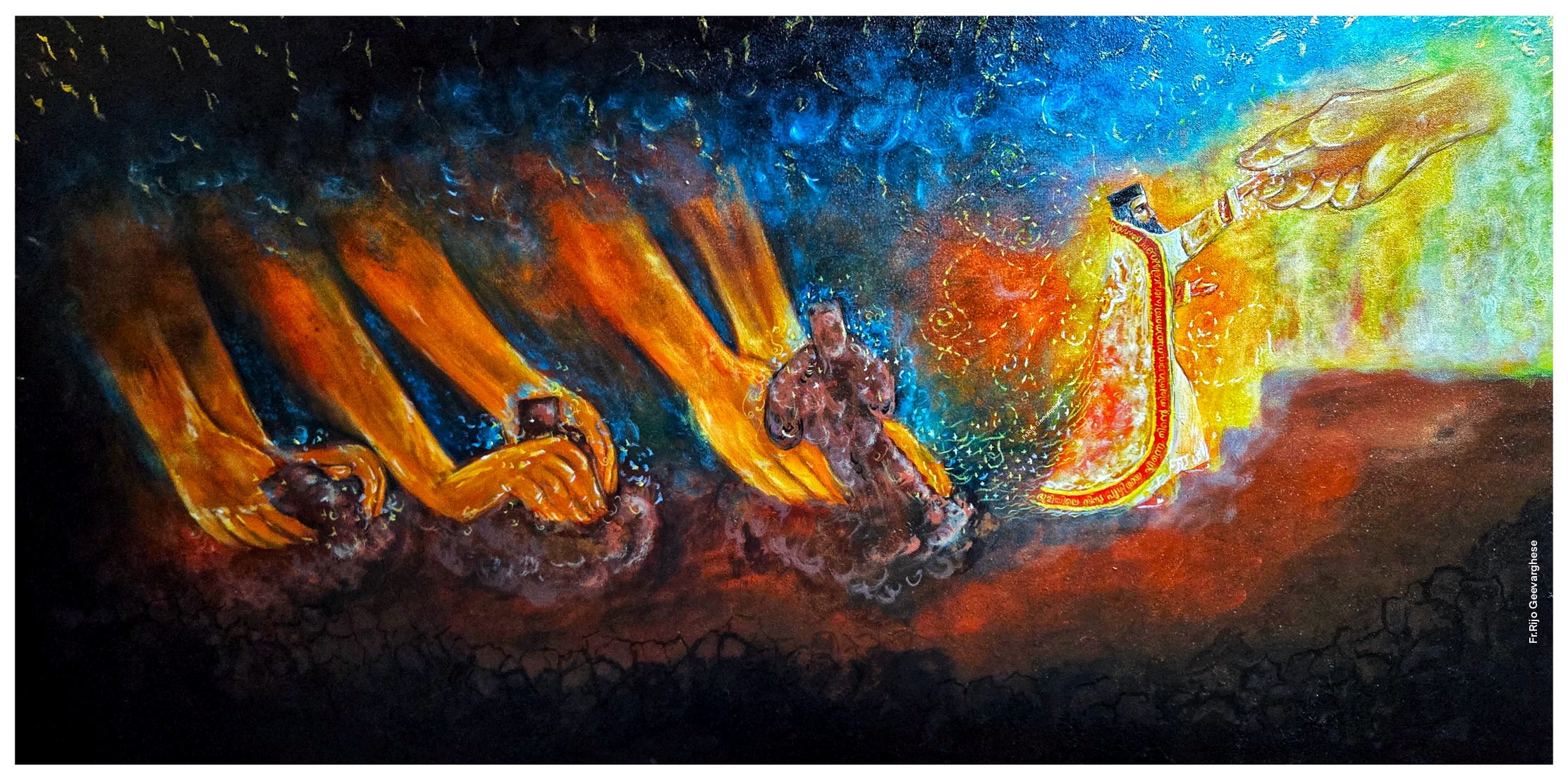
The priest stands at the altar clothed in light, yet at his very core he remains the fragile dust of the earth. This paradox – dust and glory, earth and heaven – lies at the heart of the Orthodox vision of priesthood. The painting “Priest, Raised from Dust of Earth” seeks to visually contemplate this mystery through the lens of liturgical texts: the Sedro reading from the Holy Qurbana Taksa, the Funeral Service of Priests, and a Qolo from the Friday Evening (Ramsho) prayers.
1. The Dust of Creation and the Hands of God

On the left side of the painting, we see the divine hands gathering the dust of the earth, forming the first human being. This recalls the hymn from the Funeral Service of Priests:“From the four directions the Lord took dust in His hand and created Adam in His own image.”

This tradition resonates both with the Syriac liturgy and with the Midrash Rabbah on Genesis, which tells us that God gathered dust from the four corners of the earth so that every place might claim humanity as its own. The image proclaims that the priest, like Adam, is drawn from creation itself, embodying the fragility and the universality of the human condition. He is nothing but dust – yet dust touched and shaped by the very hands of God.

2. Priesthood as New Creation

The right side of the painting shifts the focus to the priest clothed in vestments, his hands stretched toward the heavenly hand that pours forth divine grace. This visual echoes baptism, where water is drawn from the four corners of creation to sanctify and renew. As St. Paul writes, “If anyone is in Christ, he is a new creation” (2 Corinthians 5:17).

Here, the act of God shaping Adam from dust parallels the act of God renewing humanity through sacramental grace. The priest himself becomes a participant in this mystery – not merely as an officiant, but as one who has himself been reshaped and reborn in Christ.

The liturgical Sedro(eighth) captures this paradox:“You have raised me, a despicable dust of the earth, to enter the dwelling of Your divine mysteries, and lifted me to the Holy of Holies of Your Majesty.”

3. Priesthood Between Dust and Glory

The Qolo from Friday Evening (Ramsho) deepens this tension:“You created me and placed Your hands upon me…” (സൃഷ്ടിച്ചെന്മേൽ നിൻ കൈവെച്ചു).

The imagery affirms that priesthood is not self-derived but wholly a gift. It is God who fashions, raises, and sanctifies the human being from dust, clothing him with the radiant vestments of service. Even in death, as proclaimed in the Funeral Service of Priests, the priest is remembered as one who bore the imprint of both creation’s frailty and heaven’s glory.We are dust – yet in Christ, dust is raised into glory.

Fr Rijo Geevarghese

Diocese of Ahmedabad

Sopana Orthodox Academy
Icon of Theotokos : The Mother of the Light

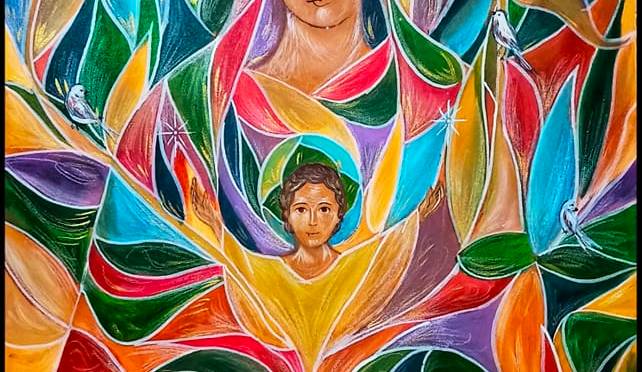
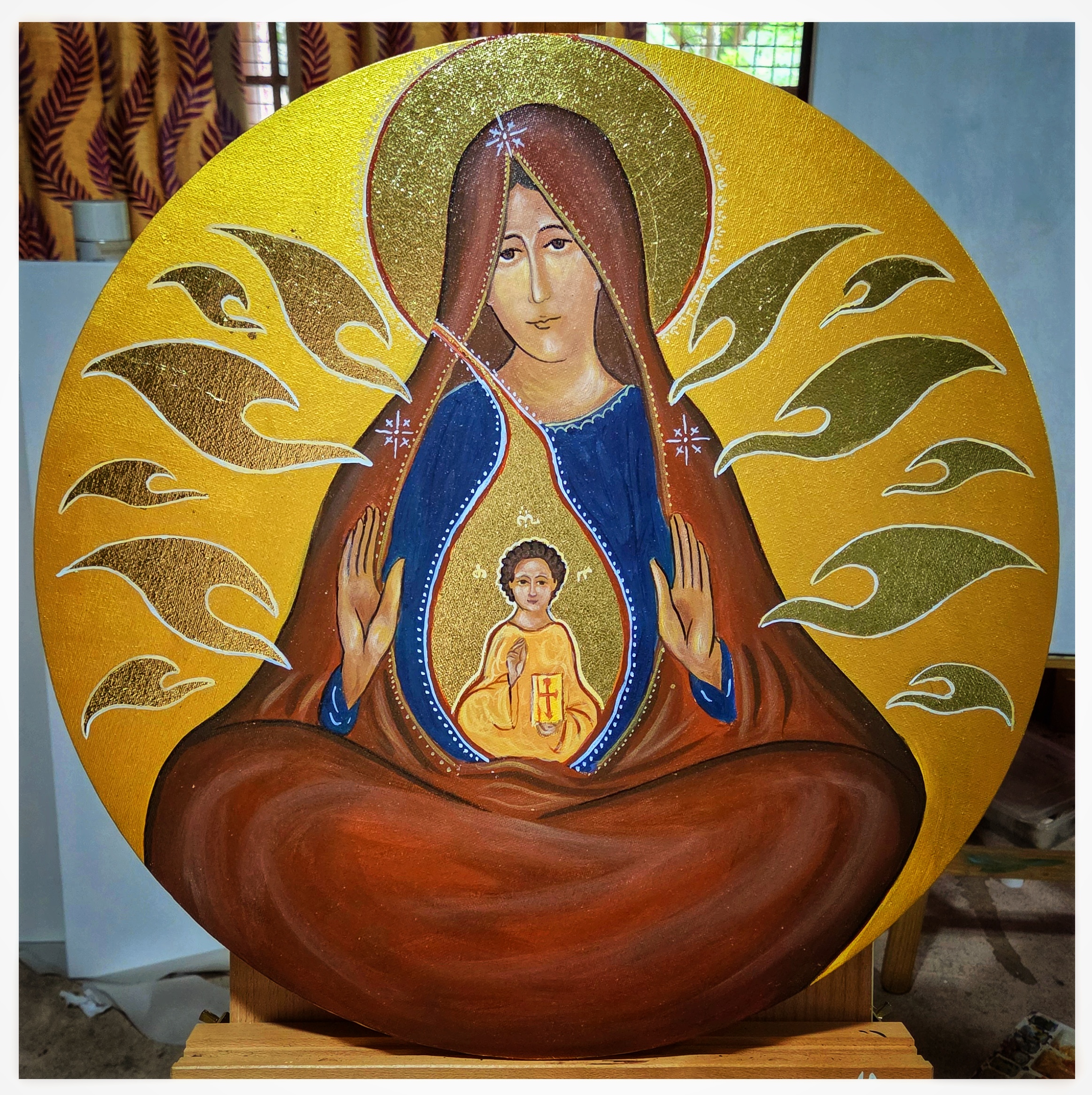
This icon titled “Mother of the Light” (Emme d-Nuhro or Emme d’nuhro) presents Mother Mary as a serene, luminous figure. From within her radiates the eternal flame of Christ, depicted here as a “diya” or “deepak”, the traditional oil lamp of Indian culture.

The flame within her is not merely a source of illumination but becomes the source of her own radiance. It reflects the profound theological truth that the holiness of the saints (symbolized by the halo) is not separate from Christ but born of Him. Mother Mary’s light is Christ’s light, dwelling within her, transforming and glorifying her.

According to St. Ephrem, the more light that enters the eye, the more the eye is enabled to see (Which is basis of optics). He applies this to the inner eye, for which faith takes the place of light: the greater the faith, the more the interior eye perceives the spiritual world. In the case of Mary, it is Christ Himself—the Light—who enters her:St Ephrem writes,

As though on an eye,the Light settled in Mary,it polished her mind,made bright her thought,and pure her understanding,causing her virginity to shine. (Hymns on the Church)

This theological vision resonates with the imagery of this Icon. The deepak’s glow is not external but proceeds from the divine Light who dwelt within her. As St. Jacob of Serugh beautifully proclaims:

“O Mary, you are the house of beauties and the storehouse of treasures, the Mother of the Sun, who generates unlimited light.”

In this image, the light of the deepak rises and extends outward, forming a radiant glow that encircles her—a visual testament to the intimate mystery of the Incarnation, where the uncreated Light takes flesh within her, making her truly the Mother of Light.

Fr. Rijo Geevarghese, Diocese of Ahmedabad Sopana Orthodox Academy
The Blessed Shoot Who sprang forth and came up out of the Thirsty Ground

𝐓𝐡𝐞 𝐁𝐥𝐞𝐬𝐬𝐞𝐝 𝐒𝐡𝐨𝐨𝐭 𝐖𝐡𝐨 𝐬𝐩𝐫𝐚𝐧𝐠 𝐟𝐨𝐫𝐭𝐡 𝐚𝐧𝐝 𝐜𝐚𝐦𝐞 𝐮𝐩 𝐨𝐮𝐭 𝐨𝐟 𝐭𝐡𝐞 𝐓𝐡𝐢𝐫𝐬𝐭𝐲 𝐆𝐫𝐨𝐮𝐧𝐝. മറിയാമെന്ന വരണ്ടഭൂമിയിൽ നിന്നു മുളച്ചു വളർന്ന അനുഗ്രഹിത സസ്യം.

This liturgical painting is a reflection from the sedro reading of the preparatory service (Thuyobo), which states:

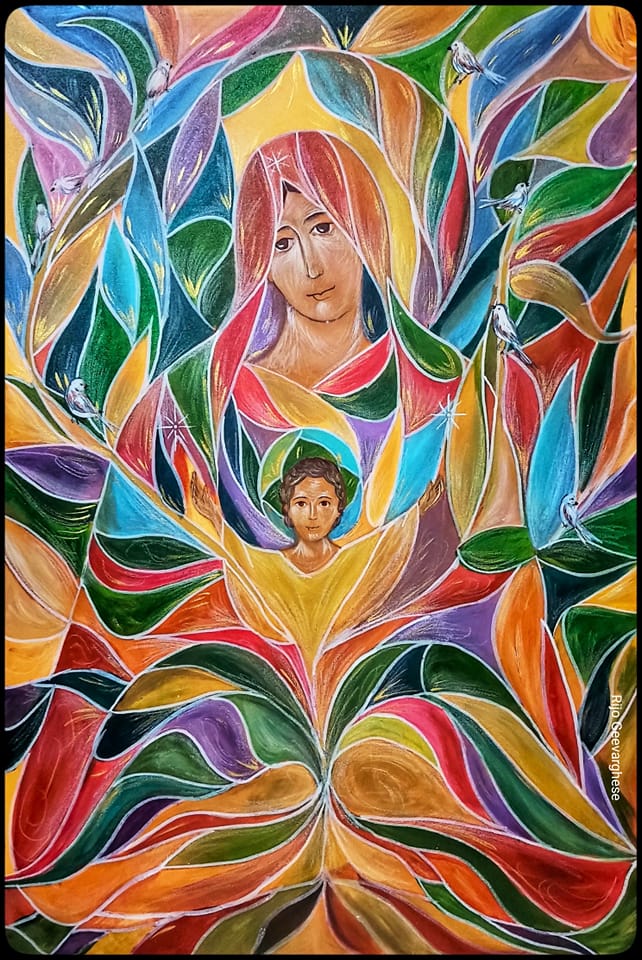
“We worship and thank You, O Creator of the worlds and the Framer of creation, the Blessed Shoot who sprang forth and came up out of the thirsty ground, Mary, and by the scent of Whose glorious sweet fragrance the whole earth was filled, and Who dispelled the foul odor of paganism from all the regions by His glorious teaching.”

Malayalam: ലോകസ്രഷ്ടാവും സൃഷ്ടികളെ ക്രമീകരിക്കുന്നവനും, മറിയാമെന്ന വരണ്ടഭൂമിയിൽ നിന്നു മുളച്ചു വളർന്ന് തന്റെ മഹനീയ സൗരഭ്യത്താല്‍ ഭൂമിയെ മുഴുവനും നിറയ്ക്കുകയും തന്റെ വിശിഷ്ടോപദേശം മുഖാന്തരം സൃഷ്ടിയുടെ എല്ലാ ഭാഗത്തു നിന്നും തിന്മയുടെ ദുർഗന്ധത്തെ അകറ്റുകയും ചെയ്ത അനുഗ്രഹിത സസ്യമായുള്ളോവേ! നിന്നെ ഞങ്ങള്‍ വന്ദിച്ച് സ്തുതിച്ച് സ്തോത്രം ചെയ്യുന്നു

This prayer reflects on the mystery of the Incarnation, drawing us to the image of Christ, the life-giving Shoot, who emerged from the pure womb of the Virgin. In His humility, He came forth from the barrenness of a fallen world, bringing life, hope, and salvation. His presence fills the earth with the sweet fragrance of grace, dispelling the foul odor of darkness.

Similarly, St. Ephrem the Syrian writes:

“Greatly saddened was the Tree of Life when it saw Adam stolen away from it; it sank down into the ‘virgin ground’ and was hidden, to burst forth and reappear on Golgotha. Humanity, like birds that are chased, took refuge in it, so that it might return them to their proper home. The Chaser (hunter) was chased away, while the birds that had been chased now hop with joy in Paradise.”

I am unsure if the Thuyobo prayer was adopted from this passage, but in this poetry, St. Ephrem expresses how the Tree of Life, which was hidden in the “virgin ground” after Adam’s fall, mirrors Christ being hidden in the womb of the Virgin Mary. He is then revealed through His birth and, ultimately, through His crucifixion on Golgotha. The imagery ties the role of Mother Mary in salvation history with that of the Tree of Life, suggesting that just as life was lost through Adam, new life comes through Christ, who is born of the Virgin.

Mother Mary, the “virgin ground,” stands at the center of this cosmic mystery. Just as the Tree of Life gives refuge and joy to birds, so too does Christ, born of Mary, become the refuge and hope of all humanity. Her role as Theotokos (God-bearer) is intimately tied to the restoration of life, underscoring her unique participation in the divine plan of salvation.

Fr Rijo Geevarghese
Diocese of Ahmedabad
Sopana Orthodox Academy
Innocence Lost: Lessons from Bethlehem to Gaza

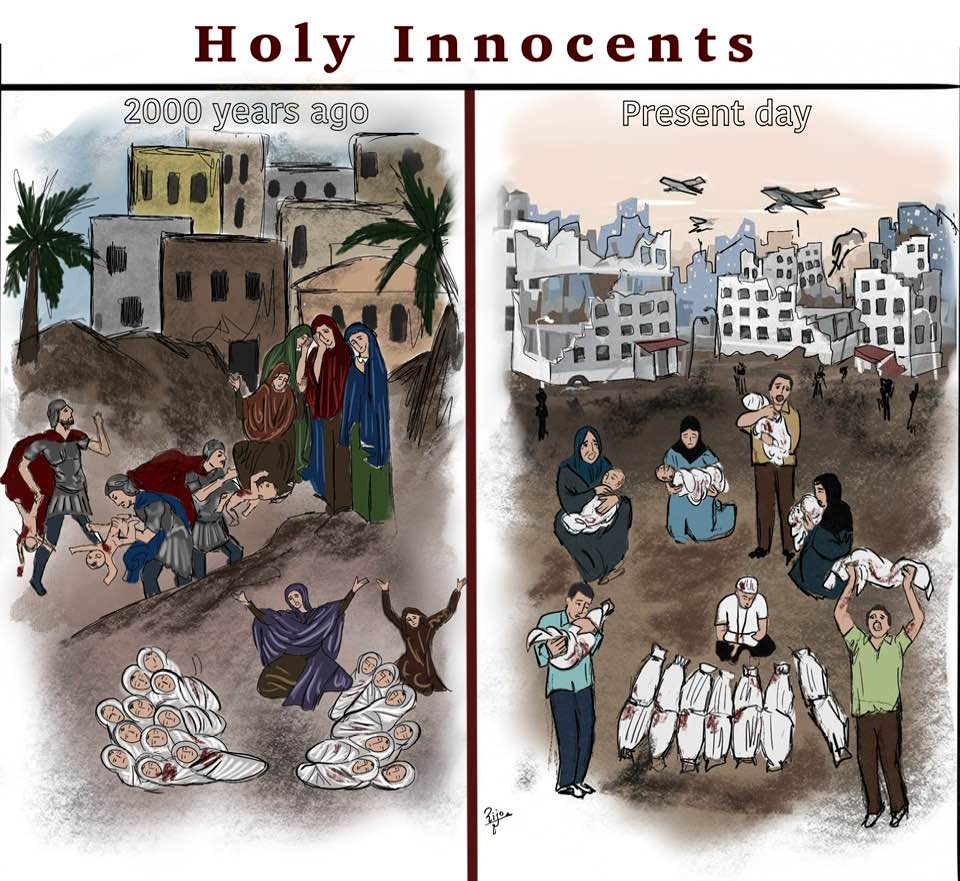
The tragic Parallel: Death of Children in Gaza and the Massacre of Children in Bethlehem (The Holy Innocents)

On these days of Christmas, we celebrate the joyous event of the birth of Christ, the prince of peace. But Christmas also reminds us of the tragic event of the Massacre of Children in Bethlehem also known as Holy Innocents. December 27 we commemorate the feast of Holy Innocents.

The nativity story found in the gospel according to Matthew tells us that once the wise men notified Herod that Jesus was born in Bethlehem, he instructed them to find the baby and then come back to him to tell him where he was so that he may “worship” the new king. Later when wisemen were instructed by the Angel to not go back to Herod the King, Herod was infuriated and ordered the death of several children.

The recent loss of innocent children in Gaza has once again brought to the forefront the tragic echoes of the past. In present days also we see leaders directly and indirectly lending a hand in the massacre of children.

In contemplating the parallels between the tragedies in Bethlehem and Gaza, we are confronted with perplexing questions. How can the innocence of children become entangled in the web of human conflict and power struggles?

Herod’s killing of children did not help him in killing the prince of peace, Jesus. Neither will the present-day massacre of children. This Christmas we all are called to stand against such atrocities and not to stand with ‘the Herods of our time’.

Let us remember these Holy Innocents along with all the children who are suffering, in prayers.

Fr. Rijo Geevarghese