Tag Archives: Indian Orthodox

“Uttam Charwaha”On Papyrus: Indigenous Icon

“Uttam Charwaha”
On Papyrus (50*30) tempra technique

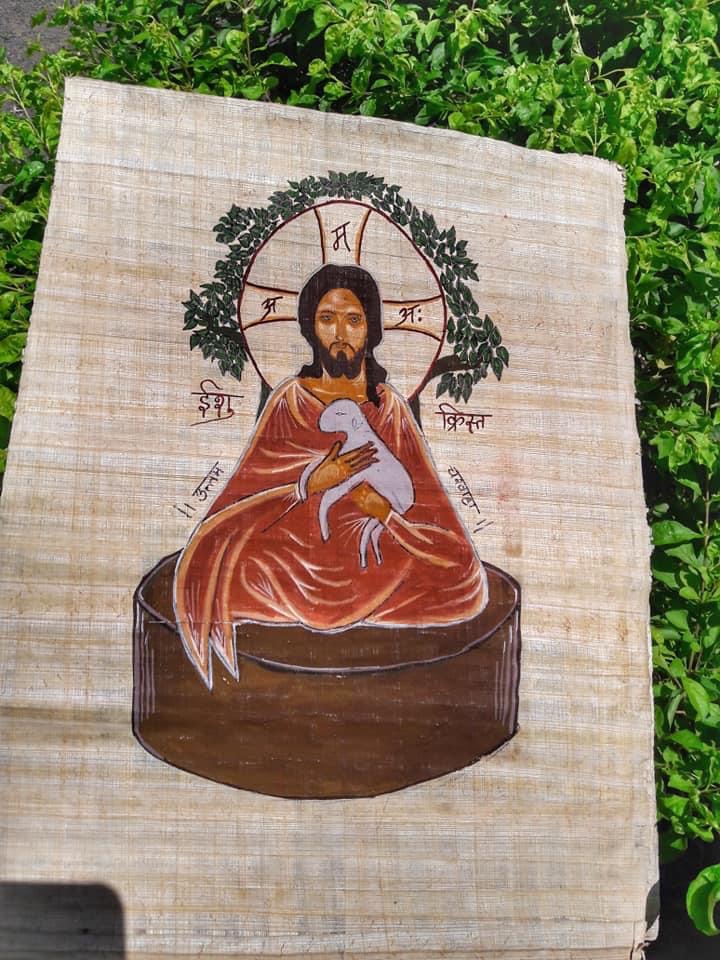
An indigenous Icon on Papyrus. An attempts in Indian Iconography. Done with traditional tempra technique on hand made papyrus sheet.
Showing Christ as the Teacher (Guru) and also as the Good Shepherd (Uttam Charvaha) taking care of his sheep /student(shishya) .

A banyan tree is the national tree of India considered to be symbol of wisdom and teacherhood as it was under this tree that early teachers use to teach in gurukul sampradayam.
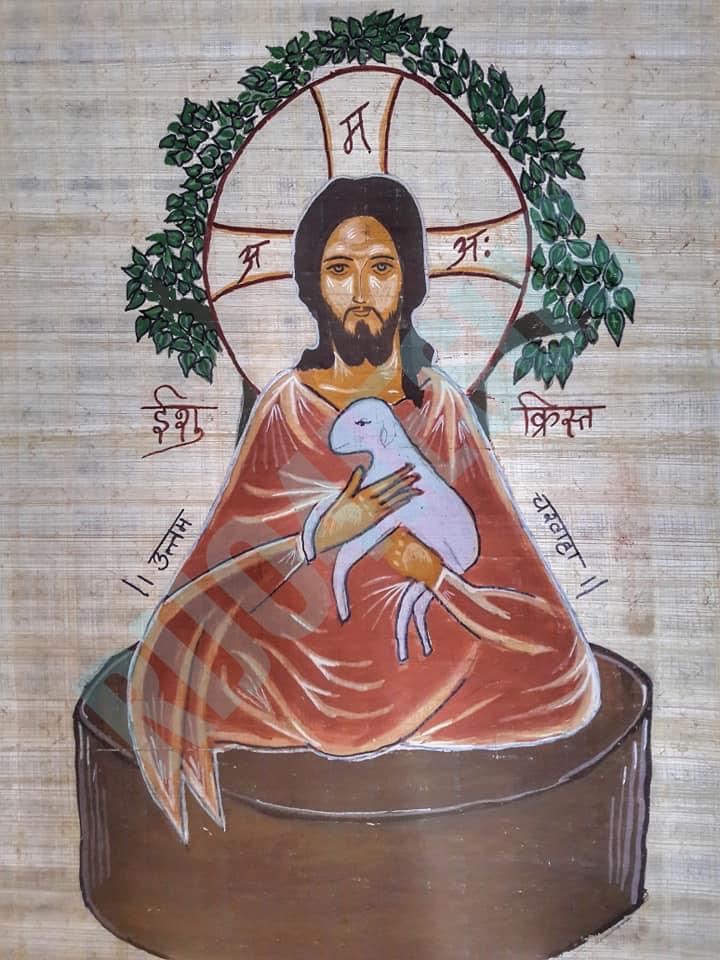
The three letters used in the Halo. These three letters are अ, म and अः
Here अ and अः are the first and the last letter of sanskrit language as written in Revelation 1: 6 . Actually unlike greek, in Sanskrit the first and the last letter (swara) are same and it sounds the same.

म is the letter representing the mediatorship of Christ (1 Tim 3:10).

Together these three letters forms the symbolic statement “Aadhyanum Madhyanum Anandanum”

Meaning He is the First, He is the Mediator and He is the Last.

Together it also defines the Truth like three letter hebrew word for Truth “emeth” Also in Greek/byzantine icons three greek letters are used ώ Ό Ν (omega, omicron, nu) which also literally means “the being” or more precisely “He who is” or simply “I AM the Exitence”
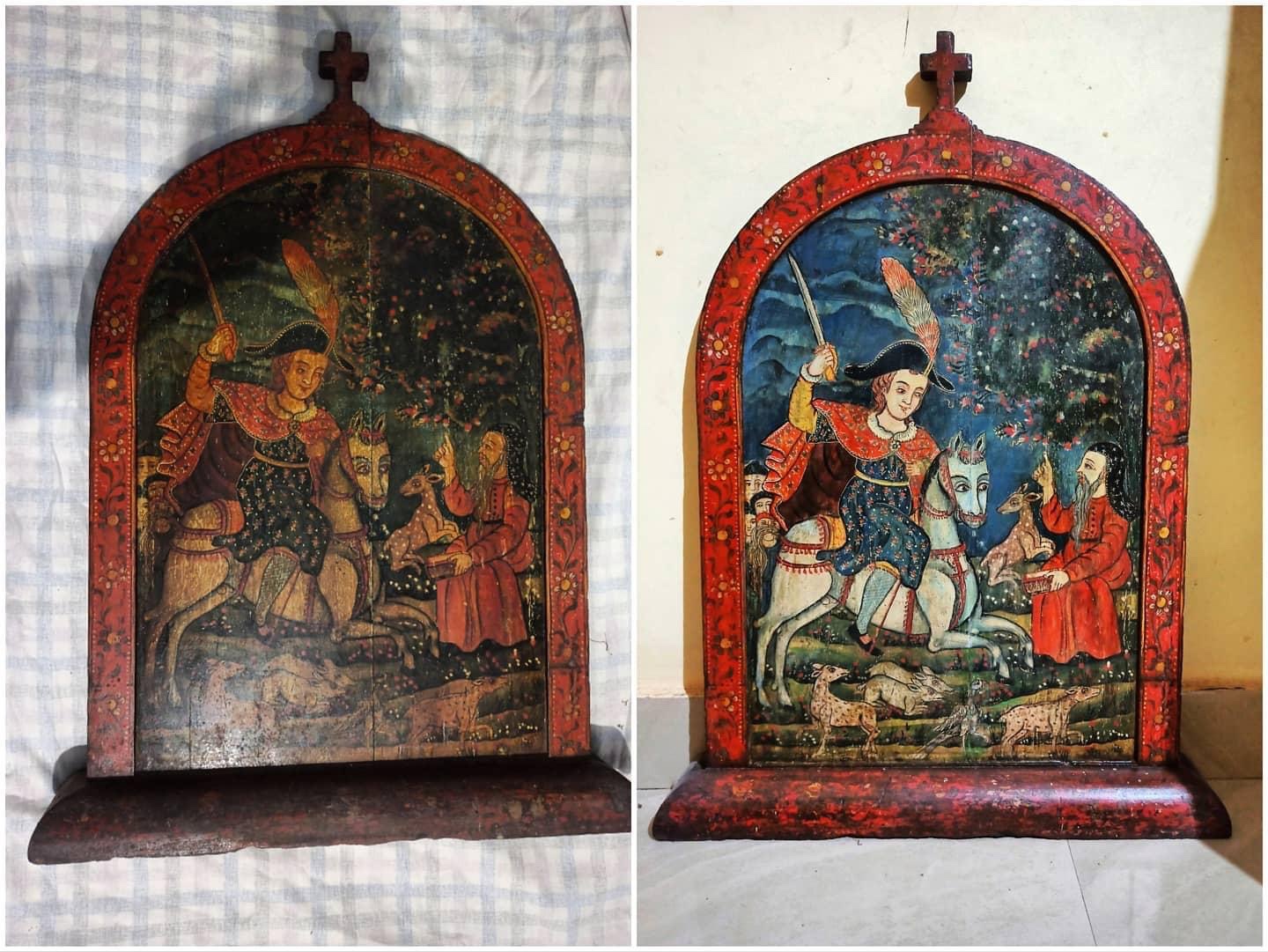
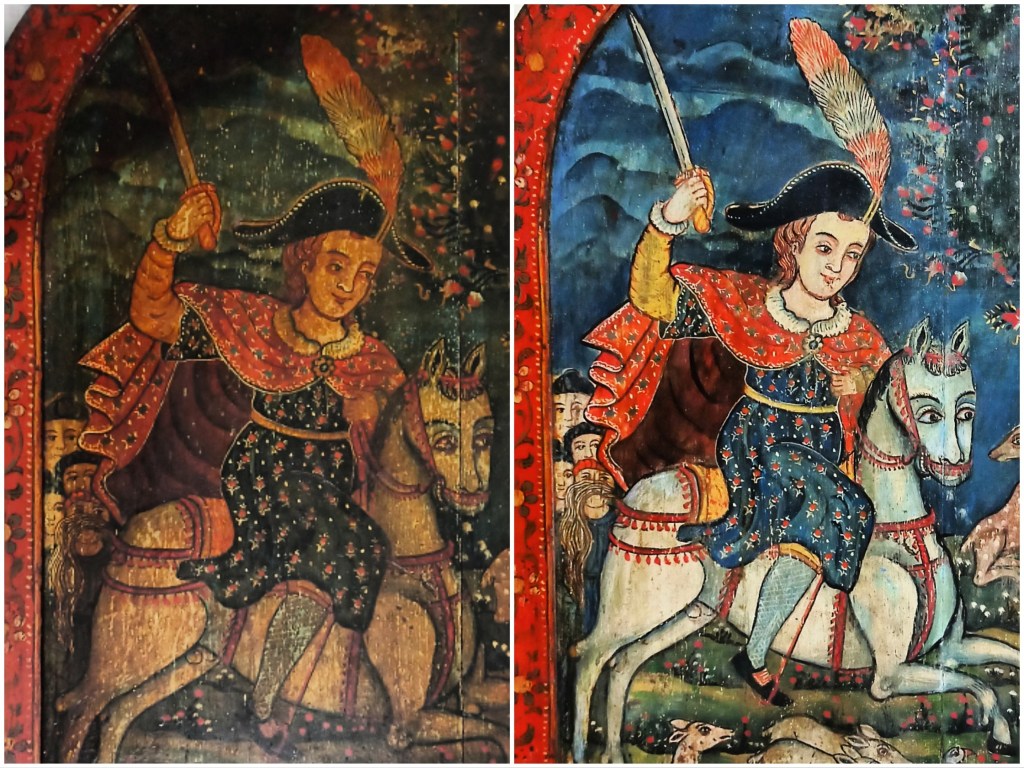
Indigenous icon of St Behanam from Niranam Church

Tried to restore with most possible cases.

I received this Icon of St Behnam and St Mathew the Hermit from Niranam St Mary’s Orthodox Church two weeks back. (Dimension 25*21 inches). Niranam church is considered to be one of the oldest churches in India, believed to be founded by St Thomas.

Some findings/ Hypothesis:

+This work is not from the Portuguese era nor gifted by Portuguese(Catholics) because St Behnam, St Sarah and St Mathew the Hermit are venerated in Oriental Orthodox Churches (mainly churches with Syrian heritage).

  • Look at the dress worn by St Mathew (Mar Mathai) which is only worn by Syriac Orthodox bishops.

+The dress of St Behnam has European influence. Maybe because this work was done by a local artist who was aware about the attire of Syriac orthodox bishop but not of a Prince from same place (St Behnam was a prince of Assyria) so used a much familiar European attire of that time.

+The style of painting is similar to that of other panel works found in Niranam Church. So most probably the panels are also from the same era and most likely painted by the same artist, an Indian Artist🙂.

  • No Canvas (or cloth layer)was used. It was painted directly on the wood and this is one of the reasons why it couldn’t hold up the colours together much.

Dn Rijo Geevarghese
Final year student, STOTS Nagpur.
Diocese of Ahmedabad