
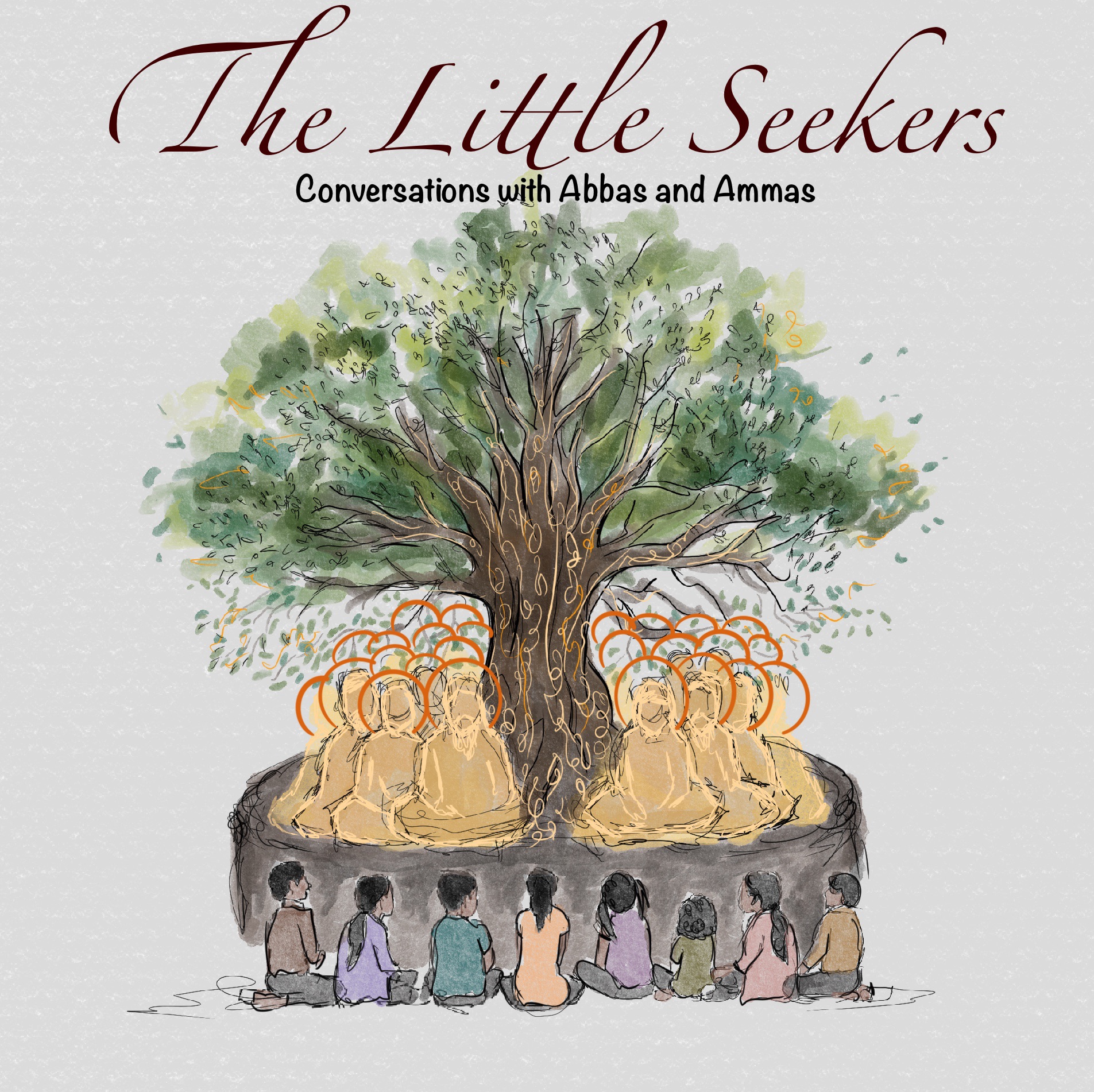
Who were the Desert Mothers and Fathers?
In the fourth century, a few men and women in Egypt, Syria, Palestine, and other areas of the Middle East and Asia Minor felt a calling. They decided to follow it. They chose to leave their possessions and their families. They gave up their everyday life for an existence of extreme simplicity in the desert. They made their homes sometimes in caves, or in small huts or “cells” (kellia) which they built themselves. They lived on bread, water, and salt. They also consumed small amounts of herbs or vegetables. They earned their living from simple manual work such as weaving linen, or making baskets and ropes. They lived with the barest essentials. This allowed them to focus on what really mattered to them. Antony was one of the most famous pioneering desert fathers. One day in church, he heard a reading containing the words of Christ: “Go and sell everything you have, give the money to the poor, and come, follow me.” He heard these words as a personal call. He felt they were addressed to him. Soon he moved into the desert to spend the rest of his life in prayer and contemplation. He died in the year 356 at the age of over a hundred, after having inspired a large number of disciples.[1]
More and more people were attracted to this life in the desert. A few chose to live in solitude, meeting with other people only occasionally; others would gather as small groups of disciples to live near an elder. In some places, larger settlements grew up in the desert. The most important ones were Nitria, Scetis, and another known as Kellia. All these were situated in the North of Egypt. In the south of Egypt, Abba Pachomius gathered his disciples into a tightly-knit community, and so the first monastery came into existence.
They referred to each other as “brother” or “sister”. However, the words Abba (Father) or Amma (Mother) came to be used as a term of respect. These terms showed affection for the most experienced and wisest of them. A little later, more specific terms came into use: “monk” and “nun”, or, for those who lived alone, “hermit” or “anchoress”.
Many of the desert fathers and mothers took great care of the parts of the desert where they lived. They cultivated the land and made it fruitful. In some places, where they lived in community, this made it possible for them to provide for the poor who lived nearby or even to send grain to the cities for the relief of the destitute
The main concern of the desert fathers and mothers was the life of the heart: they wanted to be with God. When someone lives alone, they spend a lot of time in silence. They become aware of all the different thoughts and feelings that inhabit human nature. These include both good and bad aspects. Without help, it is easy to become confused. It can be difficult to distinguish what is life-giving from what is destructive. It is also hard to determine what really comes from God and what is just imagination. So the practice soon arose of sharing one’s thoughts and way of life with an elder. The elder’s experience was invaluable in discerning what was right from what was misleading. They helped differentiate the authentic from the false. Key moments from the conversations between an elder and their disciples were remembered and later written down as the “Sayings” (Apophthegms). They contain a remarkable blend of wisdom, challenges, psychological insight, realism, and humor.
Desert Mothers
While the Desert Fathers have often been the focus of early monasticism, the contributions of the Desert Mothers are equally significant, providing unique insights into early Christian spirituality and ascetic practice.
The Desert Mothers emerged alongside Christian monasticism as Christianity became the state religion of the Roman Empire. Seeking a deeper and more austere religious life, many believers withdrew to the desert’s harsh environment for solitude and focus on God. Known as “Ammas,” these women defied societal norms and domestic expectations, leading lives of discipline and becoming spiritual leaders and mentors.
Amma Sarah
Amma Sarah is one of the most well-known Desert Mothers. She lived by the river Nile for over sixty years, dedicating her life to prayer and asceticism. Amma Sarah is remembered for her profound wisdom and spiritual strength. She famously said, “If I prayed that all men should approve of my conduct, I should find myself a penitent at the door of each one. I shall rather pray that my heart may be pure towards all.” Her teachings emphasized the importance of inner purity and the avoidance of judgment. She resisted temptation with steadfast resolve, demonstrating that the path to spiritual enlightenment requires unwavering commitment and self-awareness.
Amma Syncletica
Another prominent Desert Mother, Amma Syncletica, hailed from a wealthy Alexandrian family but chose to renounce her riches to live an ascetic life. Her teachings, recorded in the Apophthegmata Patrum, highlight the struggles and rewards of the monastic life. She taught about the importance of perseverance, comparing the spiritual life to a flame that needs continuous fuel to keep burning. Amma Syncletica also spoke about the trials and tribulations that come with a life dedicated to God, advising her followers to remain vigilant and persistent in their spiritual journey. One of her famous sayings is, “Just as treasure is discovered through toil and pain, so also is spiritual health gained through suffering.”
Amma Theodora
Amma Theodora was a spiritual guide known for her wisdom and compassion. Her teachings often revolved around the theme of divine mercy and the importance of humility. She taught that one should always trust in God’s mercy and never despair, no matter how grave their sins. Amma Theodora offered practical advice for spiritual growth, emphasizing that one must constantly strive for humility and self-awareness. She said, “Let us strive to enter by the narrow gate. Just as the trees, if they have not stood before the winter’s storms, cannot bear fruit, so it is with us. This present age is a storm, and it is only through many trials and temptations that we can obtain the kingdom of heaven.”
Amma Melania the Elder
Amma Melania the Elder was an influential figure who established monastic communities and was deeply involved in theological discourse. She traveled widely, visiting the deserts of Egypt and engaging with both Desert Fathers and Mothers. Her life reflects a dedication to fostering monasticism and encouraging others in their spiritual journeys. Amma Melania’s legacy includes not only her own ascetic practices but also her role in supporting and mentoring others in the monastic life.
Amma Alexandra
She is known from the Lausiac History[2] written by Palladius[3]. He recounts that Alexandra was a servant-girl before her life in the desert; she lived as a recluse in a former Egyptian tomb, spending her whole time praying, spinning flax, and meditating on the Bible.
Amma Talida or Talis
She is mentioned by Palladius in his Lausiac History he met her when she was very elderly, having lived for eighty years in her community with sixty other women, who loved and respected her greatly. Her long experience of self-discipline gave her great freedom.
The Desert Mothers were pioneers of Christian asceticism who left an indelible mark on early monasticism. Figures like Amma Sarah, Amma Syncletica, Amma Theodora, and Amma Melania the Elder exemplify the profound spiritual wisdom and resilience of these women. Their lives and teachings continue to inspire and challenge contemporary Christians, offering valuable lessons on humility, perseverance, and the pursuit of a deeper relationship with God. The legacy of the Desert Mothers serves as a testament to the power of faith and the enduring relevance of their spiritual journey.
[1] https://www.taize.fr/IMG/pdf/21.12quietaientlesperesetmeres-en.pdf
[2] The Lausiac History a pivotal work documenting the lives of the Desert Fathers early Christian monks who resided in the Egyptian desert. It was composed between 419 and 420 AD by Palladius of Galatia, at the request of Lausus, a chamberlain in the court of Byzantine Emperor Theodosius II.
[3] He was a Christian chronicler and the bishop. He is venerated in the Orthodox Church as a saint.
 Graphē