Khrstos Anesti +++
400+ times Kyrielyson with Prostration
I attended the Good friday service at St Marks Cathedral, Alexandria. Today sharing an experence from the good friday service in Coptic Church .
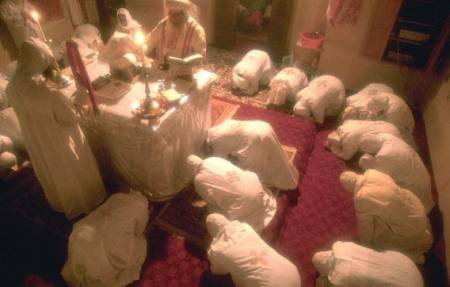
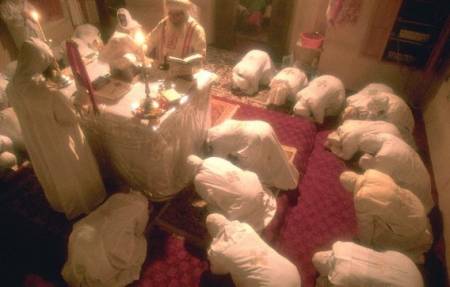
Prostration inside the altar
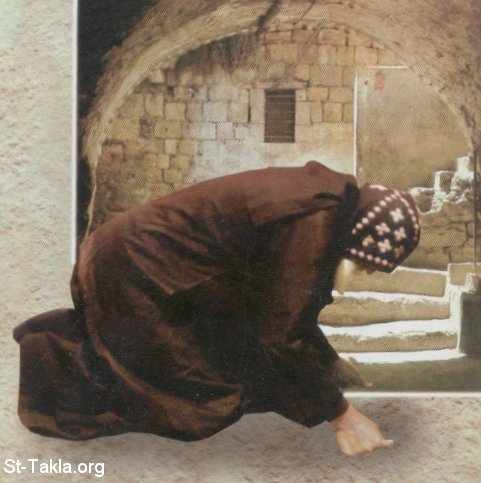
Prostration and chanting Kyrielyson is one of the most unique and blissful tradition of Orthodox Churches. Especially during Great lent and passion week numerous prostrations are preformed. In Coptic Church following the 11th and the 12th hour during Good friday service , the whole congregation prostrate(Kumbidil)(Metanis) and chants Kyrielyson 400+ time (100 facing each direction).
During 11th and the 12th hour after the readings, the cross is raised by the Patriarch or Bishop or Senior priest. Starting from east direction and the whole congregation chants Kyrielyson (Lord have mercy) with prostration (full or half) first facing east direction. 100 times facing east , 100 times facing west, 100 times facing north, 100 times facing south. Following this the clergies and congregation faces east again and continue further 12 kyrielyson chnated in a log tune.
It was a blessed experience when the whole congregation in St Marks Cathedral alexandria (may 3000 believers) chanting kyrielyson.
Orthodox way of prostration
Similarity with Indian Church.
This tradition is same in all the oriental churches. In Indian Orthodox church there is service of sleeba vandanam during which everyone prostrate and kiss the Holy Cross one by one. Again during burial service congregation prostrate and chant Kyrielyson. Coptic church performs the burial service after the recitation of Kyrielyson 400 times.
Feet Washing service in Coptic Church and Indian Church:
This Service is observed in remembrance of what happened on Holy Thursday when Jesus washed the feet of his twelve disciples prior to the Last Supper. And laid an example to all Christians showing the extent of humility in Christian life.
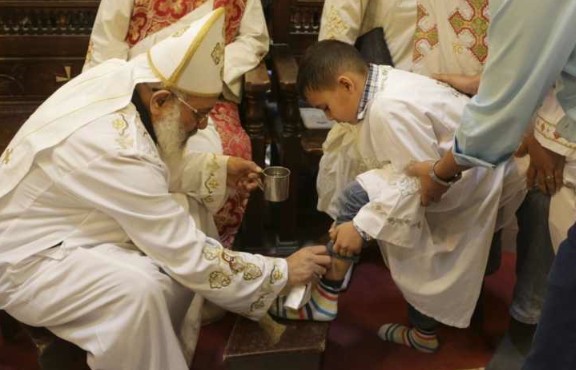
This year I attended the service at Coptic Church. Service was same like Indian and other Oriental churches except , In Coptic church Priest washes the feet of entire Male congregation and water is sprinkled over the female congregation. Service is performed by the parish priest mostly, not just by a bishop . Due to large crowd, normal priest makes sign of cross only rather washing it. The Church I went had a strength of about 2000 people. I was also blessed with this service.
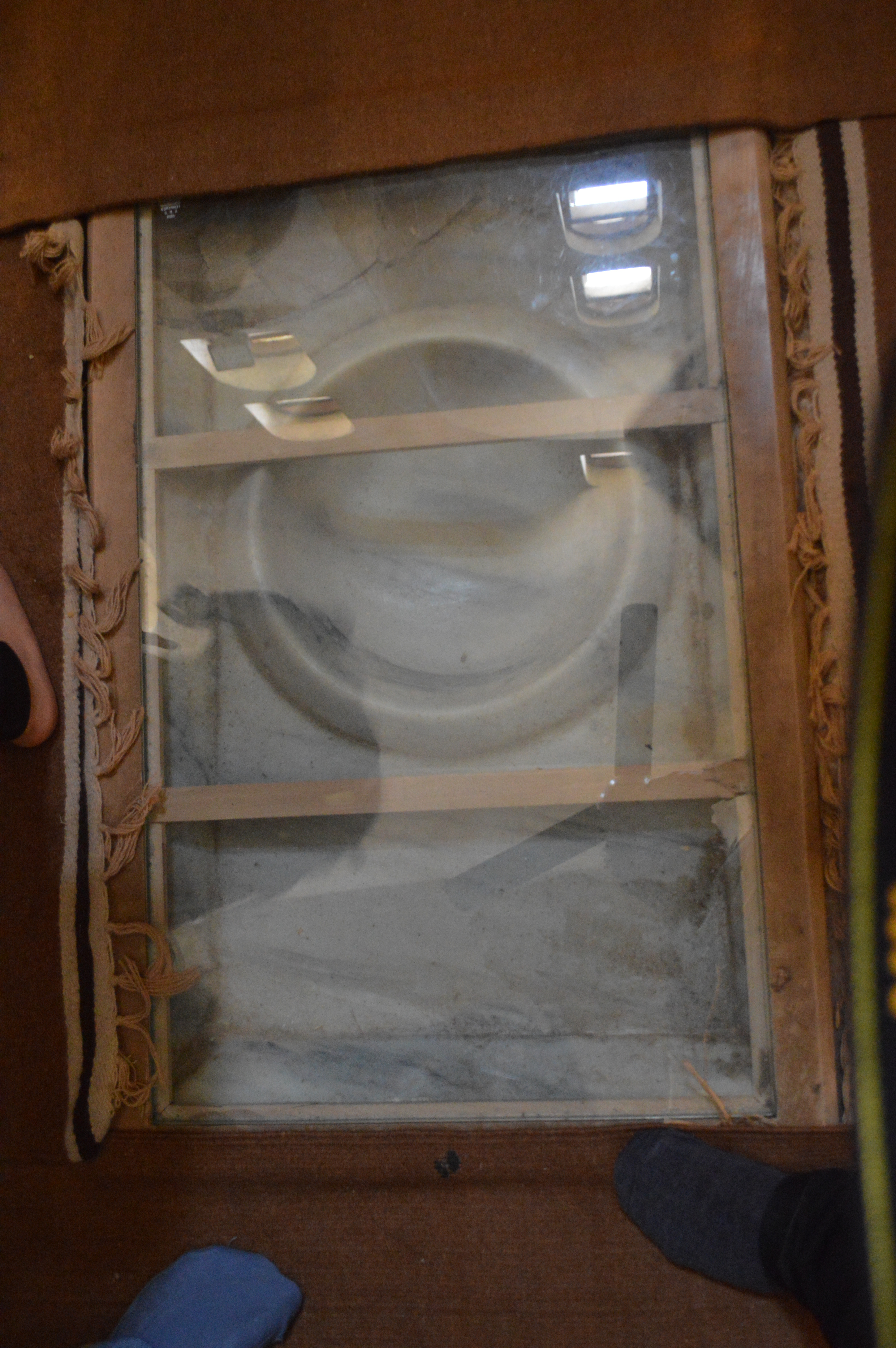
In olden days, there use to be a vessel attached to the ground which was specially for foot washing ceremony. It can be seen in some old monasteries like Syrian monastery.
I feet washing hole, in Syrian monastery
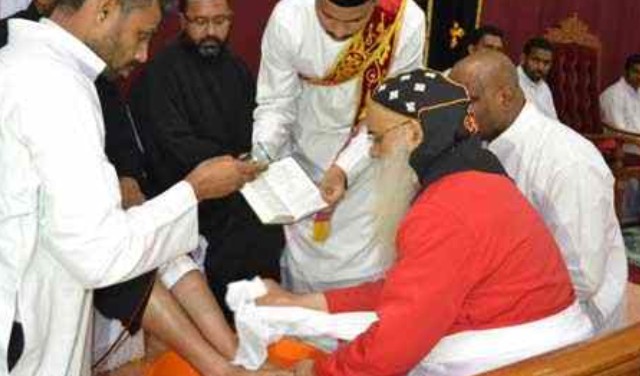
In Indian Church and Syrian Church this service is performed only by a Bishop. There will be some 12 selected persons, both priests and the lay people, and the Bishop will wash and kiss the feet of those 12 persons . (As seen in picture)
A brief description of my experience during Friday of Holy unction, when entire congregation was anointed.
Holy Unction for the entire Congregation
Sacrament of Holy unction is one of the Seven sacraments of Orthodox Church, through which the sick who are faithful, are healed from psychological and physical diseases. The priest anoints the person with the holy oil from which they obtain the grace of remedy from God. As mentioned in James 5:13
“Is anyone among you sick ? Let him call for the elders of the church , and let them pray over him , anointing him with oil in the name of the Lord .”
But till now I thought that the sacrament of Holy Unction was done only for sick people. But this year (2015) I experienced an early Christian tradition practiced on Friday before the Passion week (Pasca), in which the entire congregation is anointed with Holy oil. The Friday of Holy unction.
I came to know through Ramy Fausy, one of my Coptic friend, that there is a English service once in a month in St George Coptic Orthodox Church, Heliopolis. I have been to this church for Christmas service. Within this church compound there is a small chapel dedicated to St Pishoy of Egypt. There Abouna Boulos , a young Coptic Priest celebrates Holy Eucharist in English once in a month.
Morning Prayer (Namaskaram) of Holy unction
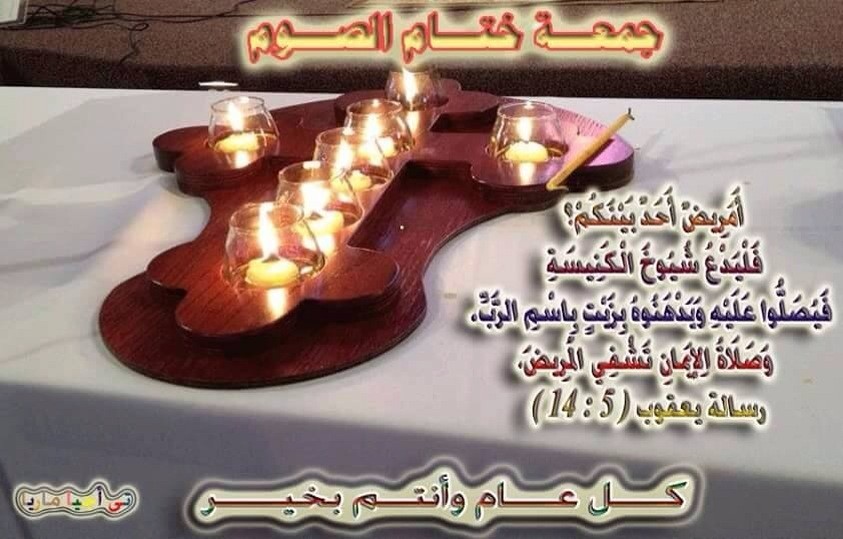
Early morning at 6:30 I reached the Church. Wearing my white color deacon robe I entered the Holy Altar. The deacon robe of Indian church is fully white unlike the deacon robe of Copts, which have shape of cross on it. I was surprised to see that the prayers were different and there was something kept on the table. Something with oil on it and Seven wicks making a shape of Cross.
Later did I came to know that its Friday before Passion week , the day of Holy unction. It is called the day of Sacrament of Lamps for the early Christians used to place oil in a lamp on this day from which hung seven other lamps. Each lamp was lit at the beginning of every prayer. The morning prayer is divided into seven parts. This rite still exists, however, the seven lamps were replaced by seven wicks, made from cotton wool, which sit in a plate of oil. This prayer is known as Kandeel, same like kandeela Service , termed by Indian/ Syriac Church. After every prayer, priest lit the wick which finally makes a shape of cross(as shown in picture)
This service is same for wnnointment of sick but with some little changes in words like on this day prayers are performed in the plural forms, hence, instead of the priest saying: Lord heal Your servant (…name), he says: Lord heal Your attending servants.
Anointment of Entire Congregation
After the seven prayers and lightening of seven lamp is accomplished , priest anoints the entire congregation , starting with his fellow priest and deacons. I was also blessed to be anointed. The Priest anoints the forehead, down neck and both the hands. Then prayers begin for celebrating the last holy Eucharist in Lent.
Reason why the whole congregation is anointed
Anointing all the believers prior to Passion Week, for it is not permissible to perform the Sacrament of Unction of the Sick during the Holy Week, even funeral rites are not allowed to take place during Passion Week. In the Byzantine and Coptic liturgies, the entire congregation is anointed with oil, usually on the evening of Holy Wednesday in the Byzantine and on the Friday before Lazarus Saturday in the Coptic. In the Coptic Rite this is connected to the idea that these services of Unction and funeral being unavailable in Holy Week.
*Even there is a General Funeral for anyone who dies in Holy Week after the Palm Sunday service (will write about it later).
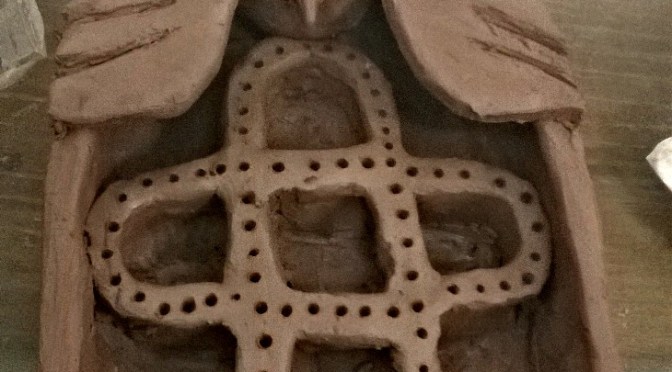
Ancient Coptic pottery with seven lamps
When I made this pottery I didn’t knew the importance of it . Now I know its meaning and importance. Although the pottery tradition is almost forgotten now seven wicks are used in place of clay lamps. This pottery is entirely made in Brown nile clay. In Byzantine Churches Seven candles are used (as shown in Figure).
Holy unction in Indian Orthodox Church
I am not much aware of how it is done in Indian Church. But I am sure that this sacrament is done only for sick people. The number of lamps is Five and not Seven. Five number signifies the 5 wound of Christ which is also made in Qurbana bread.
As per Indian Orthodox Church calender today(25th March) is the Feast of #Annunciation.
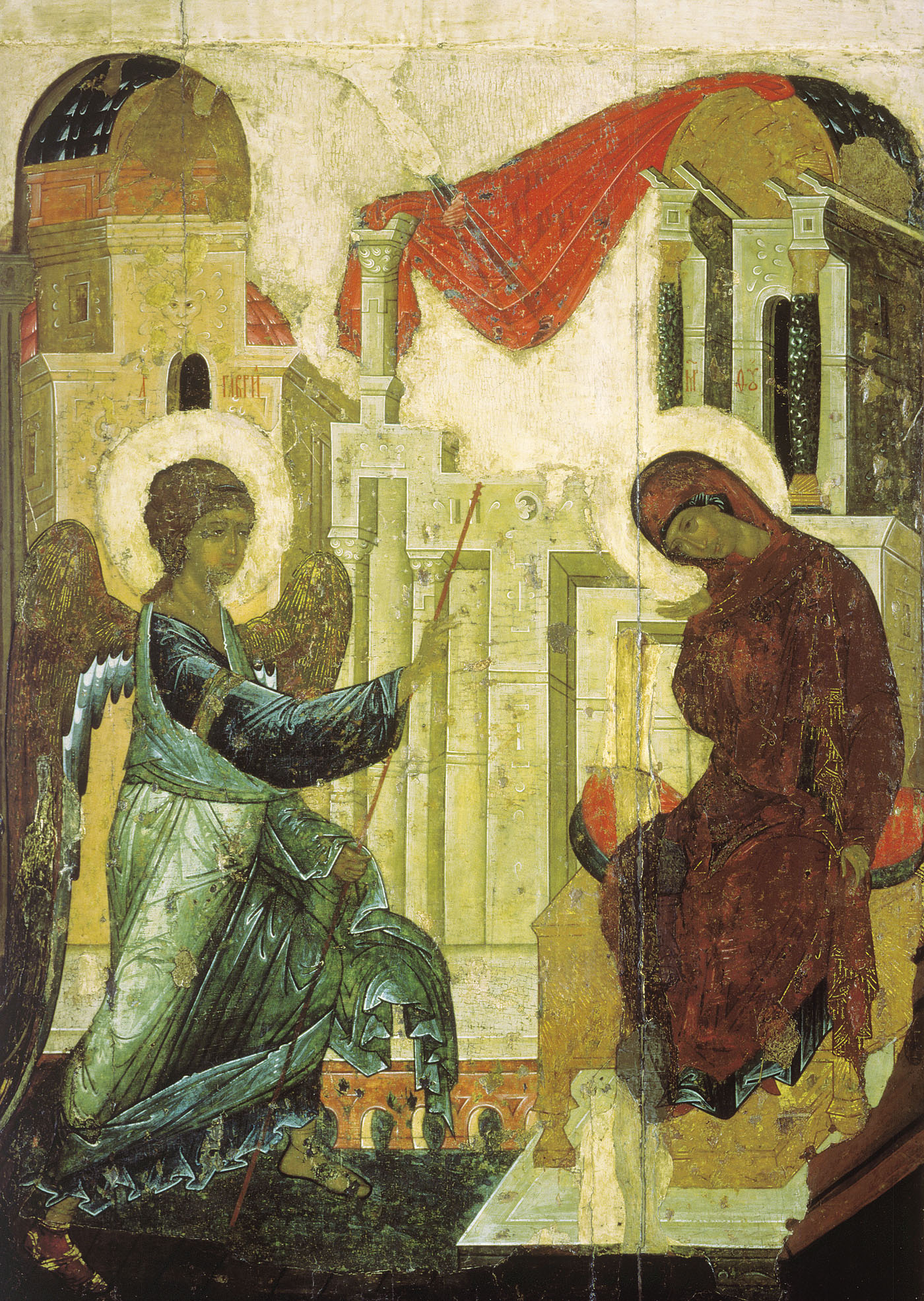
The Icon of the Annunciation reflects the deep inner joy. It is the joy of the Old testament promise being fulfilled through the incarnation of the Redeemer of the world.
“This day is the beginning of our salvation and the manifestation of the Eternal mystery. The Son of God becomes the son of the Virgin and Gabriel announce the good news of grace. Therefore let us also him cry to mother of God: Hail! Thou that art Full of grace; the Lord is with thee.”
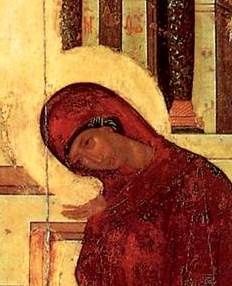
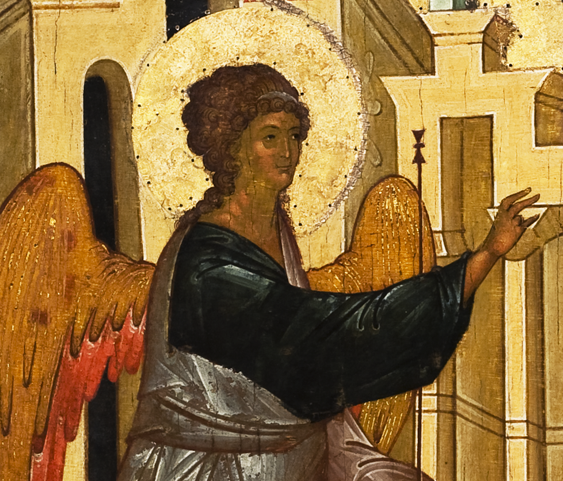
Annunciation from vasilyevskiy by Andreï Roublev
+This Joy is also mentioned in colors. I will try to briefly explain the meaning behind the Icons depicting this joyful event.
+The majority of Icons depicts Archangel Gabriel in swift motion, he just descended from heaven and looking as a diligent servant intent on carrying out the task given by his Master. His legs are wide apart as though he came running.
+In his left hand he holds a staff, the symbol of a messenger, his right hand strongly moving toward Virgin Mary. He communicates to Her with the glad news from his Master.
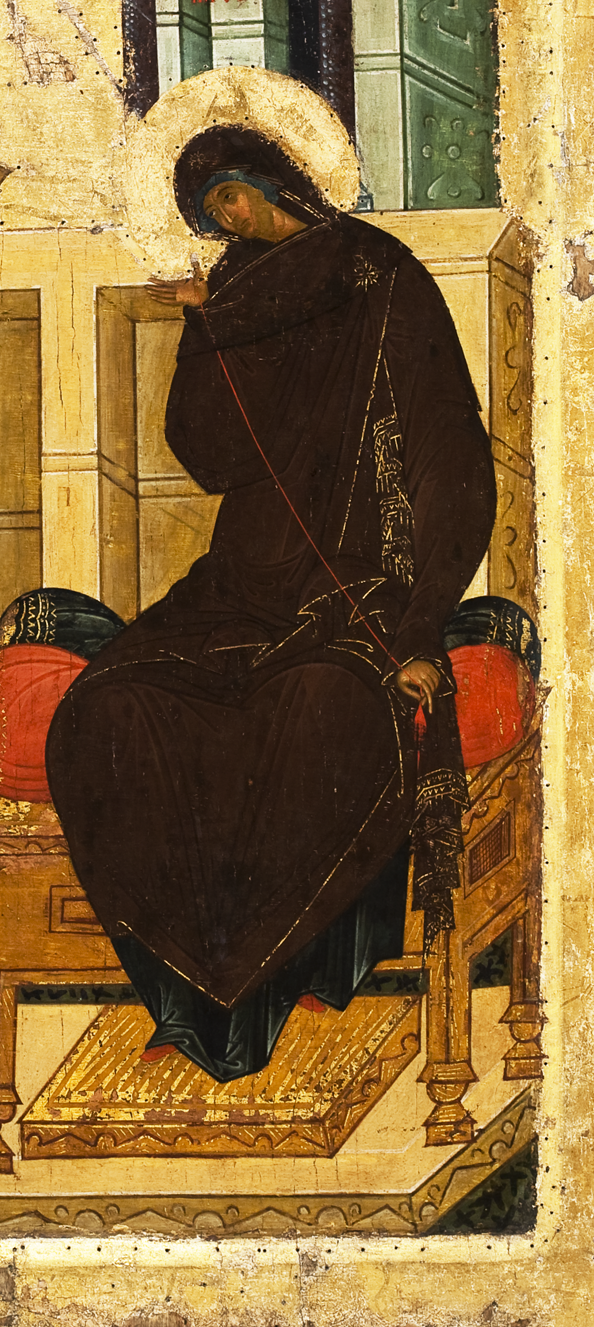
+The Mother of God is depicted either sitting, to emphasise her superiority over Angel or sometimes as standing , as listening to King’s command. As per the rule in Icons, she will be holding a yarn in Her Hands, rarely a scroll. These details are more mentioned in the Proto Gospel of St James.
+The Icon usually emphasizes three moments of the event.
1) The apparition of Angel, his greeting, amazed Holy Virgin. In this icon, in Her surprise, drops the yarn she was spinning.
2) The beginning of our salvation, with the beginning of the fall of man. The fall of our ancestor eve. There Eve along with Adam was casted out of Eden by an angel and here An angel comes in front of New eve for the beginning of our Salvation. Virgin at once does not accept this extraordinary message and recalls the Law of nature:”How this shall be , seeing I know not a man?”
3) Finally, Mother of God bowing Her head , with her right palm to Her breast –the gesture of acceptance , of submission which has decided the fate of the World.
“Behold the handmaid of the Lord; be it unto Me according to thy word.”
+A traditional Iconographical sphere can be scene above , the symbol of high heaven and rays coming through it-the very action of Holy spirit. Same like the Icon of Holy Baptism.
+One of the most attractive feature is the compilation of Unity of action and will of God and His creature. As the festival speaks:
“The angel serves the miracle , the virgin womb receives the Son, the Holy spirit is sent down , the Father send his favor from high(sphere) and the transformation is made………”
#Orthopost
The first icon, the MANDYLION or The Holy Napkin, sometimes called “Made without hands” is said not only to have been an authentic likeness of Christ, but one which Christ Himself willingly produced. It was thus often cited both as proof of the reality of His Incarnation — as it had been in contact with His body — and as justification for the iconophile position that Christ Himself has endorsed the making of His image.
Eusebius of Caesarea
“The Transfer from Edessa to Constantinople of the Icon of our Lord Jesus Christ Not-Made-by-Hands occurred in the year 944. Eusebius, in his HISTORY OF THE CHURCH (I:13), relates that when the Savior was preaching, Abgar ruled in Edessa. He was stricken all over his body with leprosy. Reports of the great miracles worked by the Lord spread throughout Syria (Mt.4:24) and reached even Abgar. Without having seen the Savior, Abgar believed in Him as the Son of God. He wrote a letter requesting Him to come and heal him. He sent with this letter to Palestine his own portrait-painter Ananias, and commissioned him to paint a likeness of the Divine Teacher.
Eusebius does not mention the Mandylion directly, but he does include the letters exchanged between Christ and Abgar, which have come down from us through tradition (the following is the translation from the Menaia (translation by Fr. Ephraim Lash); for the Eusebius’ quote on Abgar and Christ
The existence of The Holy Napkin is first mentioned in the 6th Century. According to one story, Abgar V the Black, king of Edessa (capital of the Turkish province of Oshroene, important Christian and commercial center of the Islamic world until the 13th Century) had fallen ill and begged Christ to come and cure him. Instead of going to visit Abgar, the Lord asked water and a cloth be brought to Him. He washed His Face, drying it with the cloth, and His Divine Countenance was imprinted upon it. Ananias took the cloth and the letter of the Savior to Edessa. Reverently, Abgar pressed the holy object to his face and he received partial healing. Only a small trace of the terrible affliction remained until the arrival of the disciple promised by the Lord. The image was lost and then rediscovered and it remained in Edesa. In the year 944 Edesa was sieged and the Holy Napkin was demanded as a condition for withdrawal. It was then carried in procession to Constantinople, where it was placed in the Sultan’s chapel in the Great Palace. The event is celebrated annually on August 16. Later it is said to have been purchased by King Louis IX of France, in 1247, and taken to Paris and placed in St. Chapelle. It disappeared during the French Revolution.
An old Icon explaining the story of Image of Edessa
The features of Christ’s face on the Holy Napkin are those of the Pantocrator. It is not a bust because it only shows the head and part of the neck; no shoulders are seen. The face is painted as though it is imprinted on a horizontal fringed strip of white cloth, hence the name “napkin.” The earliest surviving example is said to date from the 10th Century and it is at St. Catherine Monastery in Sinai. This icon has no fixed place in the decoration of a church.
The image of the Holy Napkin was also known in the West under the name of The Veil of Veronica. The Veronica story is similar to that of King Abgar: Veronica was a woman who comforted Jesus as He was bearing the cross on the way to Golgotha. She offered Him a piece of cloth to wipe the blood and sweat off His face; later she found that she received a ‘miraculous image. A building along Via Dolorosa in Jerusalem associated with Veronica is today the home of a community of sisters called “The Little Sisters of Jesus.”
“All creative work, be it the spoken word, the written word or the sung word, are essentials in praise and worship, meditation, education, inculturation and evangelism. This also includes art and pictures, which is universal seeing.” Hanna Varghese
Late Mrs Hanna Varghese
You all might have gone through my article called “Face of Christ ,image of edessa”. It tells the story of Hanna or Ananias (royal painter of King Abdgar) and how the miraculous image of Christ was portrayed.
Malankara Orthodox Syrian Church was blessed by an another royal artist with the same name Mrs Hanna Varghese.
Hanna Varghese was born on April 7, 1938, she was one of three children of accountant Ikareth Cheriyan and Kunjamma Parayil, and showed promise in art from a young age. She attended a two-year teachers training course at Kirkby College in England, where she earned a distinction in art.
“saviour”
She returned in 1958 to begin her career in teaching. After two years with a government school in Sabak Bernam, she married George Varghese. Hanna quit teaching after 14 years in the profession to concentrate on her growing family. This brought the best out of her creative and natural abilities. The Last Supper, The Good Samaritan, The Moment of Truth and Calming the Storm, to name a few, are considered “master paintings”. These were essentially paintings with acrylic on canvas and batik-dyeing in fabric. About batik, Hanna has been quoted as saying:
“Hosanna”
“There is an element of surprise and wonder in dyeing. The colour is deep when the fabric is wet. When it dries it takes on a lighter shade. Finally, the result of colour on colour is amazing when a new hue emerges.”
She began to strongly express her faith, spiritual thoughts and experiences with lively biblical images. Inspired by the artwork of many Asian Christian artists in the Image magazine, Hanna had her own work featured in too. She became a coordinator of the Malaysian Christian Artists Fellowship and was vice-president of the Asian Christian Art Association from 1998 until 2003.
She aslo served the Overseas Ministries Study Centre (OMSC) at New Haven, Connecticut, in the United States as resident artist during the 2006-07 academic year and her paintings were exhibited at Yale Institute of Sacred Music, Princeton Theological Seminary and the OMSC. It was while Hanna was in the US that she was diagnosed with cancer. Throughout her illness she was still working on her paintings and designing theme posters for important Christian conferences in Asia. She entered heavenly abode on June 12, 2009 aged 71.
“calming the storm”
Through her gift of art and the love, Hanna touched many people, her church, the ecumenical movement and organizations:
World Council of Churches
Christian Conference of Asia
Asian Christian Art Association
Overseas Ministries Study Center- New Haven, USA
Hanna preached the gospel through the best way she knew. Once during an interview she said:
“As a child I loved drawing. We had a Bible storybook at home with vivid illustrations which left a lasting impression on me. Although I could not read at that time, the pictures made sense to me. Image is the tangible form of our thoughts and our spoken and written words. I could read into the pictures and interpret what they were saying. The images I make today are windows for others to look into my interpretation. That is my witnessing.”
Batic art
Hanna has taught us that life can be made beautiful if we can use the gifts God has given to us to touch other lives. Just as her paintings communicate the love of God and blessed so many, she would wish that we so live to bless others.
When asked What advice would you give to Christians and the global Church about using art for evangelism?
She said: All creative expression, be it the spoken word, the written word or the sung word are essentials in evangelism. Let us not forget the rightful place of visual images too. Art is the “seeing” word, the tangible word. Remember God “created” and “it was good.” Only when we perceive the beautiful can we say, “The heavens are telling the glory of God and the firmament proclaims his handiwork” (Psalm 19:1). Christian communities should look into the possibilities [of including] art in their praise and worship, education and veneration (as in icon).
Art is the expressive cry of the soul. All of us have that urge in one form or another. Discover it; nurture it.
Remembering her with love
Rijo Geevarghese
rijo4iesus@gmail.com
COMMUNION OF THE MOTHER OF GOD (Manna Makalkayi)
The Old Testament is filled with the stories of people and events that builds up the history of God’s chosen people, Israel. But we may often wonder, “What do all these stories mean?” We are also told that in Christ, the whole Bible holds together. How can we see our Lord Jesus Christ in the people, events, and prophecies of the Old Testament?
We can find many symbols representing Holy #Theotokos (Mother of God) in Old testament. These symbols are also mentioned in Madyastha Prarthanagal, Theotokias ( Coptic Midnight Praise), as well as other hymns chanted during the Divine Liturgy. Lets understand these symbols. #Orthopost
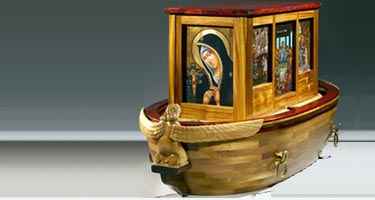
Mary , the noah’s ark
The Ark of Noah (Genesis 6-9) In his first epistle, Saint Peter writes that by Noah,
“…eight souls, were saved through water. There is also an anti type which now saves us – baptism” (1 Peter 3:20-21).
Saint Peter makes the connection between the event of Noah’s Ark, and the salvation in Christ through baptism. Noah, then, is a type of Christ, while the ark itself symbolizes Saint Mary. Just as the ark received Noah and became a means of saving the world, Saint Mary received God the Word and gave Him the human body by which He died for our salvation.
Icon with Jacobs ladder , above a depiction of Theotokos
The Ladder of Jacob (Genesis 28:10-17)
When Jacob fled from his brother Esau, he saw a vision of a ladder that was set upon the earth with its top reaching to heaven. The Lord stood above this ladder and the angels of God ascended and descended on it. The Lord stood above this ladder expressing His intent to descend on it. It is through His incarnation that the Lord descended from heaven and manifested Himself to us. The ascending and descending of angels point to their ministering to Saint Mary. Archangel Gabriel announced the birth of our Savior to Saint Mary (Luke 1:26-39). An angel also appeared to Saint Joseph telling him not to be afraid, but to keep Saint Mary at his house (Matthew 1:18-25). The angels also led the Holy Family as they fled from Herod (Matthew 2). Jacob’s ladder, therefore, is a type of Saint Mary, who tied heaven and earth together through the body of the Lord which was taken from her. She also intercedes on our behalf, carrying our prayers to our Lord in heaven.
Mary. the Burning bush(coptic Icon)
The Burning Bush (Exodus 3)
While tending to the flock of his father in law, Moses saw a burning bush. Although it was burning with fire, the bush was not consumed. The burning bush represents Saint Mary who carried the fire of the Lord’s divinity without her wo
A tabernacle
mb being consumed. After she gave birth to the Lord, Saint Mary’s virginity also remained sealed; that is, it was not consumed.
The Tabernacle
In the Book of Exodus, we read of the building of the Tabernacle. God spoke to Moses saying, “I will consecrate the tabernacle of meeting and the altar… I will dwell among the children of Israel and be their God” (Exodus 29:44-45). The Tabernacle is likened to Saint Mary, for the Lord dwelt in her.
A replica of Golden pot of Manna
The Pot of Manna (Exodus 16)
After their escape from Egypt, the children of Israel ate manna in the wilderness for forty years. God spoke to Moses saying, “Behold I will rain bread from heaven for you…Take a pot and put an omer of manna in it, and lay it up before the LORD, to be kept for your generations” (Exodus 16:4,33). This pot was then kept in the Ark of the Covenant along with the tablets on which the Ten Commandments were written, as well as the rod of Aaron. Our Lord Jesus Christ also spoke to the Jews saying, “I am the bread of life. Your fathers ate the manna in the wilderness, and are dead. This is the bread which comes down from heaven, that one may eat of it and not die. I am the living bread which came down from heaven. If anyone eats of this bread, he will live forever; and the bread that I shall give is My flesh, which I shall give for the life of the world” (John 6:48-51). If the manna is a type of Christ, Who is the bread of life coming down from even, then the pot made of pure gold, which carried the manna, is a type of the pure Saint Mary, who carried the Lord in her womb.
“At your hand stands the queen in gold from Ophir” (Psalm 45:9).
This is why in her Icon, she is portrayed at the right hand of Christ our Lord and King.
Aaron’s blossoming rod
The Rod of Aaron (Numbers 17:1-8)
In Numbers 16, we read of Korah who rebelled against God, Moses, and Aaron and claimed for themselves the priesthood. The Lord wished to reveal to the people of Israel to which tribe the priesthood rightly belonged. Each tribe presented a rod and placed it in the tabernacle of meeting. Aaron’s name was placed on the rod of the tribe of Levi. The rod of Aaron sprouted and put forth buds, producing blossoms and yielding ripe almonds, as a sign that God had chosen the tribe of Levi. The barren rod which blossomed without planting or watering is a symbol of Saint Mary, who, being a virgin, brought forth the Fruit of Life. It is also a symbol of the human soul; although weak in itself, through God’s grace can bring forth the fruit of the Spirit.
The closed gate of temple, Jerusalem
The Gate of Ezekiel
Ezekiel the prophet said, “Then He brought me back to the outer gate of the sanctuary which faces toward the east, but it was shut. And the Lord said to me, ‘This gate shall be shut; it shall not be opened, and no man shall enter by it, because the Lord God of Israel has entered by it; therefore it shall be shut” (Ezekiel 44:1-2). This gate, which Ezekiel saw, is a type of Saint Mary. She is the gate through which the Lord entered. After she gave birth to Him, the gate remained shut; that is, she remained a virgin and no other man entered into her womb.
Censer
The Censer
The golden censer, used in Church worship, is also a type of Saint Mary. The live coal in the censer, according to Saint Cyril the Great, points to the unity of the divinity and humanity of Christ. Just as the censer carries the fiery coal, so also the Lord dwelt in the womb of the Virgin. The aroma of incense coming from the censer is likened to the sweet-smelling sacrifice of our Savior. As the church chants in the Hymn of the Censer, “The golden censer is the Virgin. Her aroma is our Savior.”
You prepared the world to receive You, now also purify our hearts to receive You always.We ask this through the intercessions of Your holy and pure mother, Saint Mary.
Amen.
*Do mail /comment, if you have any other symbols for Mother Mary.
Shalom +++
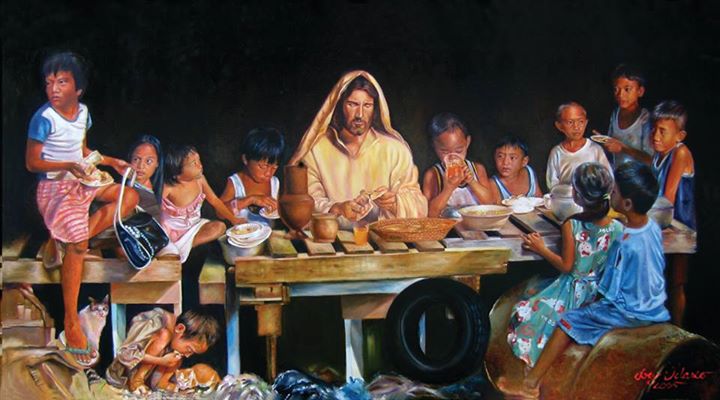
Lenten thoughts from a “Table of Love” painting
Yesterday I shared a story behind an inspirational painting called “Table of Hope” but that story is not complete yet.
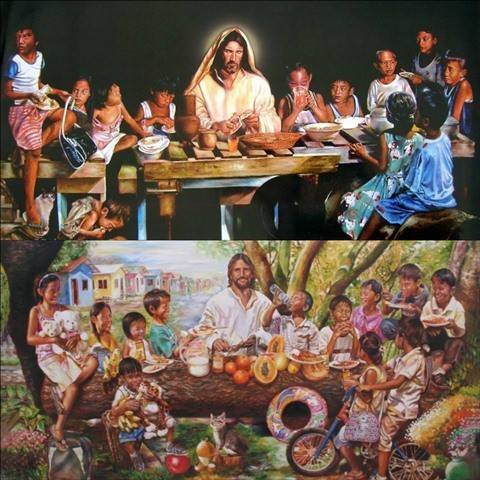
Earlier we saw how Joey found 12 children in poor districts of Manila . After treating them with meals, Joey took their pictures and retreated to his studio to start working on the painting. Which turned out to be a very thought provoking painting “Table of Hope”. It was a hope for better future of those Kids portrayed on canvas by Joey who was very sick with a life threatening Kidney disease.
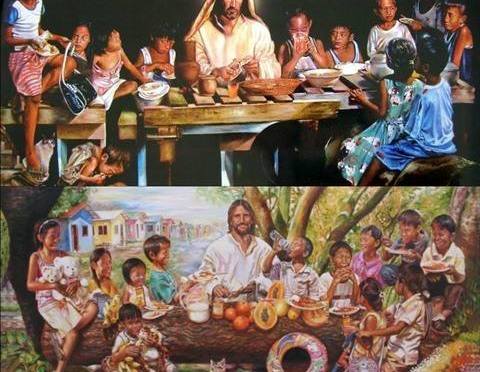
The story of those kids didn’t ended with that painting, it continued with one more master piece ,Joey not only hoped for a better future of those 12 kids but he actually created a better future for those slum kids. Three years later, in 2008, he successfully helped each kid with secured shelter at a Gawad Kalinga village for them. They all have a better life now. This inspired him to create “Table of Love,” another version of the Last Supper with Jesus Christ dining with the same 12 street children but this time these Kids are happy and smiling with their homes as the background.
We all think about the miserable life of others, we hope the best for them but we resist taking the step to achieve what we hoped for.
Artist Joey passed away 4years back but with his life, with his painting “Table of Hope” the artist genuinely hoped for a better future for those kids and with the second painting he achieved what he hoped for, filling the life of those kids with Love.
Christ who showed this world that He who Himself is Love, is with us. May God help us to hope a better life for everyone and to achieve what we are hoping for with Love and care.
Shalom+++
Lenten thoughts from a painting
I have seen the copy of this painting twice, once at Bishop House, diocese of Mumbai then again here in the office of Abouna Dawood. Today thought of sharing the inspiring story behind this powerful painting. Must read……..
This painting was made by a Filipino artist Joey Velasco, like many of his painting this one was also inspired by what he saw in the streets of Manila. In his search for inspiration, Joey found 12 children in poor districts of Manila . After treating them with meals, Joey took their pictures and retreated to his studio to start working on the painting. He describes that
“It was they who touched my soul. Through them, God spoke to me and moved me to paint their stories and tell others about their lives.”
The result was a thought provoking painting of the Last Supper, with Christ breaking bread with street children. The name of this painting is Hapag ng Pag-asa (Table of Hope). Below is the brief explanation of this painting,
+The young girl standing at the extreme left, is 10-year-old Nene. Joey met her at the Manila North Cemetery, where she and her family lived among the graves.
+Onse, 9 year old, sits at the table, his plate cleaned to the last crumb, he listens to Jesus to feed his other hungers.
+The child, who scavenges with a push cart, has a father addicted to drugs and a mother who works as a strip dancer.
+Itok, another scavenger who at 11 is the family breadwinner, sits at the right hand of Jesus. This child spent time in jail after being caught in a number of robberies.
+Velasco placed a small boy under the table eating the fallen scraps with the cats. The artist explained, “The skinny child is not one of the hungry kids who roam our busy streets at night. He is “an imaginary symbolic figure” who in the past “had satisfied himself with unnecessary food, (but) now finds himself under the table seeking spiritual crumbs.”
+ The children featured in the painting are no longer in the areas where Velasco originally found them. Through the help of an organization to shelter homeless, these 12 children and their family have new home in Quezon city.
Reminds me the words of Jesus “Let the little children come to me, and do not hinder them, for the kingdom of God belongs to such as these.”
In this painting every single face around Jesus and their story gives a clear strong message. Children are fragile, like street kids most of them are abandoned and neglected by the society. Like Joey Velasco we must also see the agony of the kids around us , to think about how they will be motivated, go on with their life, and be in the right path .
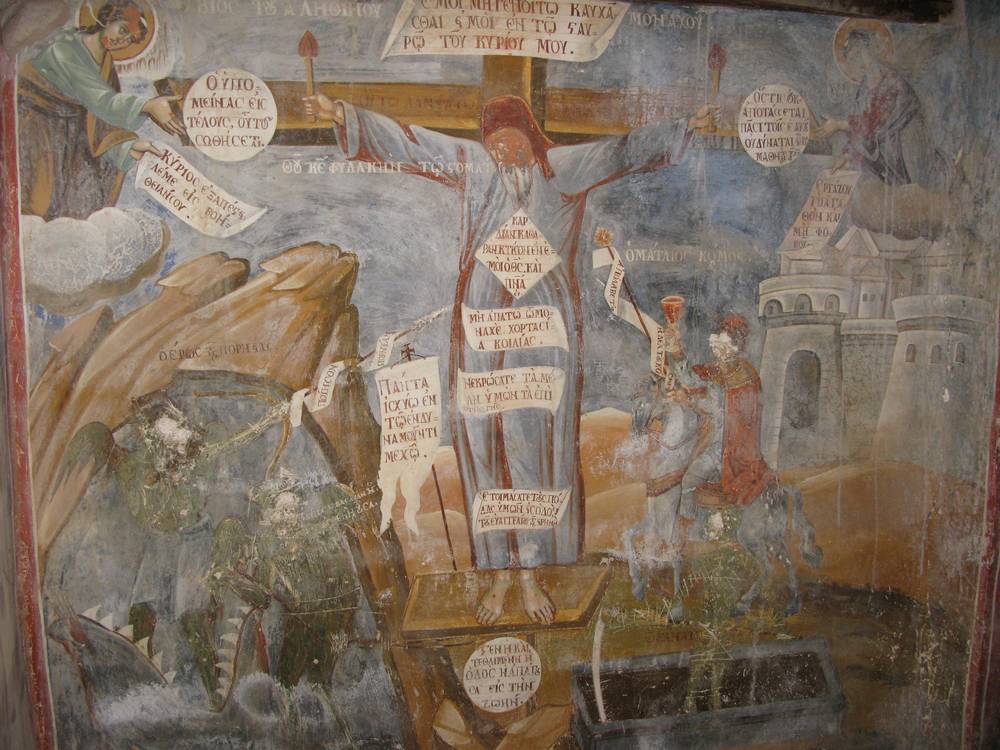
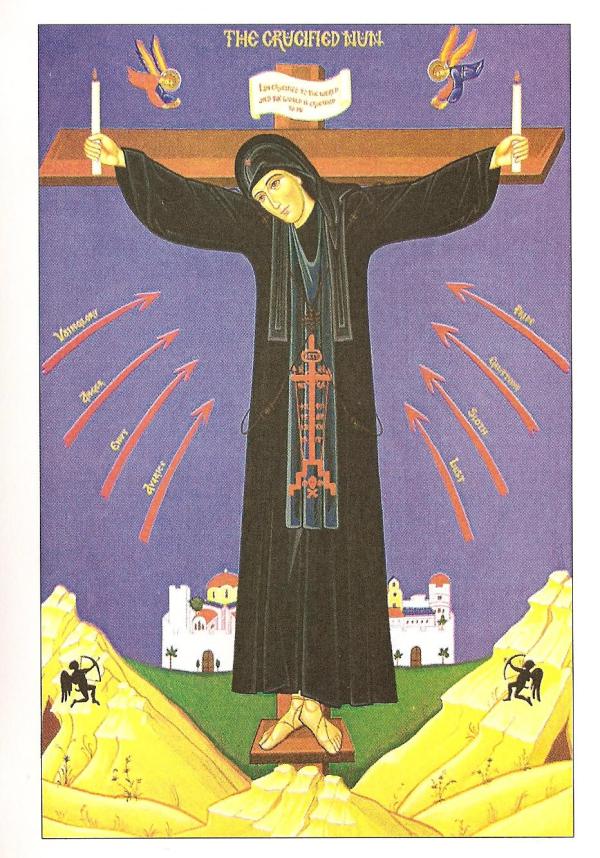
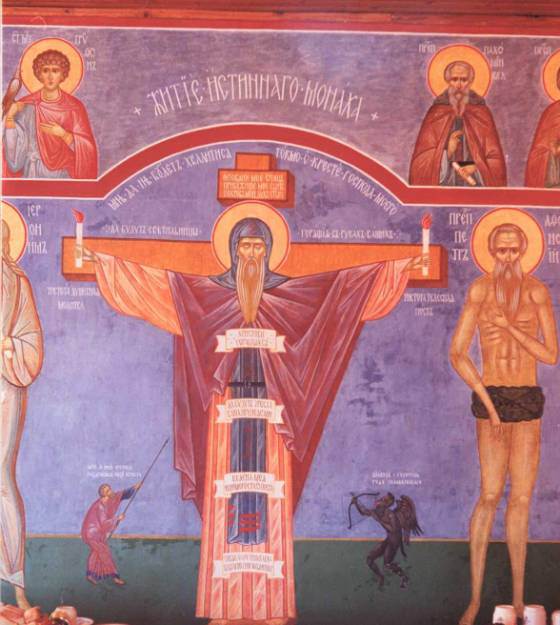
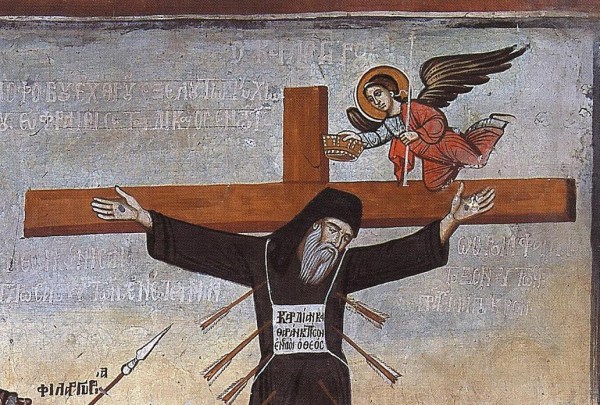
An 18th Century Monk/Iconographer Dionysius of Fourna wrote a manual for Iconographers. One such description is about “The life of a true monk” occupies a prominent part. It represents the true Glory of every monk, of every faithful person and how it is related to voluntary cross-bearing and crucifixion. Below is the English text from “Painter’s manual” by Dionysius along with some Icons/Frescoes depicting it.
“+Draw a monk crucified on a cross, clothed in a tunic and a monk’s hat, barefoot and with his feet nailed to the footrest of the cross; his eyes are closed and his mouth shut. Just above his head is this inscription: “Set a watch, O Lord, before my mouth; keep the door of my lips”.
+In his hands he holds lighted candles, and next to the candles is this inscription: “Let your light so shine before men, that they may see your good works, and glorify your Father, which [is in heaven]“.
+On his chest he has a tablet like a hassock, which says: “Create in me a clean heart, O God, and renew a right spirit within me.”
+On his stomach is another scroll, like a title, with these words: “Do not be led astray, O monk, by a full belly.”
+Lower down on his body is another scroll which says: “Mortify your members which are upon the earth.”
+Lower down again, below his knees, is another scroll which says: “Prepare your feet in the way of the Gospel of peace.”
+Above, in the top arm of the cross, make a title nailed on with this inscription: “God forbid that I should glory, save in the cross of my Lord.” On the three arms of the cross make seals, and in the right one write this: “He that endures to the end shall be saved.” In the left-hand one: “He who does not renounce everything is not able to be a disciple of Christ.” On the seal above the footrest of the cross: “Strait and narrow is the way that leadeth unto life.”
+To the right side of the cross paint a dark cavern with a big dragon in it coiled up, and write: “The all-devouring Hell.” Over the mouth of the dragon is a naked young man with his eyes bound by a cloth, he holds a bow and shoots at the monk. On his bow is a scroll which says: “Maker of lust.” Write this inscription above him: “The love of harlotry.” Above the cave put many snakes and write: “The cares.” Near to Hades put a devil dragging at the cross with a rope and saying: “The flesh is weak and cannot resist.” At the right-hand end of the footrest put a spear with a cross and a flag and write on it: “I can do all things through Christ Who strengthens me.”
+To the left of the cross make a tower with a door, out of which comes a man sitting on a white horse, wearing a fur hat and robes woven with gold and trimmed with fur. In his right hand he holds a cup full of wine and in his left a lance on the end of which is a sponge; a scroll is wrapped around the lance which says: “Take delight in the pleasures of the world.” He shows them to the monk. Write this inscription above him: “The vainglorious world.” Below him put a grave out of which Death is coming holding a large scythe on his shoulder and an hour-glass in his hand, and looking at the monk. Above him is the inscription: “Death and the grave.”
+Below the hands of the monk on either side put two angels holding scrolls; write on the scroll of that on the right: “The Lord has sent me to help you.” And on that on the left: “Do good and fear not.”
+Above the cross represent heaven with Christ in it, holding the Gospels on his breast open at the words: “Whosoever will follow me, let him deny himself, and take up his cross, and follow me.” In his right hand he holds a king’s crown, and in his left a crown [of flowers]. Below him to either side are two angels, looking at the monk and showing him to Christ, and holding between them a long scroll with these words: “Fight that you may receive the crown of righteousness, and the Lord will give you a crown of precious stones.”Then write this title: The life of the true monk.”
Unlike most of the Icons, this particular depiction is for contemplation rather than for veneration. It makes a very striking icon, because the monk/nun is in place of Christ. This Icon provides a similar contemplation like the noble literature of “Ladder of Divine Ascent icon”. Looking forward to learn and write more about Icons from “Ladder of Divine ascent “ and “Crucified Monk”.






 Graphē