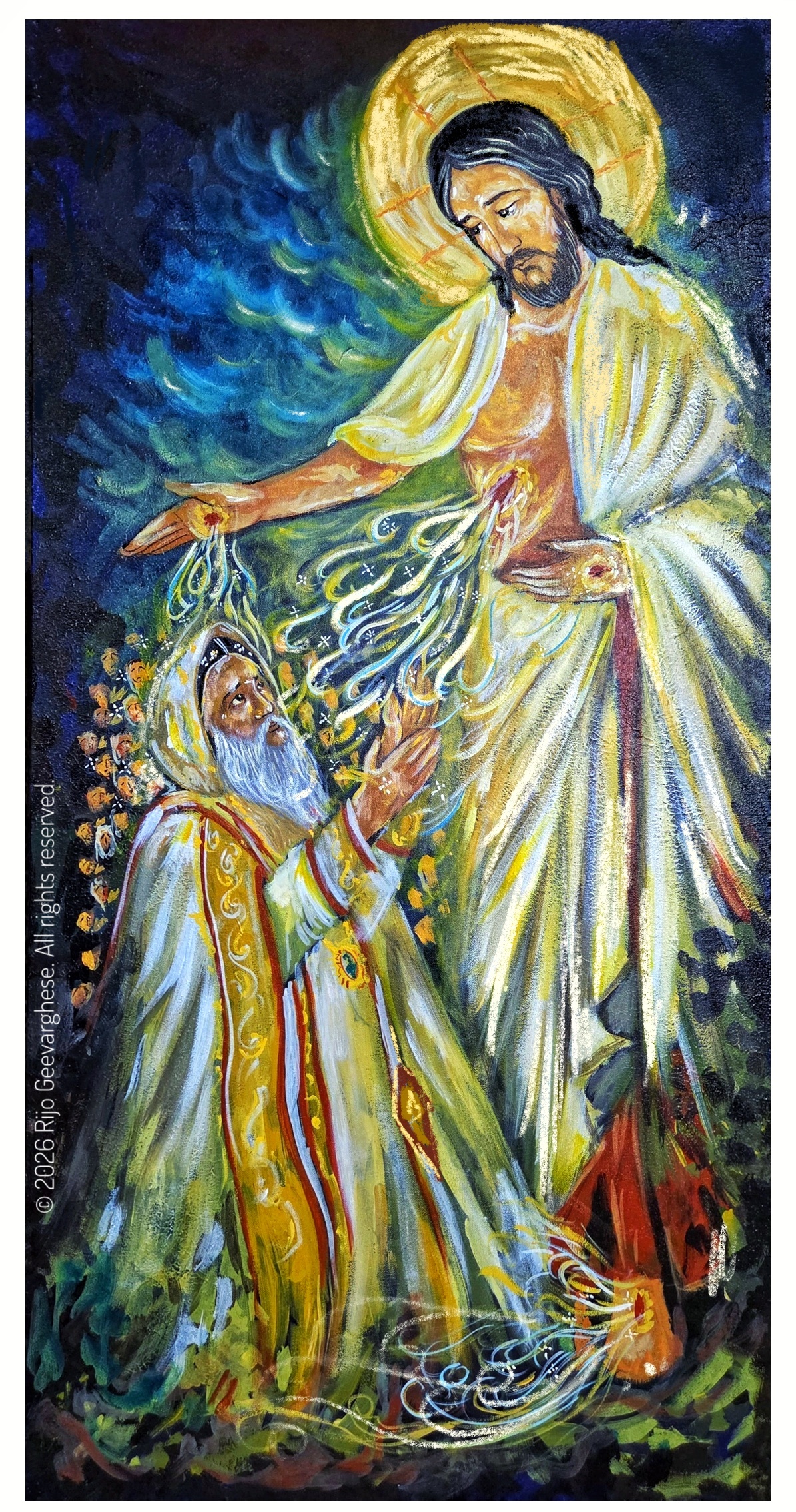
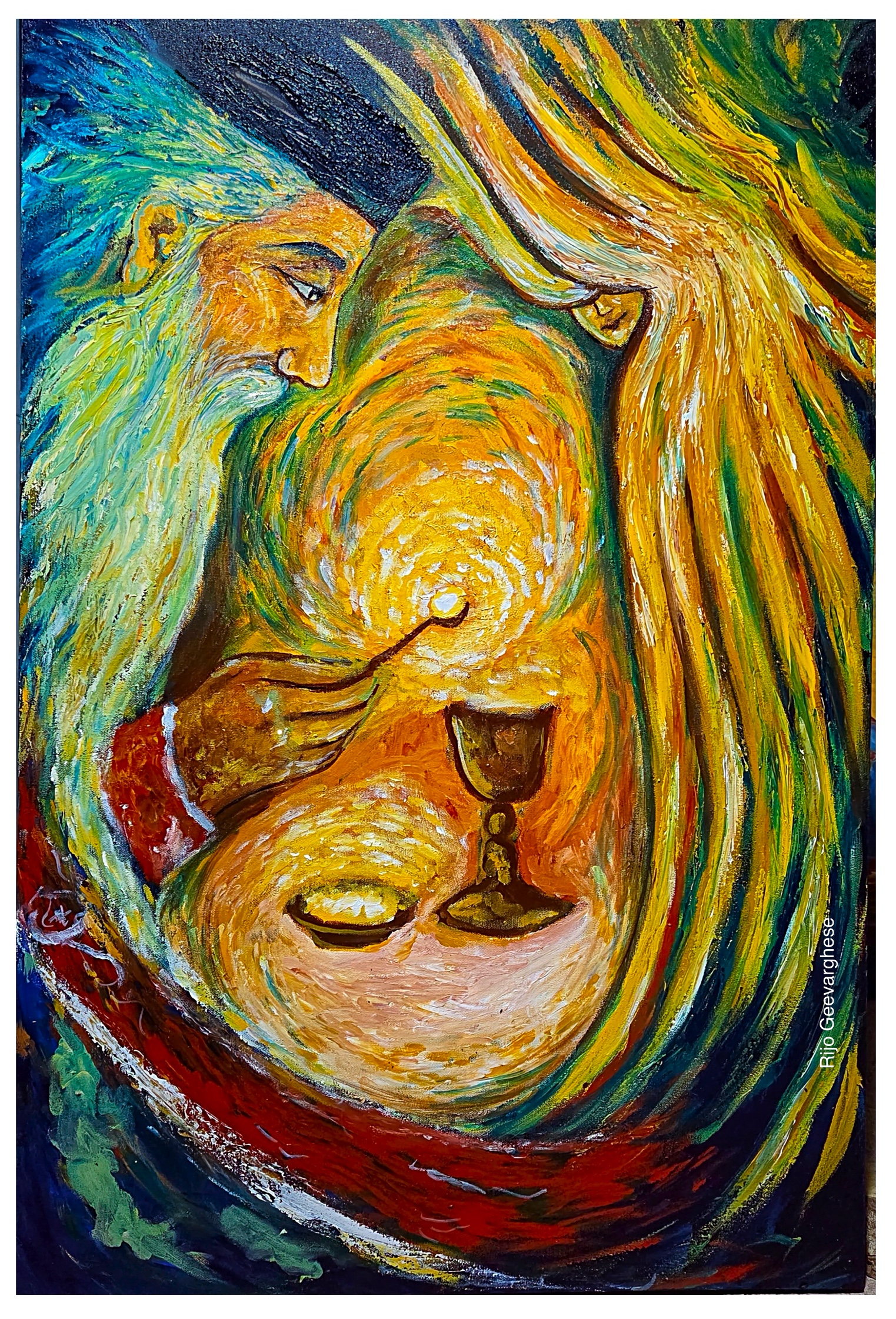
As the Holy Church prepares for the Holy Mooron Consecration (മൂറോൻ കൂദാശ | Holy Chrism), I share this liturgical painting.
This work is inspired by a hymn from the Evening Prayer (Kymtho):
“The scent of Chrism, O Lord, rises from Your wounds”(നിൻ മുറിവുകളീന്നേറ്റേൻ മൂറോൻ…)
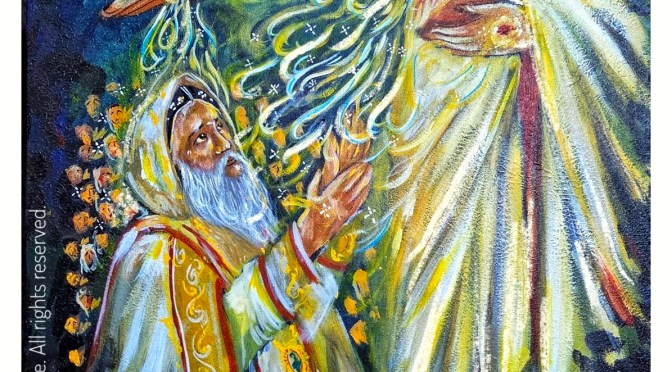
In this painting, Christ stands as the eternal source of grace. From His holy wounds flows not blood alone, but the fragrant mystery of the Mooron—the life of the Spirit poured out for the Church.
As St. John Chrysostom teaches, “the side of Christ is the beginning of all the Holy Mysteries of the Church” (Homilies on John 85). From that pierced side flows the life of the Church.In the painting below, the Catholicos, the shepherd of the Church, stands with open hands—not to take, but to receive.
What is given from Christ becomes the life of the Church. From the wounds of Christ – to the hands of the shepherd, and from the shepherd to the faithful—the mystery continues.
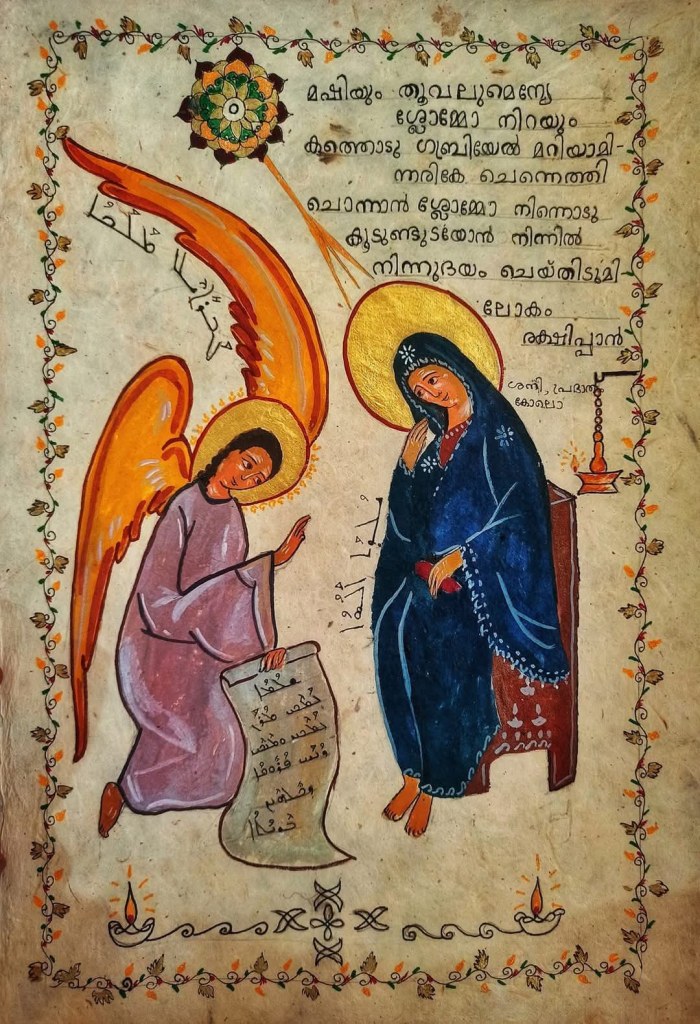
ചൊന്നാൻശ്ലോമ്മോ നിന്നോടുകൂടുണ്ടുടയോൻനിന്നിൽ നിന്നുദയം ചെയ്തിടുമീ ലോകം രക്ഷിപ്പാൻ
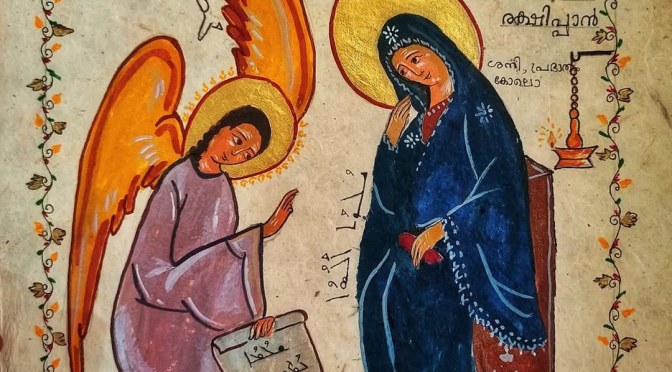
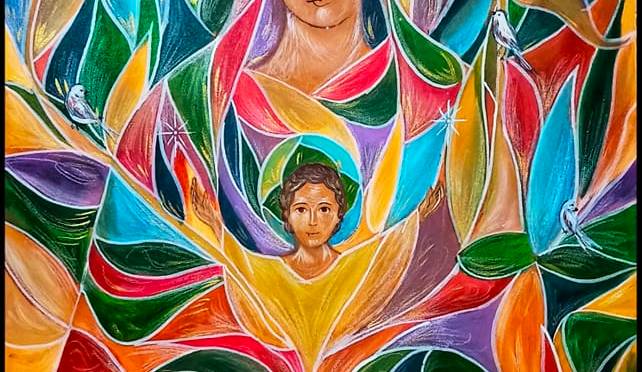
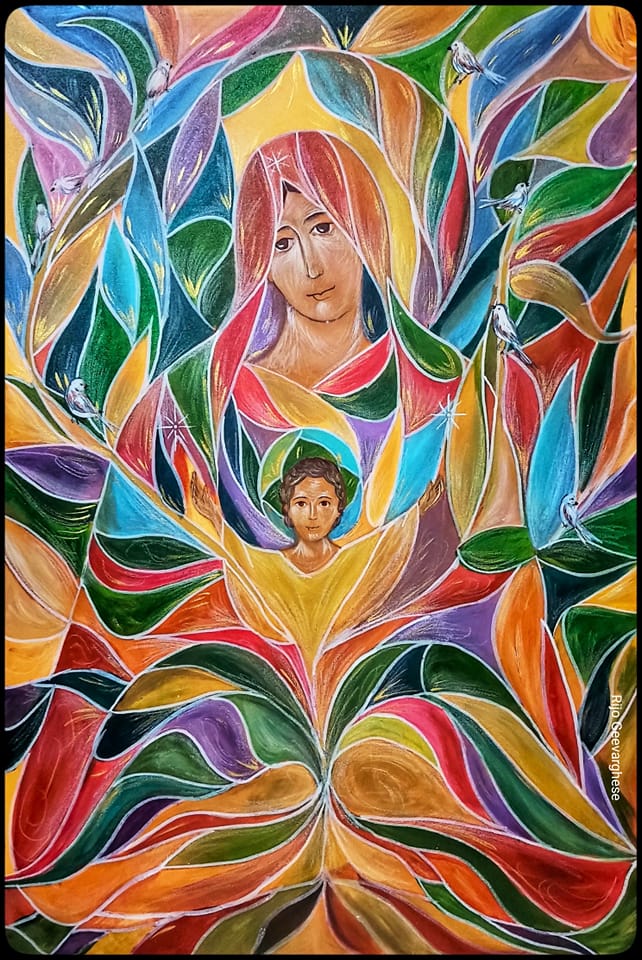
The Annunciation reveals a moment where eternity touches time—where divine humility meets human openness.Gabriel’s greeting becomes the doorway through which salvation enters the world. In Mary’s quiet “yes,” creation finds hope, and the long-awaited Redeemer steps into history.
This illuminated icon seeks to reflect that sacred wonder.
This icon is done on a Hand-made Batik sheet, it’s an illuminated-text Icon by the unworthy hands of
Hybrid Mode: Online lectures with a mandatory offline residential practical session.
Hybrid Mode: Online lectures with a mandatory offline residential practical session.
This six-month Certificate Program in Sacred Art andSpirituality forms students to understand, practice, and live the tradition of Orthodox iconography. It is an intensive course covering history, symbolism,philosophical and theological approaches, liturgical significance, andpractical studio training. The program seeks to bring together Orthodox faith,culture, and creativity in the service of the Church.
A genuine desire to learn Orthodox Iconography and deepen spiritual life.
Ability to attend both online lectures and the mandatory residential practicalsession at Sopana Orthodox Academy, Mar Baselios Dayara, Njaliakuzhy, Kottayam.
Language: Basic proficiency in English or Malayalam (the medium of instruction may includeboth).
Subjects
1. History of Art & Art in the Church
2. Foundation of Sacred Art & Theology
3. Iconography & Symbolism
4. Art & Spirituality
5. Sacred Art in the Indian Context
6. Basic Skill Development
7. Practical – Writing an Icon
Credits·
Theory (1, 2, 3, 4, 5, 6): 12 credits.·
Practical Icon Writing (7): 4 credits.·
Total: 16 credits.
Proposed Course Calendar
January – May
Mode: Online
Schedule: Tuesdays, 8:00 pm – 9:00 pm (twice a month)
There might be guest lectures.
Focus: Theory modules—History, Symbolism, Theology, Spirituality.
May – June (7-day Residential Block)
• Mode: Offline at Sopana Orthodox Academy, Mar Baselios Dayara, Njaliakuzhy, Kottayam.
• Focus: Practical Icon Writing Workshop and spiritual immersion.
Late June
• Mode: Online
• Focus: Project submission, exhibition presentation, and final evaluation.
There will be a study tour to selected ancient Christian heritage sites as part of the program. Additional charges may apply depending on the location and logistics.
Important Points for Students·
This is a six-month intensive formation program in sacred art andspirituality.
The workshop will be in the last week of May or the first week of June.Dates will be informed by February.
Regular attendance for online weekend sessions is required.
No prior art experience is needed, but dedication and consistentpractice are expected.
The residential practical session in May/June is compulsory forcertification.
All assignments should be submitted on time.
The goal is not only artistic skill but also inner transformation and growthin faith.
For more details, contact Fr. Rijo Geevarghese (Coordinator, Sacred Art Wing, Sopana Orthodox Academy).
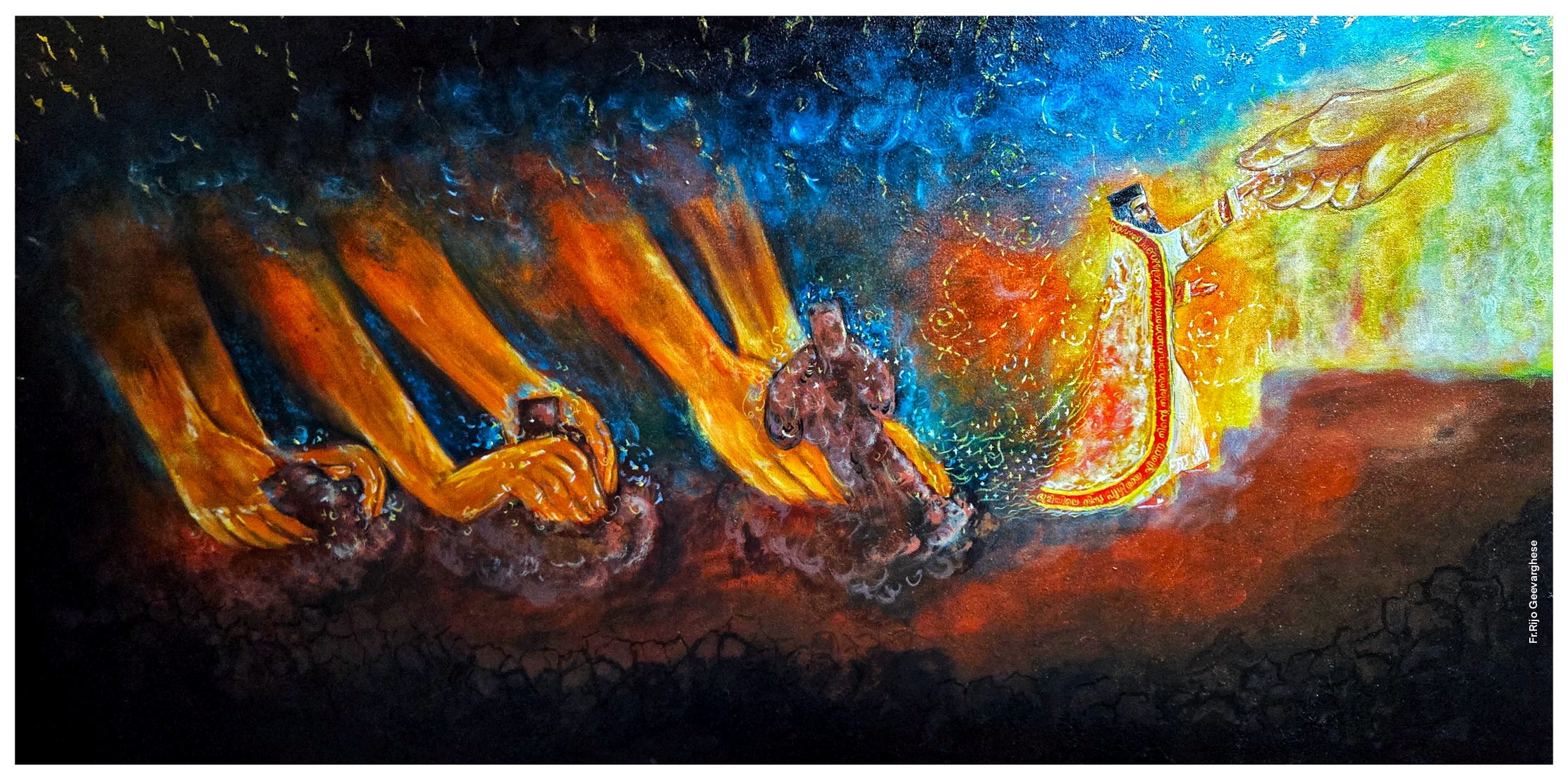
A Visual Contemplation on Priesthood from a Liturgical Reading
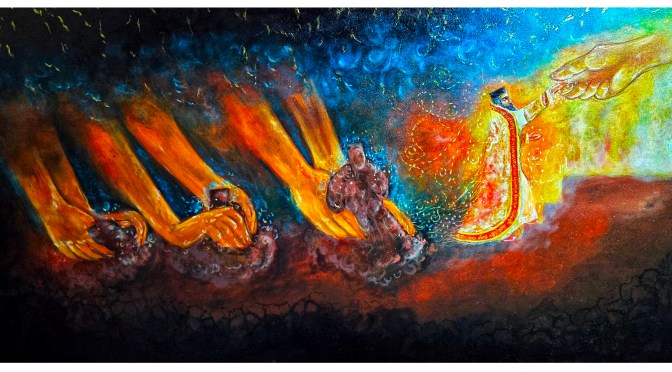
The priest stands at the altar clothed in light, yet at his very core he remains the fragile dust of the earth. This paradox – dust and glory, earth and heaven – lies at the heart of the Orthodox vision of priesthood. The painting “Priest, Raised from Dust of Earth” seeks to visually contemplate this mystery through the lens of liturgical texts: the Sedro reading from the Holy Qurbana Taksa, the Funeral Service of Priests, and a Qolo from the Friday Evening (Ramsho) prayers.
1. The Dust of Creation and the Hands of God
On the left side of the painting, we see the divine hands gathering the dust of the earth, forming the first human being. This recalls the hymn from the Funeral Service of Priests:“From the four directions the Lord took dust in His hand and created Adam in His own image.”
This tradition resonates both with the Syriac liturgy and with the Midrash Rabbah on Genesis, which tells us that God gathered dust from the four corners of the earth so that every place might claim humanity as its own. The image proclaims that the priest, like Adam, is drawn from creation itself, embodying the fragility and the universality of the human condition. He is nothing but dust – yet dust touched and shaped by the very hands of God.
2. Priesthood as New Creation
The right side of the painting shifts the focus to the priest clothed in vestments, his hands stretched toward the heavenly hand that pours forth divine grace. This visual echoes baptism, where water is drawn from the four corners of creation to sanctify and renew. As St. Paul writes, “If anyone is in Christ, he is a new creation” (2 Corinthians 5:17).
Here, the act of God shaping Adam from dust parallels the act of God renewing humanity through sacramental grace. The priest himself becomes a participant in this mystery – not merely as an officiant, but as one who has himself been reshaped and reborn in Christ.
The liturgical Sedro(eighth) captures this paradox:“You have raised me, a despicable dust of the earth, to enter the dwelling of Your divine mysteries, and lifted me to the Holy of Holies of Your Majesty.”
3. Priesthood Between Dust and Glory
The Qolo from Friday Evening (Ramsho) deepens this tension:“You created me and placed Your hands upon me…” (സൃഷ്ടിച്ചെന്മേൽ നിൻ കൈവെച്ചു).
The imagery affirms that priesthood is not self-derived but wholly a gift. It is God who fashions, raises, and sanctifies the human being from dust, clothing him with the radiant vestments of service. Even in death, as proclaimed in the Funeral Service of Priests, the priest is remembered as one who bore the imprint of both creation’s frailty and heaven’s glory.We are dust – yet in Christ, dust is raised into glory.
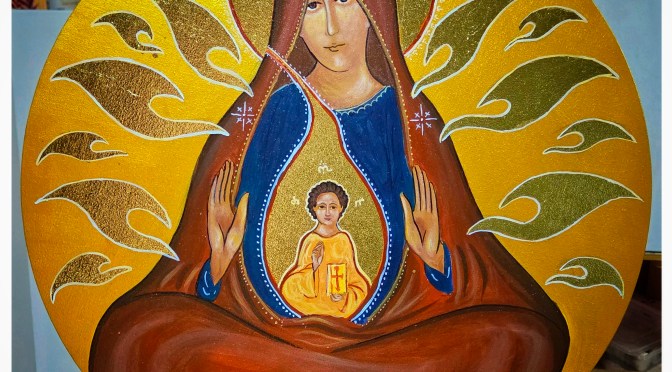
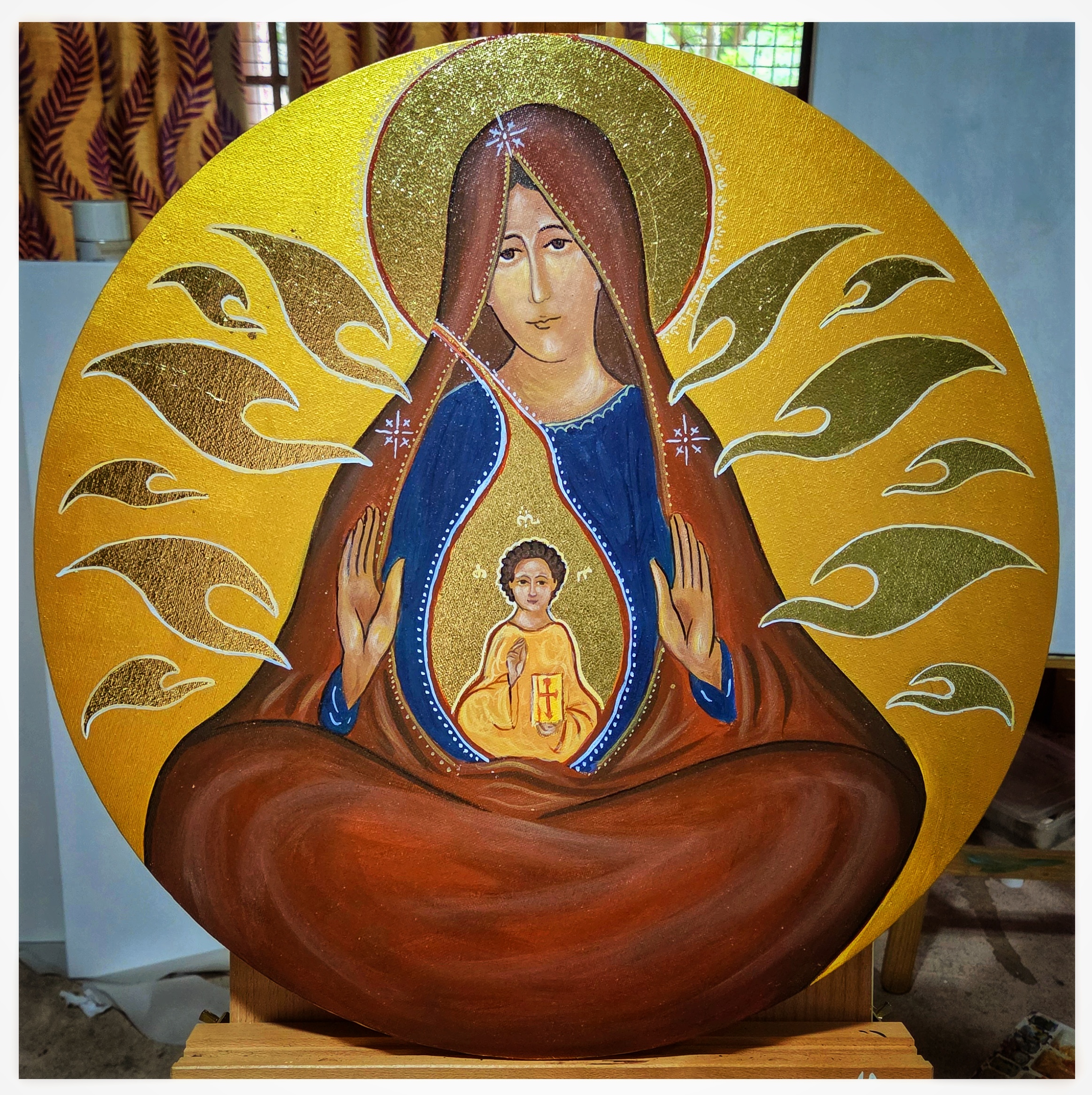
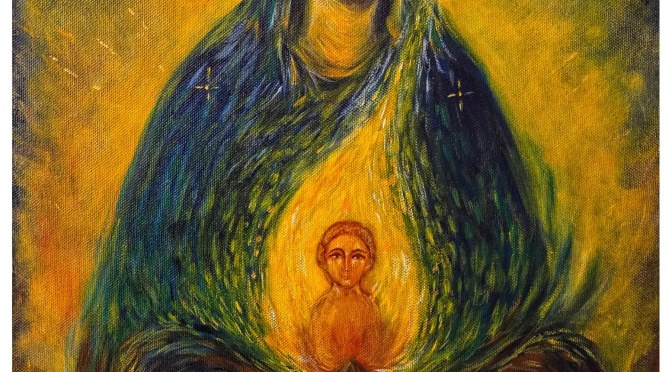
This icon titled “Mother of the Light” (Emme d-Nuhro or Emme d’nuhro) presents Mother Mary as a serene, luminous figure. From within her radiates the eternal flame of Christ, depicted here as a “diya” or “deepak”, the traditional oil lamp of Indian culture.
The flame within her is not merely a source of illumination but becomes the source of her own radiance. It reflects the profound theological truth that the holiness of the saints (symbolized by the halo) is not separate from Christ but born of Him. Mother Mary’s light is Christ’s light, dwelling within her, transforming and glorifying her.
According to St. Ephrem, the more light that enters the eye, the more the eye is enabled to see (Which is basis of optics). He applies this to the inner eye, for which faith takes the place of light: the greater the faith, the more the interior eye perceives the spiritual world. In the case of Mary, it is Christ Himself—the Light—who enters her:St Ephrem writes,
As though on an eye,the Light settled in Mary,it polished her mind,made bright her thought,and pure her understanding,causing her virginity to shine. (Hymns on the Church)
This theological vision resonates with the imagery of this Icon. The deepak’s glow is not external but proceeds from the divine Light who dwelt within her. As St. Jacob of Serugh beautifully proclaims:
“O Mary, you are the house of beauties and the storehouse of treasures, the Mother of the Sun, who generates unlimited light.”
In this image, the light of the deepak rises and extends outward, forming a radiant glow that encircles her—a visual testament to the intimate mystery of the Incarnation, where the uncreated Light takes flesh within her, making her truly the Mother of Light.
Fr. Rijo Geevarghese, Diocese of Ahmedabad Sopana Orthodox Academy
In Orthodox tradition, Mother Mary and the virgin birth of Christ are expressed through rich typologies in Christian tradition. I earlier tried to cover some of them in my Channel (link below).
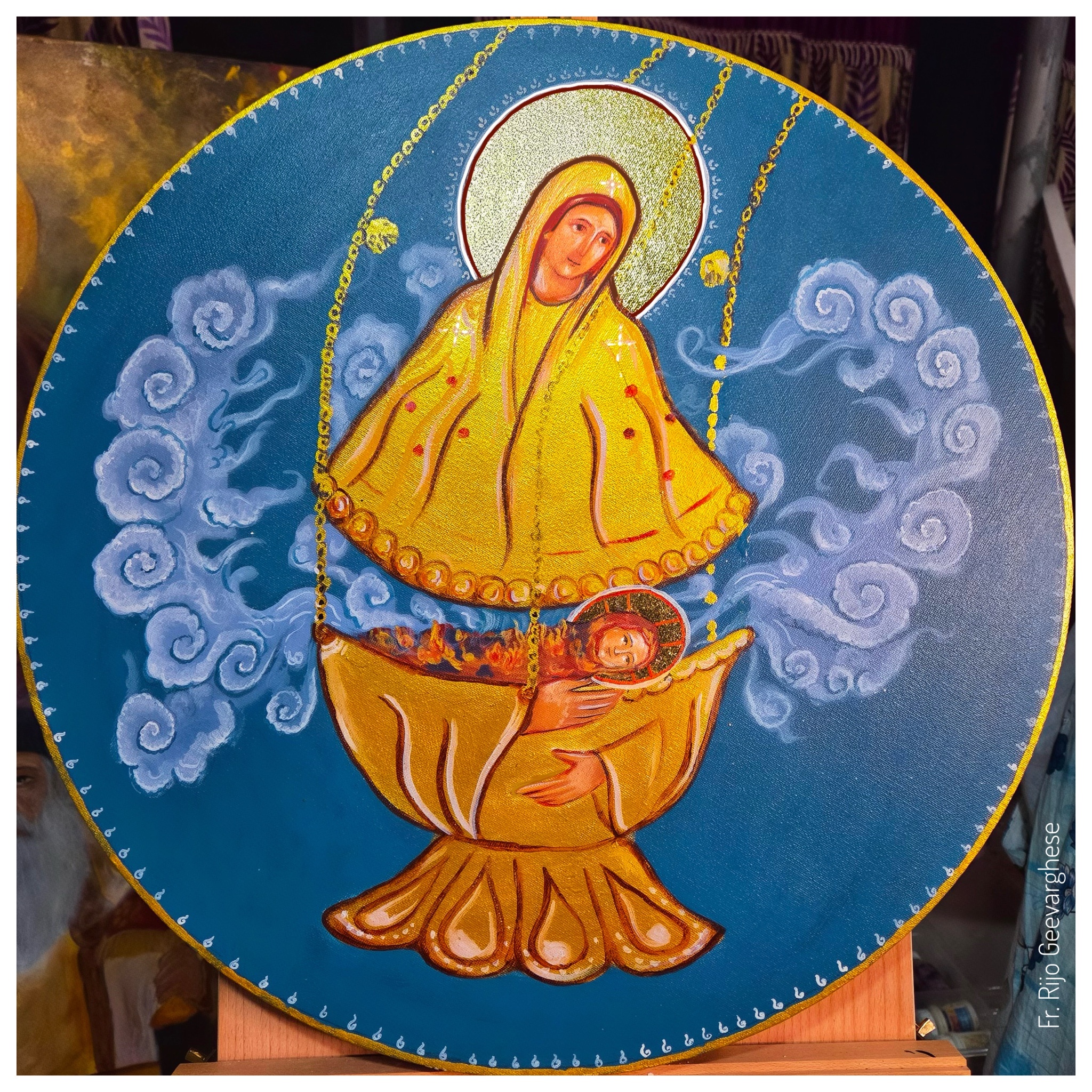
Each typology reveals an aspect of the mystery of the Incarnation.One profound typology is that of Mother Mary as the Golden Censer. Sharing an Icon of Mother as the Golden censer. Her womb is called the holy censer because it bore the living burning coal —Christ Himself.
Though its a familar typology in Orthodox church, I found this imagery recently in the readings of Feast of Dormition.
Here are three of them,Malayalam: “നിർമ്മലകന്യകയുടെ പരിശുദ്ധ ഗർഭപാത്രമാകുന്ന പാവനധൂപകലശത്തിൽ വയ്ക്കപ്പെടുകയും”.
English: Christ was placed in the holy censer, which is the pure womb of the VirginEvening Ethro , Dormition of Mother Mary
Another one says,
“സംയോജിപ്പിന്റെ ധൂപമായിത്തീർണ സ്വർണചെപ്പേ”.“O golden censer, who became the incense of union…” (Night Sedra, Dormition of Mother Mary)
Another connect her with the High Priesthood of Christ.
English:“O pure censer of the heavenly High Priest! Peace.” (Sedra reading, Dormition of Mother Mary.)
This icon of Theotokos as the Golden Censer proclaims Mary not only as the vessel but also Christ as the fragrance of life (msheeho, reeho hayutso)
As St Ephrem says, When eaten as the Bread of Life, Christ pervades whole of the believer’s being. When inhaled as the Fragrance of Life, Christ again penetrates throughout the believer.(Thoughts from Hymns on Nativity and Virginity) ജീവൻ്റെ സുഗന്ധമായി ശ്വസിക്കുമ്പോൾക്രിസ്തു വീണ്ടും വിശ്വാസിയിലുടനീളം വ്യാപിക്കുന്നു.
So too, in contemplating Mary as the Golden Censer, we see her not only as the vessel of divine fire but as the one who offers Christ, the life-giving fragrance, to the world.May this image invite us to breathe in Christ, who fills all creation with the fragrance of life.
This liturgical painting titled “Mother of Light” (Emme d-Nuhro or Emme d’nuhro in Syriac) presents Mother Mary as a serene, luminous figure. From within her radiates the eternal flame of Christ, depicted here as a diya or deepak, the traditional oil lamp of Indian culture.
The flame within her is not merely a source of illumination but also becomes the source of her own radiance. It reflects the profound theological truth that the holiness of the saints (symbolized by the halo) is not separate from Christ but born of Him.
Mother Mary’s light is Christ’s light, dwelling within her, transforming and glorifying her. As St Jacob of Serugh writes:O Mary, you are the house of beauties and the storehouse of treasures,the Mother of the Sun, who generates unlimited light.
In this image, the light of the deepak rises and extends outward, forming a glow that encircles her, a visual testament to the intimate mystery of the Incarnation, where the uncreated Light takes flesh within her, and in doing so, makes her the Mother of Light.
This liturgical painting is a reflection from the sedro reading of the preparatory service (Thuyobo), which states:
“We worship and thank You, O Creator of the worlds and the Framer of creation, the Blessed Shoot who sprang forth and came up out of the thirsty ground, Mary, and by the scent of Whose glorious sweet fragrance the whole earth was filled, and Who dispelled the foul odor of paganism from all the regions by His glorious teaching.”
Malayalam: ലോകസ്രഷ്ടാവും സൃഷ്ടികളെ ക്രമീകരിക്കുന്നവനും, മറിയാമെന്ന വരണ്ടഭൂമിയിൽ നിന്നു മുളച്ചു വളർന്ന് തന്റെ മഹനീയ സൗരഭ്യത്താല് ഭൂമിയെ മുഴുവനും നിറയ്ക്കുകയും തന്റെ വിശിഷ്ടോപദേശം മുഖാന്തരം സൃഷ്ടിയുടെ എല്ലാ ഭാഗത്തു നിന്നും തിന്മയുടെ ദുർഗന്ധത്തെ അകറ്റുകയും ചെയ്ത അനുഗ്രഹിത സസ്യമായുള്ളോവേ! നിന്നെ ഞങ്ങള് വന്ദിച്ച് സ്തുതിച്ച് സ്തോത്രം ചെയ്യുന്നു
This prayer reflects on the mystery of the Incarnation, drawing us to the image of Christ, the life-giving Shoot, who emerged from the pure womb of the Virgin. In His humility, He came forth from the barrenness of a fallen world, bringing life, hope, and salvation. His presence fills the earth with the sweet fragrance of grace, dispelling the foul odor of darkness.
Similarly, St. Ephrem the Syrian writes:
“Greatly saddened was the Tree of Life when it saw Adam stolen away from it; it sank down into the ‘virgin ground’ and was hidden, to burst forth and reappear on Golgotha. Humanity, like birds that are chased, took refuge in it, so that it might return them to their proper home. The Chaser (hunter) was chased away, while the birds that had been chased now hop with joy in Paradise.”
I am unsure if the Thuyobo prayer was adopted from this passage, but in this poetry, St. Ephrem expresses how the Tree of Life, which was hidden in the “virgin ground” after Adam’s fall, mirrors Christ being hidden in the womb of the Virgin Mary. He is then revealed through His birth and, ultimately, through His crucifixion on Golgotha. The imagery ties the role of Mother Mary in salvation history with that of the Tree of Life, suggesting that just as life was lost through Adam, new life comes through Christ, who is born of the Virgin.
Mother Mary, the “virgin ground,” stands at the center of this cosmic mystery. Just as the Tree of Life gives refuge and joy to birds, so too does Christ, born of Mary, become the refuge and hope of all humanity. Her role as Theotokos (God-bearer) is intimately tied to the restoration of life, underscoring her unique participation in the divine plan of salvation.
Fr Rijo Geevarghese Diocese of Ahmedabad Sopana Orthodox Academy
This liturgical painting, titled “A Divine Paradox,” is a visual contemplation drawn from a majestic moments in the Orthodox liturgy visually expreased in the post-communion hymn:
Fiery ones fear to gaze upon the Lord. You have seen Him in Bread and Wine on the Altar. If those clothed in lightning beheld Him, they would burn, Yet shameful dust stands unveiled when they consume Him.
അഗ്നിമയന്മാർ ആരെ നോക്കിൽ വിറച്ചീടുന്നു അവനെ മേശയിൽ അപ്പം വീഞ്ഞായ് നീ കാണുന്നു ആരെ മിന്നലുടുത്തോർ നോക്കുകിലെരിയുന്നൂടനെ അവനെ മണ്മയർ ഭക്ഷിച്ച് മുഖം തെളിയുന്നേറ്റം
The painting reflects the wondrous mystery that while the fiery angels dare not look upon the Lord, we—priests and laity alike—formed from dust, are invited to behold Him and partake of Him. The central image captures that sacred moment during the Holy Eucharist when the celebrant priest, lifting the Holy Mysteries with the Tharvodo (spoon), prays “I am holding You who hold the boundaries of creation.” (അതിർത്തികളെ വഹിച്ചിരിക്കുന്നവനേ! നിന്നെ ഞാൻ എടുക്കുന്നു)
This visual meditation is also inspired by other liturgical hymns and prayers—such as the eighth Sedra of the Holy Qurbana, where the priest confesses: “I, who am despicable dust” (ഭൂമിയിലെ നിന്ദ്യ പൂഴിയായ എന്നെ), yet is granted the grace to stand in the radiant presence of the Shekinah and receive the Divine Mysteries.
Such imagery found throughout the Orthodox liturgy, revealing the paradox of divine mercy, that the unworthy are made worthy to stand before the Holy.
Painted by the unworthy hands of Fr. Rijo Geevarghese Diocese of Ahmedabad
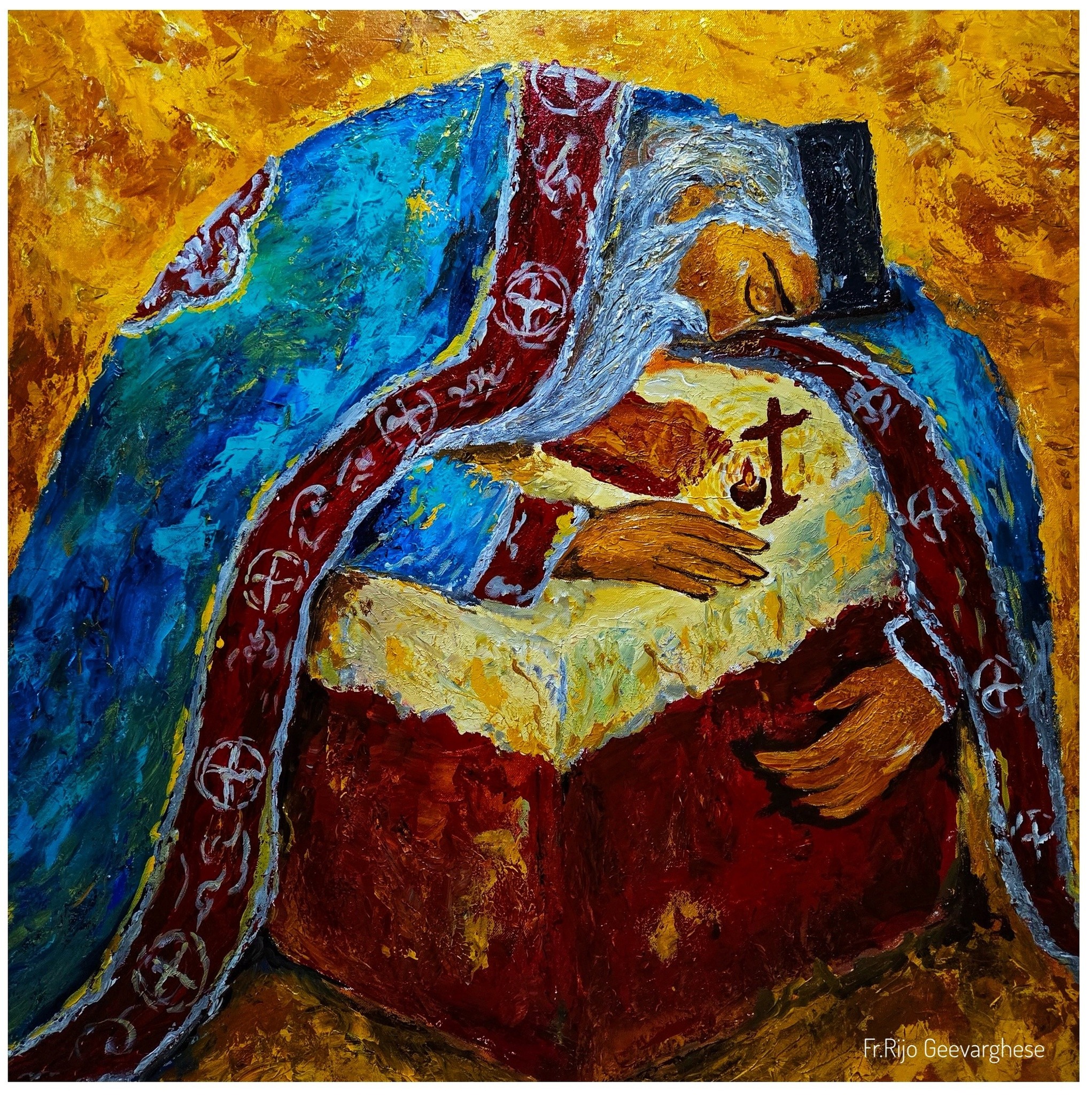
“Remain in Peace, O Holy Altar” “പരിശുദ്ധമായ ബലിപീഠമേ! സമാധാനത്തോടെ വസിക്കുക.”
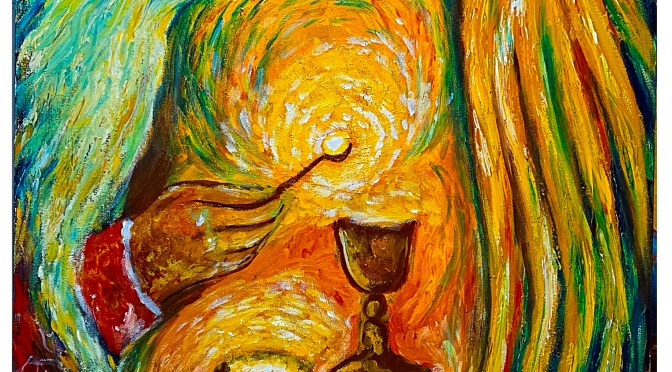
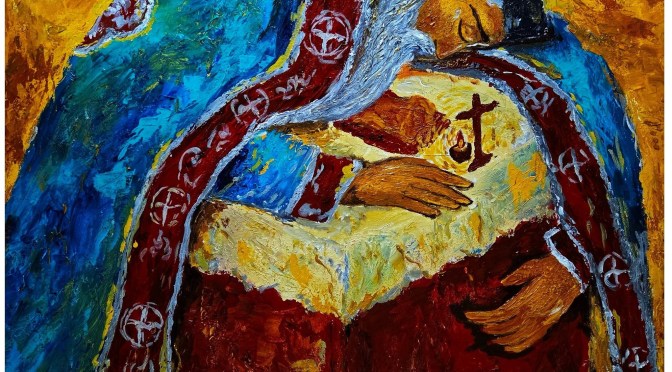
This liturgical painting, “The Final Farewell,” is a visual contemplation inspired by one of the most intimate moments in the Orthodox liturgy — the priest’s final farewell to the Holy Altar. It is a moment filled with sacred emotion and mystical significance, where the celebrant, having completed the Holy Qurbana, leans upon the altar, offering it a final kiss, a last farewell.
In the Orthodox tradition, as preserved in the Malankara Orthodox Syrian Church, the priest recites a farewell prayer that embodies both personal humility and eschatological hope:
“Remain in peace, Holy Altar of the Lord, for I do not know whether I shall return to you again.”
Malayalam: കർത്താവിന്റെ പരിശുദ്ധവും ദിവ്യവുമായ ബലിപീഠമേ! സമാധാനത്തോടെ വസിക്കുക. ഇനി ഈ സന്നിധിയിലേക്കു ഞാൻ വരുമോ ഇല്ലയോ എന്ന് എനിക്ക് നിശ്ചയമില്ല.
In this painting, I have attempted to capture this sacred farewell as the priest embraces the altar (Thronos). This gesture might not be rubrically seen, but it is a personal contemplation of what this moment signifies.
Here, the altar — a symbol of the Cross and the Tomb, the Table of Life, and the Throne of God — becomes both a companion and a silent witness to the priest’s life and ministry.
The final words of the priest profoundly express the living reality of the altar, which continues to intercede for the priest:
“Remain in peace, Holy and Atoning Altar… beg for me from our Lord Jesus Christ that my remembrance may not cease from you henceforth and forever.”
Malayalam: ജീവന്റെ മേശയാകുന്ന പരിശുദ്ധ ബലിപീഠമേ! സമാധാനത്തോടെ വസിക്കുക. ഇനി എന്നെന്നേക്കും എന്റെ സ്മരണ നിന്നിൽ നിന്ന് മാഞ്ഞുപോകുവാനിടയാകരുതേ. കർത്താവേശുമിശിഹായോട് എനിക്കുവേണ്ടി പ്രാർത്ഥിക്കണമേ.
I simply adore the beauty and depth of the Orthodox faith, where even a farewell to the altar becomes a mystical meeting place of love, memory, and eternal hope.


 Graphē