As per Indian Orthodox Church calender today(25th March) is the Feast of #Annunciation.
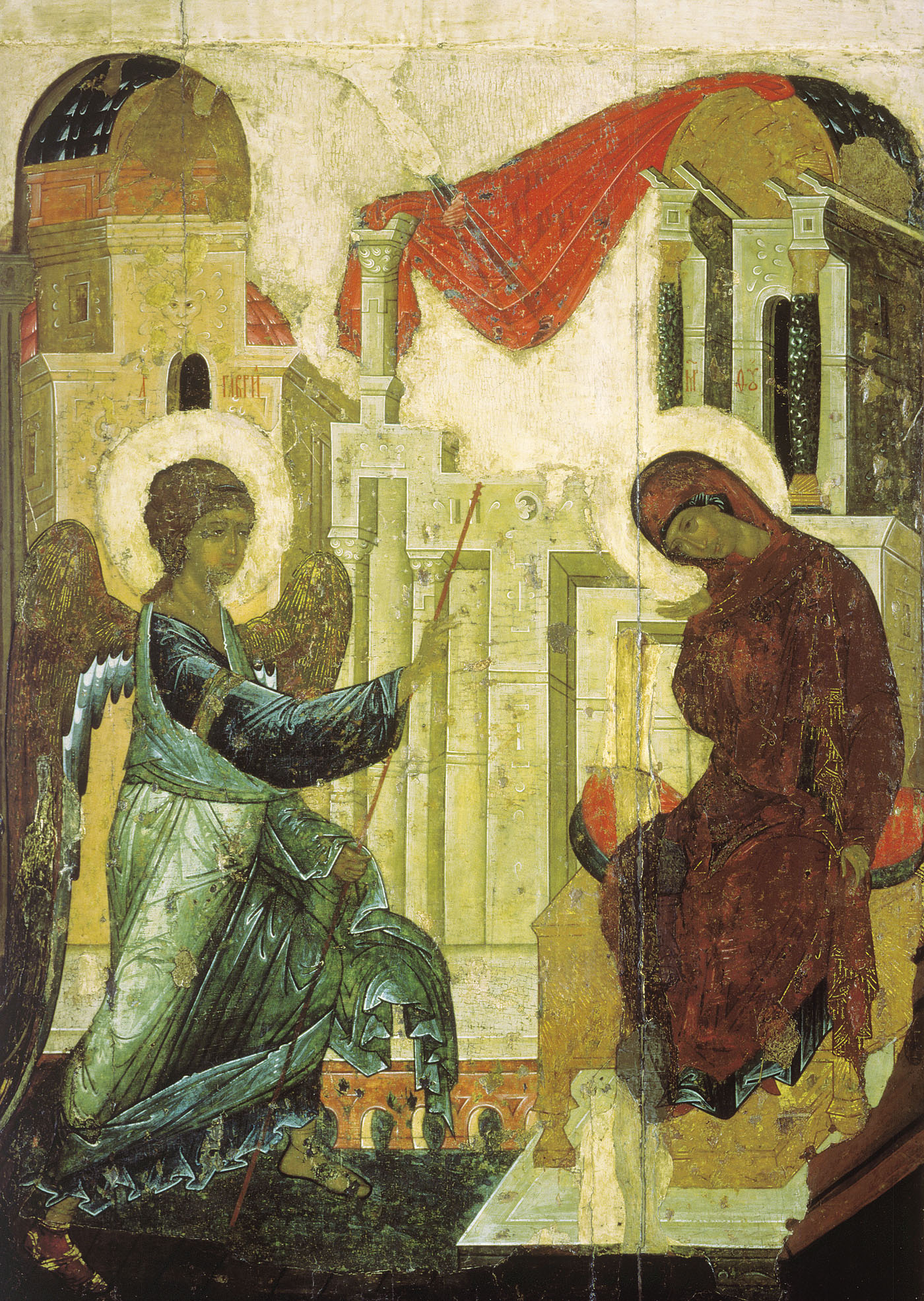
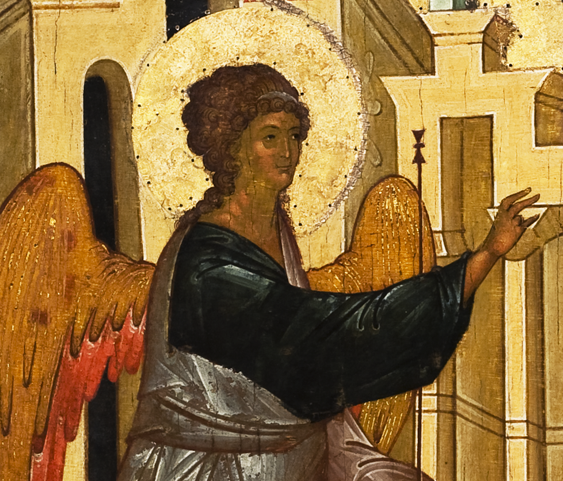
The Icon of the Annunciation reflects the deep inner joy. It is the joy of the Old testament promise being fulfilled through the incarnation of the Redeemer of the world.
“This day is the beginning of our salvation and the manifestation of the Eternal mystery. The Son of God becomes the son of the Virgin and Gabriel announce the good news of grace. Therefore let us also him cry to mother of God: Hail! Thou that art Full of grace; the Lord is with thee.”
Annunciation from vasilyevskiy by Andreï Roublev
+This Joy is also mentioned in colors. I will try to briefly explain the meaning behind the Icons depicting this joyful event.
+The majority of Icons depicts Archangel Gabriel in swift motion, he just descended from heaven and looking as a diligent servant intent on carrying out the task given by his Master. His legs are wide apart as though he came running.
+In his left hand he holds a staff, the symbol of a messenger, his right hand strongly moving toward Virgin Mary. He communicates to Her with the glad news from his Master.
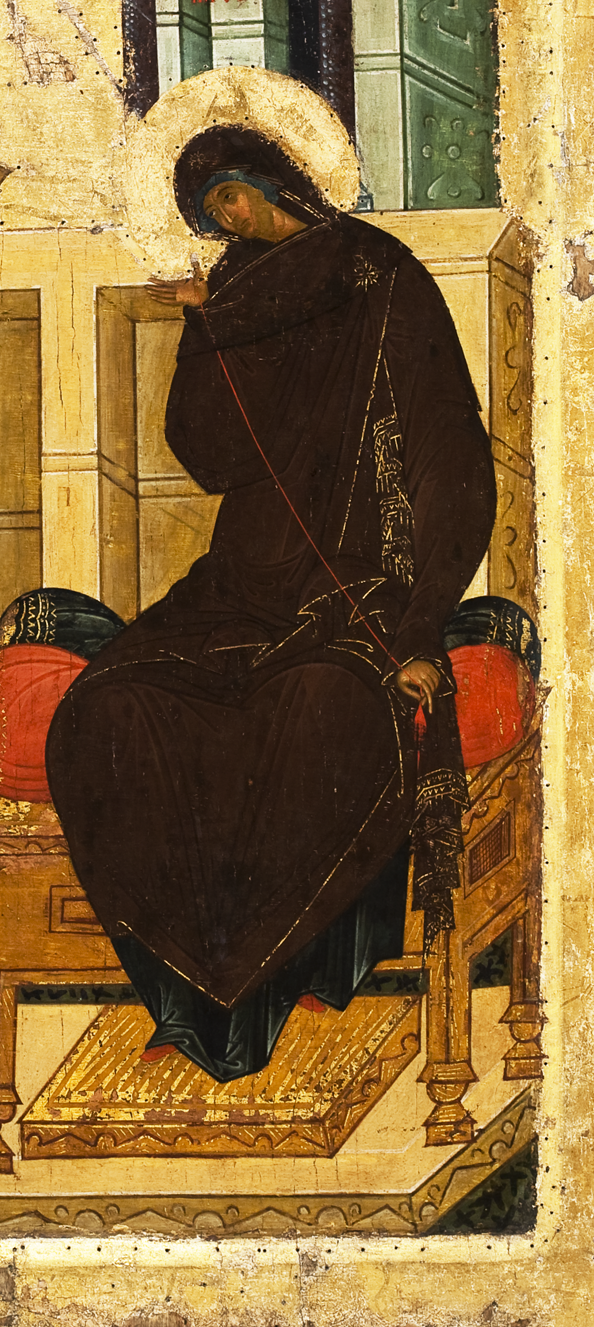
+The Mother of God is depicted either sitting, to emphasise her superiority over Angel or sometimes as standing , as listening to King’s command. As per the rule in Icons, she will be holding a yarn in Her Hands, rarely a scroll. These details are more mentioned in the Proto Gospel of St James.
+The Icon usually emphasizes three moments of the event.
1) The apparition of Angel, his greeting, amazed Holy Virgin. In this icon, in Her surprise, drops the yarn she was spinning.
2) The beginning of our salvation, with the beginning of the fall of man. The fall of our ancestor eve. There Eve along with Adam was casted out of Eden by an angel and here An angel comes in front of New eve for the beginning of our Salvation. Virgin at once does not accept this extraordinary message and recalls the Law of nature:”How this shall be , seeing I know not a man?”
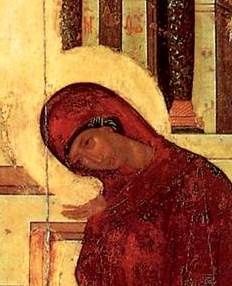
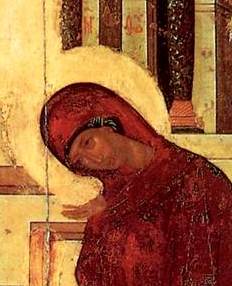
3) Finally, Mother of God bowing Her head , with her right palm to Her breast –the gesture of acceptance , of submission which has decided the fate of the World.
“Behold the handmaid of the Lord; be it unto Me according to thy word.”
+A traditional Iconographical sphere can be scene above , the symbol of high heaven and rays coming through it-the very action of Holy spirit. Same like the Icon of Holy Baptism.
+One of the most attractive feature is the compilation of Unity of action and will of God and His creature. As the festival speaks:
“The angel serves the miracle , the virgin womb receives the Son, the Holy spirit is sent down , the Father send his favor from high(sphere) and the transformation is made………”
#Orthopost
COMMUNION OF THE MOTHER OF GOD (Manna Makalkayi)
The Old Testament is filled with the stories of people and events that builds up the history of God’s chosen people, Israel. But we may often wonder, “What do all these stories mean?” We are also told that in Christ, the whole Bible holds together. How can we see our Lord Jesus Christ in the people, events, and prophecies of the Old Testament?
We can find many symbols representing Holy #Theotokos (Mother of God) in Old testament. These symbols are also mentioned in Madyastha Prarthanagal, Theotokias ( Coptic Midnight Praise), as well as other hymns chanted during the Divine Liturgy. Lets understand these symbols. #Orthopost
Mary , the noah’s ark
The Ark of Noah (Genesis 6-9) In his first epistle, Saint Peter writes that by Noah,
“…eight souls, were saved through water. There is also an anti type which now saves us – baptism” (1 Peter 3:20-21).
Saint Peter makes the connection between the event of Noah’s Ark, and the salvation in Christ through baptism. Noah, then, is a type of Christ, while the ark itself symbolizes Saint Mary. Just as the ark received Noah and became a means of saving the world, Saint Mary received God the Word and gave Him the human body by which He died for our salvation.
Icon with Jacobs ladder , above a depiction of Theotokos
The Ladder of Jacob (Genesis 28:10-17)
When Jacob fled from his brother Esau, he saw a vision of a ladder that was set upon the earth with its top reaching to heaven. The Lord stood above this ladder and the angels of God ascended and descended on it. The Lord stood above this ladder expressing His intent to descend on it. It is through His incarnation that the Lord descended from heaven and manifested Himself to us. The ascending and descending of angels point to their ministering to Saint Mary. Archangel Gabriel announced the birth of our Savior to Saint Mary (Luke 1:26-39). An angel also appeared to Saint Joseph telling him not to be afraid, but to keep Saint Mary at his house (Matthew 1:18-25). The angels also led the Holy Family as they fled from Herod (Matthew 2). Jacob’s ladder, therefore, is a type of Saint Mary, who tied heaven and earth together through the body of the Lord which was taken from her. She also intercedes on our behalf, carrying our prayers to our Lord in heaven.
Mary. the Burning bush(coptic Icon)
The Burning Bush (Exodus 3)
While tending to the flock of his father in law, Moses saw a burning bush. Although it was burning with fire, the bush was not consumed. The burning bush represents Saint Mary who carried the fire of the Lord’s divinity without her wo
A tabernacle
mb being consumed. After she gave birth to the Lord, Saint Mary’s virginity also remained sealed; that is, it was not consumed.
The Tabernacle
In the Book of Exodus, we read of the building of the Tabernacle. God spoke to Moses saying, “I will consecrate the tabernacle of meeting and the altar… I will dwell among the children of Israel and be their God” (Exodus 29:44-45). The Tabernacle is likened to Saint Mary, for the Lord dwelt in her.
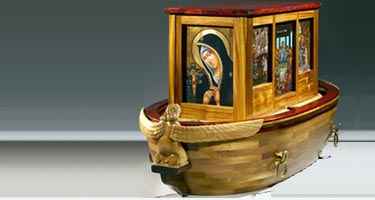
A replica of Golden pot of Manna
The Pot of Manna (Exodus 16)
After their escape from Egypt, the children of Israel ate manna in the wilderness for forty years. God spoke to Moses saying, “Behold I will rain bread from heaven for you…Take a pot and put an omer of manna in it, and lay it up before the LORD, to be kept for your generations” (Exodus 16:4,33). This pot was then kept in the Ark of the Covenant along with the tablets on which the Ten Commandments were written, as well as the rod of Aaron. Our Lord Jesus Christ also spoke to the Jews saying, “I am the bread of life. Your fathers ate the manna in the wilderness, and are dead. This is the bread which comes down from heaven, that one may eat of it and not die. I am the living bread which came down from heaven. If anyone eats of this bread, he will live forever; and the bread that I shall give is My flesh, which I shall give for the life of the world” (John 6:48-51). If the manna is a type of Christ, Who is the bread of life coming down from even, then the pot made of pure gold, which carried the manna, is a type of the pure Saint Mary, who carried the Lord in her womb.
“At your hand stands the queen in gold from Ophir” (Psalm 45:9).
This is why in her Icon, she is portrayed at the right hand of Christ our Lord and King.
Aaron’s blossoming rod
The Rod of Aaron (Numbers 17:1-8)
In Numbers 16, we read of Korah who rebelled against God, Moses, and Aaron and claimed for themselves the priesthood. The Lord wished to reveal to the people of Israel to which tribe the priesthood rightly belonged. Each tribe presented a rod and placed it in the tabernacle of meeting. Aaron’s name was placed on the rod of the tribe of Levi. The rod of Aaron sprouted and put forth buds, producing blossoms and yielding ripe almonds, as a sign that God had chosen the tribe of Levi. The barren rod which blossomed without planting or watering is a symbol of Saint Mary, who, being a virgin, brought forth the Fruit of Life. It is also a symbol of the human soul; although weak in itself, through God’s grace can bring forth the fruit of the Spirit.
The closed gate of temple, Jerusalem
The Gate of Ezekiel
Ezekiel the prophet said, “Then He brought me back to the outer gate of the sanctuary which faces toward the east, but it was shut. And the Lord said to me, ‘This gate shall be shut; it shall not be opened, and no man shall enter by it, because the Lord God of Israel has entered by it; therefore it shall be shut” (Ezekiel 44:1-2). This gate, which Ezekiel saw, is a type of Saint Mary. She is the gate through which the Lord entered. After she gave birth to Him, the gate remained shut; that is, she remained a virgin and no other man entered into her womb.
Censer
The Censer
The golden censer, used in Church worship, is also a type of Saint Mary. The live coal in the censer, according to Saint Cyril the Great, points to the unity of the divinity and humanity of Christ. Just as the censer carries the fiery coal, so also the Lord dwelt in the womb of the Virgin. The aroma of incense coming from the censer is likened to the sweet-smelling sacrifice of our Savior. As the church chants in the Hymn of the Censer, “The golden censer is the Virgin. Her aroma is our Savior.”
You prepared the world to receive You, now also purify our hearts to receive You always.We ask this through the intercessions of Your holy and pure mother, Saint Mary.
Amen.
*Do mail /comment, if you have any other symbols for Mother Mary.
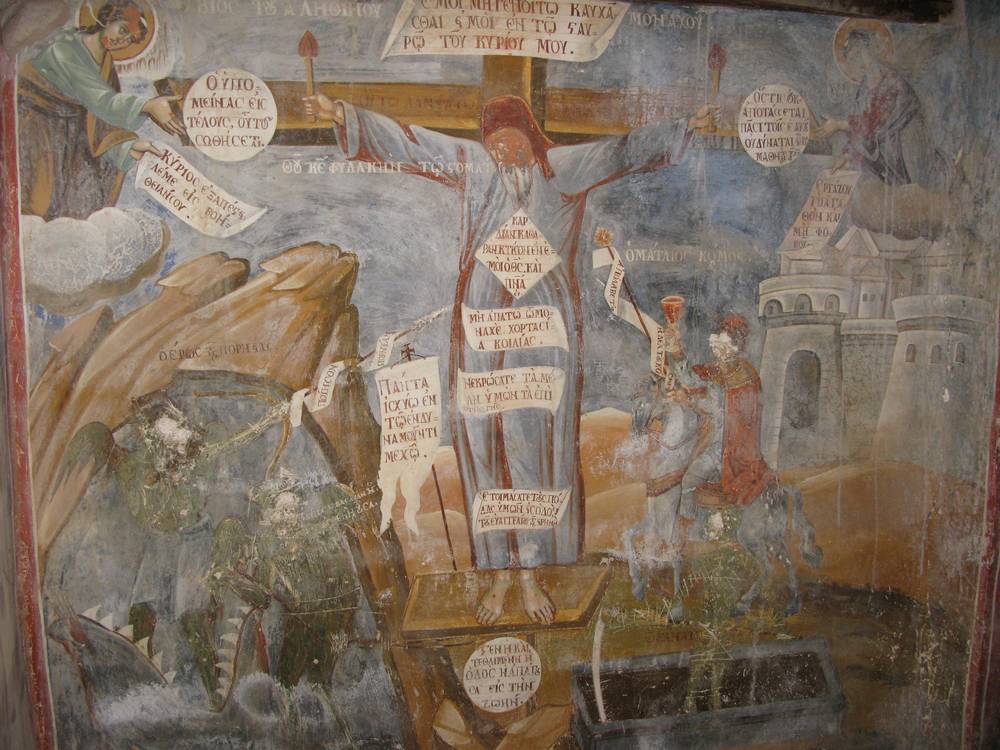
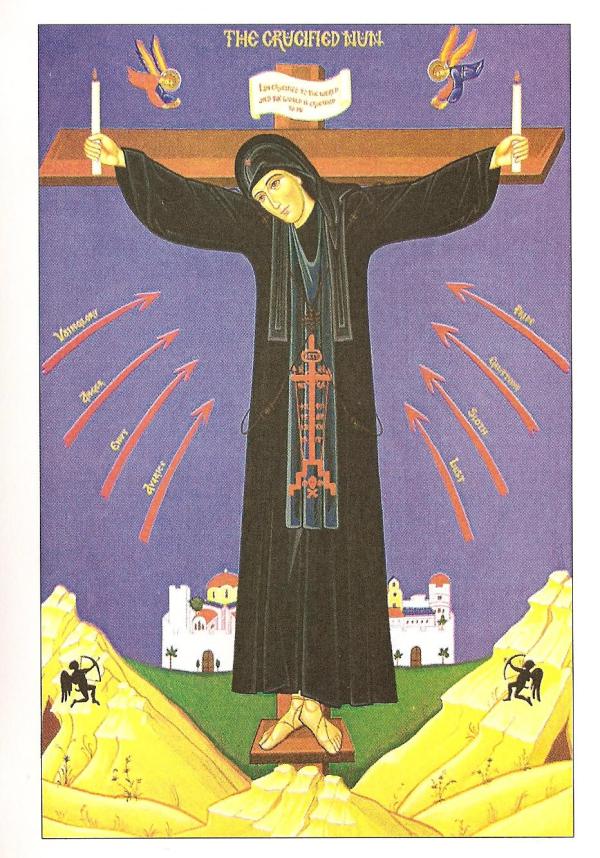
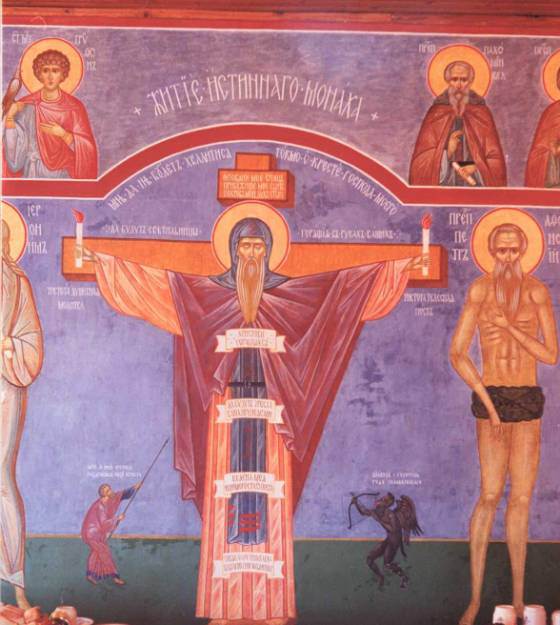
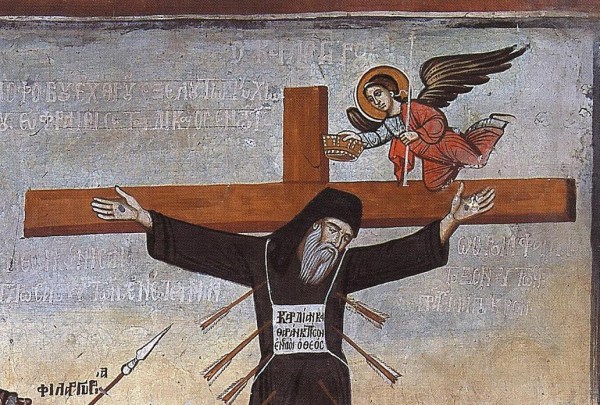
An 18th Century Monk/Iconographer Dionysius of Fourna wrote a manual for Iconographers. One such description is about “The life of a true monk” occupies a prominent part. It represents the true Glory of every monk, of every faithful person and how it is related to voluntary cross-bearing and crucifixion. Below is the English text from “Painter’s manual” by Dionysius along with some Icons/Frescoes depicting it.
“+Draw a monk crucified on a cross, clothed in a tunic and a monk’s hat, barefoot and with his feet nailed to the footrest of the cross; his eyes are closed and his mouth shut. Just above his head is this inscription: “Set a watch, O Lord, before my mouth; keep the door of my lips”.
+In his hands he holds lighted candles, and next to the candles is this inscription: “Let your light so shine before men, that they may see your good works, and glorify your Father, which [is in heaven]“.
+On his chest he has a tablet like a hassock, which says: “Create in me a clean heart, O God, and renew a right spirit within me.”
+On his stomach is another scroll, like a title, with these words: “Do not be led astray, O monk, by a full belly.”
+Lower down on his body is another scroll which says: “Mortify your members which are upon the earth.”
+Lower down again, below his knees, is another scroll which says: “Prepare your feet in the way of the Gospel of peace.”
+Above, in the top arm of the cross, make a title nailed on with this inscription: “God forbid that I should glory, save in the cross of my Lord.” On the three arms of the cross make seals, and in the right one write this: “He that endures to the end shall be saved.” In the left-hand one: “He who does not renounce everything is not able to be a disciple of Christ.” On the seal above the footrest of the cross: “Strait and narrow is the way that leadeth unto life.”
+To the right side of the cross paint a dark cavern with a big dragon in it coiled up, and write: “The all-devouring Hell.” Over the mouth of the dragon is a naked young man with his eyes bound by a cloth, he holds a bow and shoots at the monk. On his bow is a scroll which says: “Maker of lust.” Write this inscription above him: “The love of harlotry.” Above the cave put many snakes and write: “The cares.” Near to Hades put a devil dragging at the cross with a rope and saying: “The flesh is weak and cannot resist.” At the right-hand end of the footrest put a spear with a cross and a flag and write on it: “I can do all things through Christ Who strengthens me.”
+To the left of the cross make a tower with a door, out of which comes a man sitting on a white horse, wearing a fur hat and robes woven with gold and trimmed with fur. In his right hand he holds a cup full of wine and in his left a lance on the end of which is a sponge; a scroll is wrapped around the lance which says: “Take delight in the pleasures of the world.” He shows them to the monk. Write this inscription above him: “The vainglorious world.” Below him put a grave out of which Death is coming holding a large scythe on his shoulder and an hour-glass in his hand, and looking at the monk. Above him is the inscription: “Death and the grave.”
+Below the hands of the monk on either side put two angels holding scrolls; write on the scroll of that on the right: “The Lord has sent me to help you.” And on that on the left: “Do good and fear not.”
+Above the cross represent heaven with Christ in it, holding the Gospels on his breast open at the words: “Whosoever will follow me, let him deny himself, and take up his cross, and follow me.” In his right hand he holds a king’s crown, and in his left a crown [of flowers]. Below him to either side are two angels, looking at the monk and showing him to Christ, and holding between them a long scroll with these words: “Fight that you may receive the crown of righteousness, and the Lord will give you a crown of precious stones.”Then write this title: The life of the true monk.”
Unlike most of the Icons, this particular depiction is for contemplation rather than for veneration. It makes a very striking icon, because the monk/nun is in place of Christ. This Icon provides a similar contemplation like the noble literature of “Ladder of Divine Ascent icon”. Looking forward to learn and write more about Icons from “Ladder of Divine ascent “ and “Crucified Monk”.
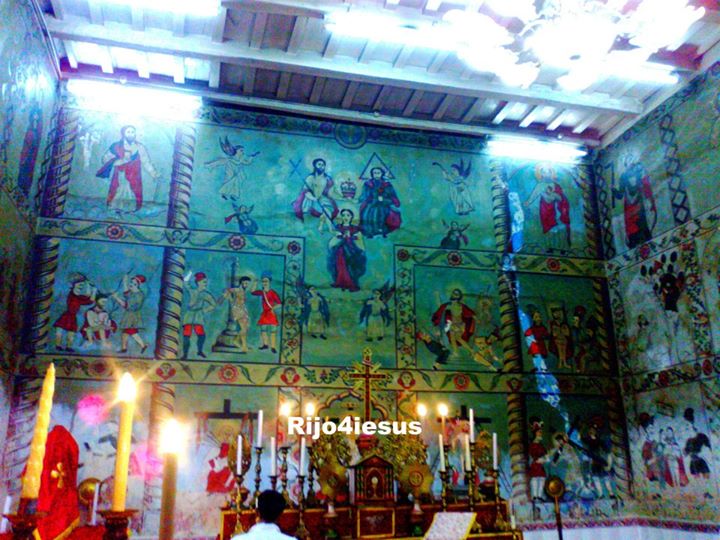
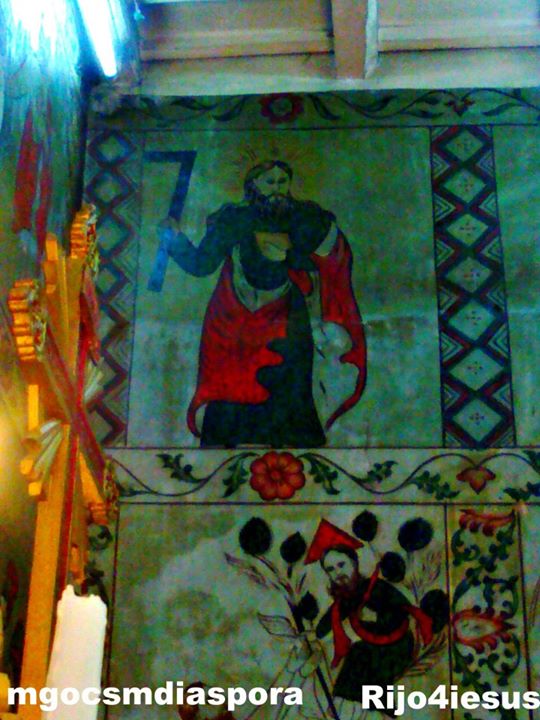
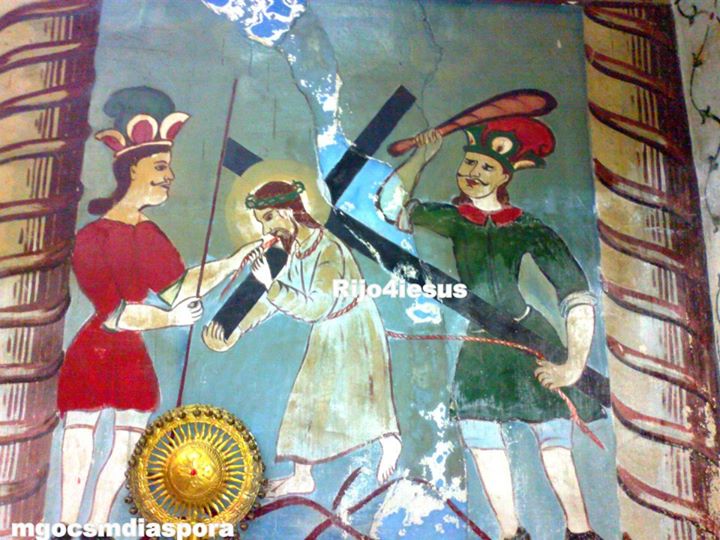
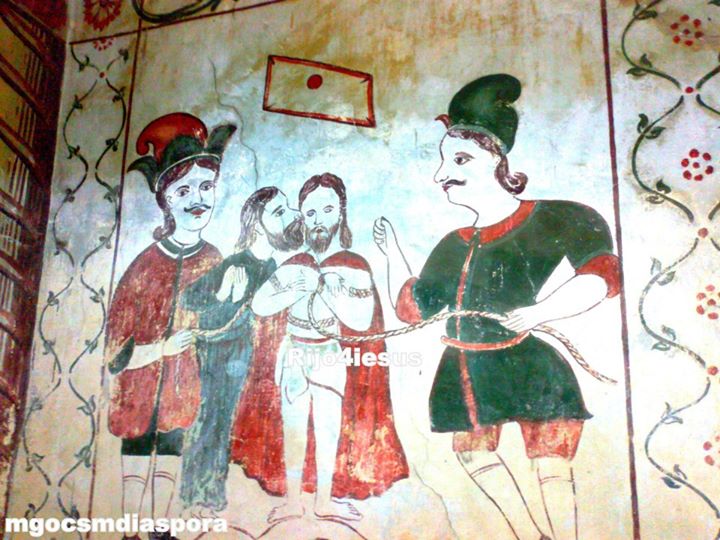
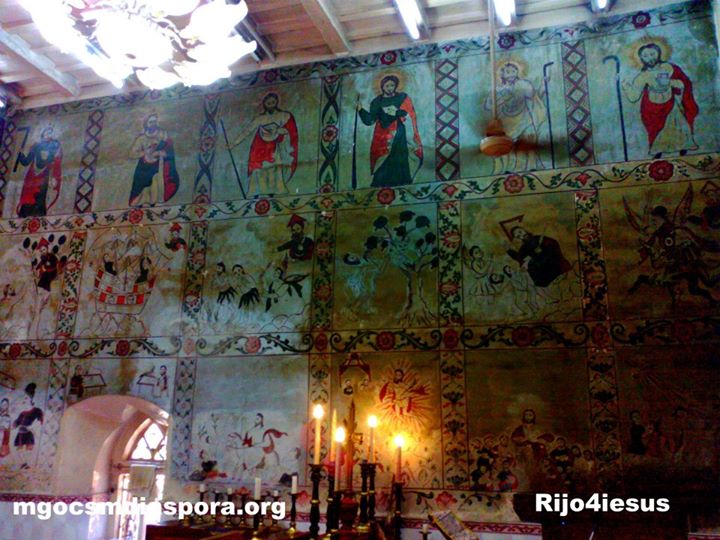
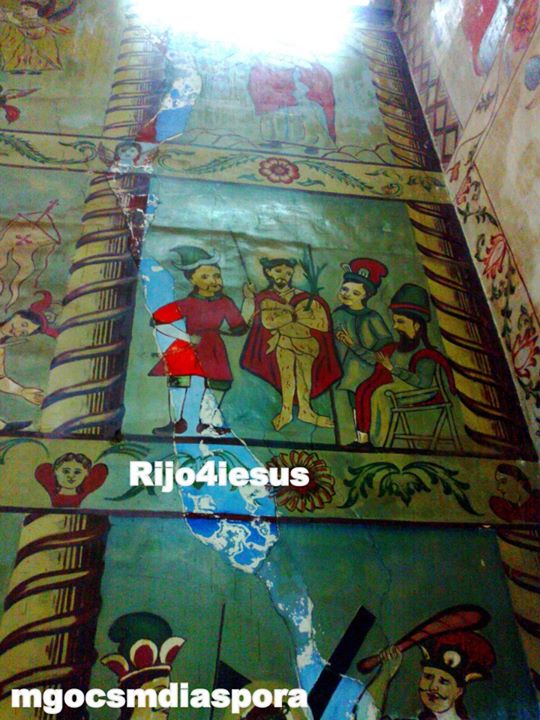
Saint George is a martyr and in the classical orthodox icon style; he is either portrayed as a soldier with his weapons, or in the more famous setting of him riding a white horse and slaying the dragon.Some exception to these forms , we see some mural and icons portraying different life scenes in St George’s life mostly his suffering and some portraying the whole life of Saint George as well as the scenes of his torture and martyrdom.
St. George with scenes from his life, Kremikovtsi MonasteryMural from StGeorge Cathedral, FranceMural from StGeorge Cathedral, FranceDragging St George Through the streetsPaliakara Church, India
Icon of St George with his beheaded headMadonna and Child with St George Alte Meister GermanySt. George being tortured on the wheelGlass painting , beheading of St GeorgMartyrdom of St George by Paolo VeroneseUnknown: Showing the life of St georgSt. George raising the dead manSt. George in the lime pit and drinking poSt. George destroys the idol by prayer and St. George saving the young womanThe burial of St. George






 Graphē