All posts by Rijo Geevarghese

Priesthood and Return of Prodigal son

#OrthodoxPriest

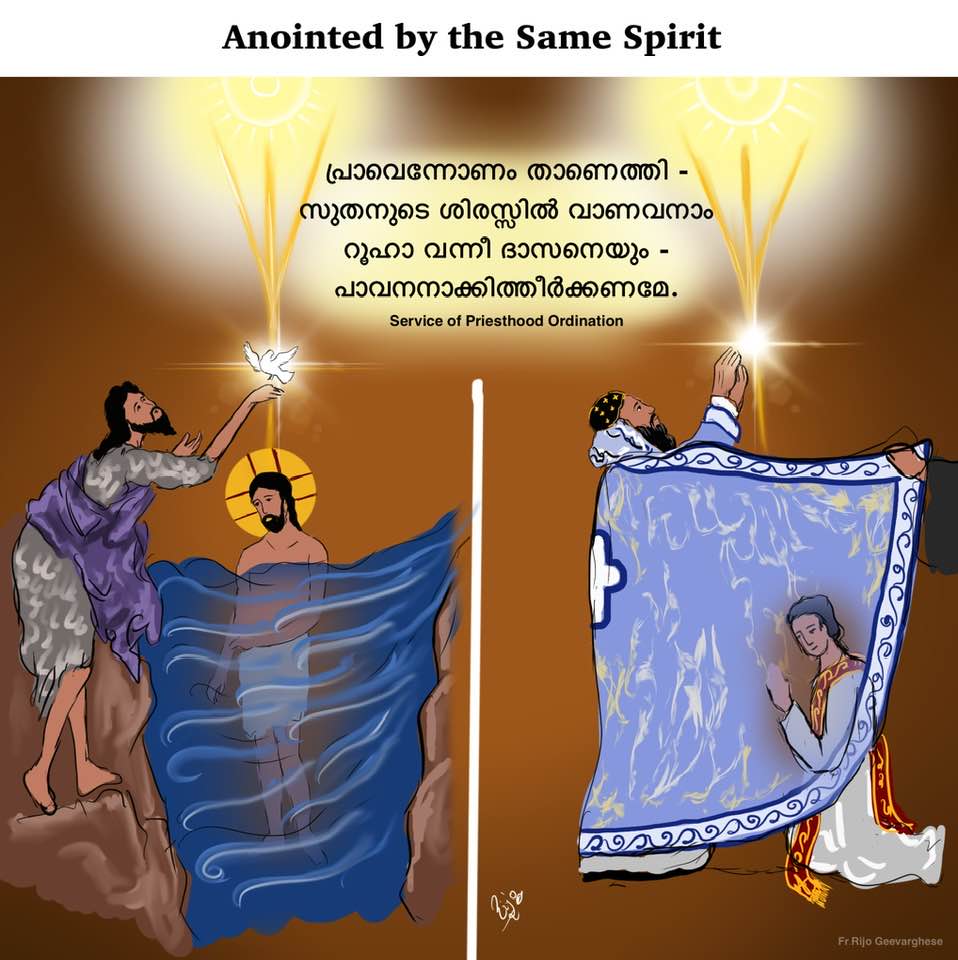
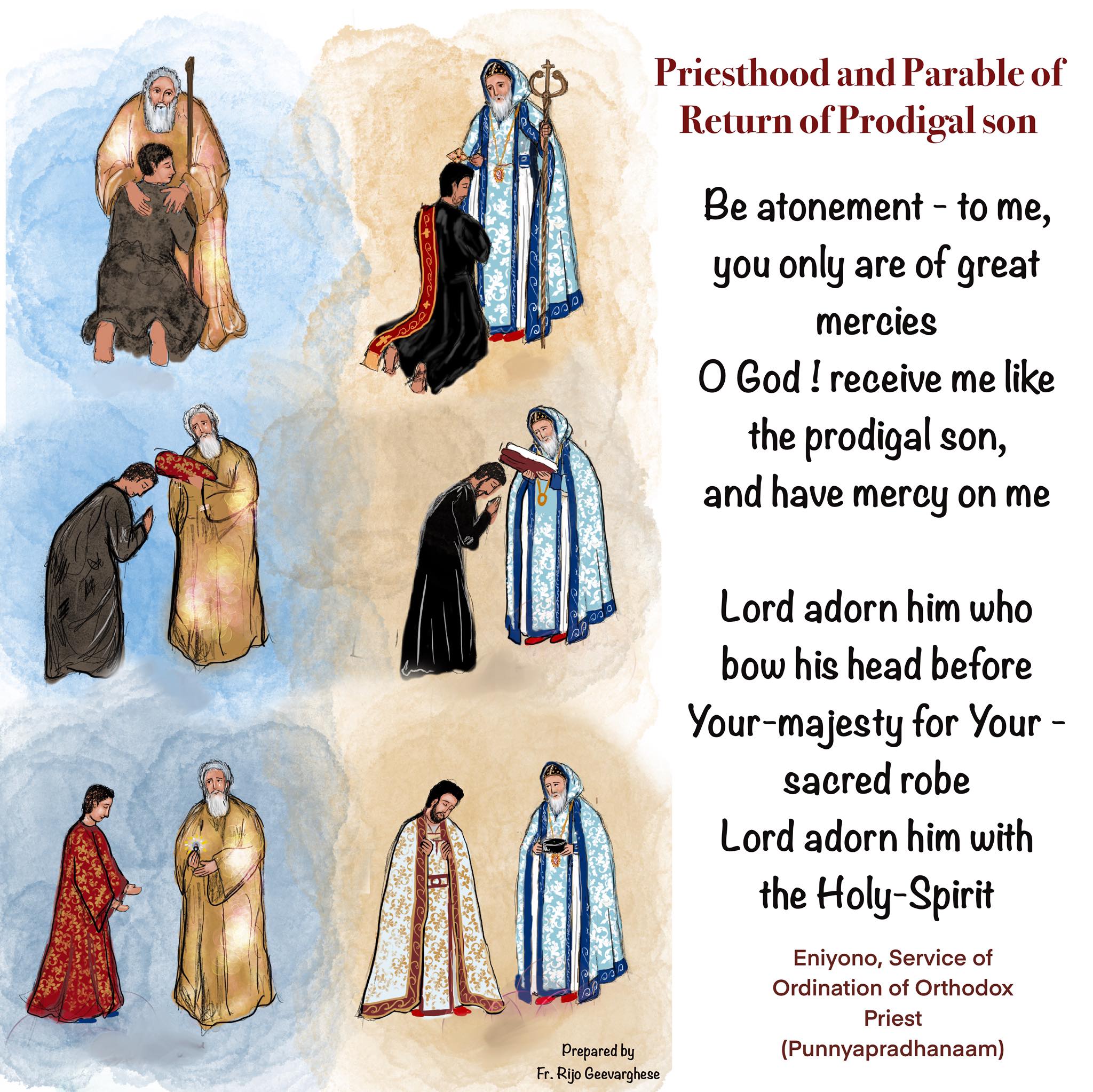
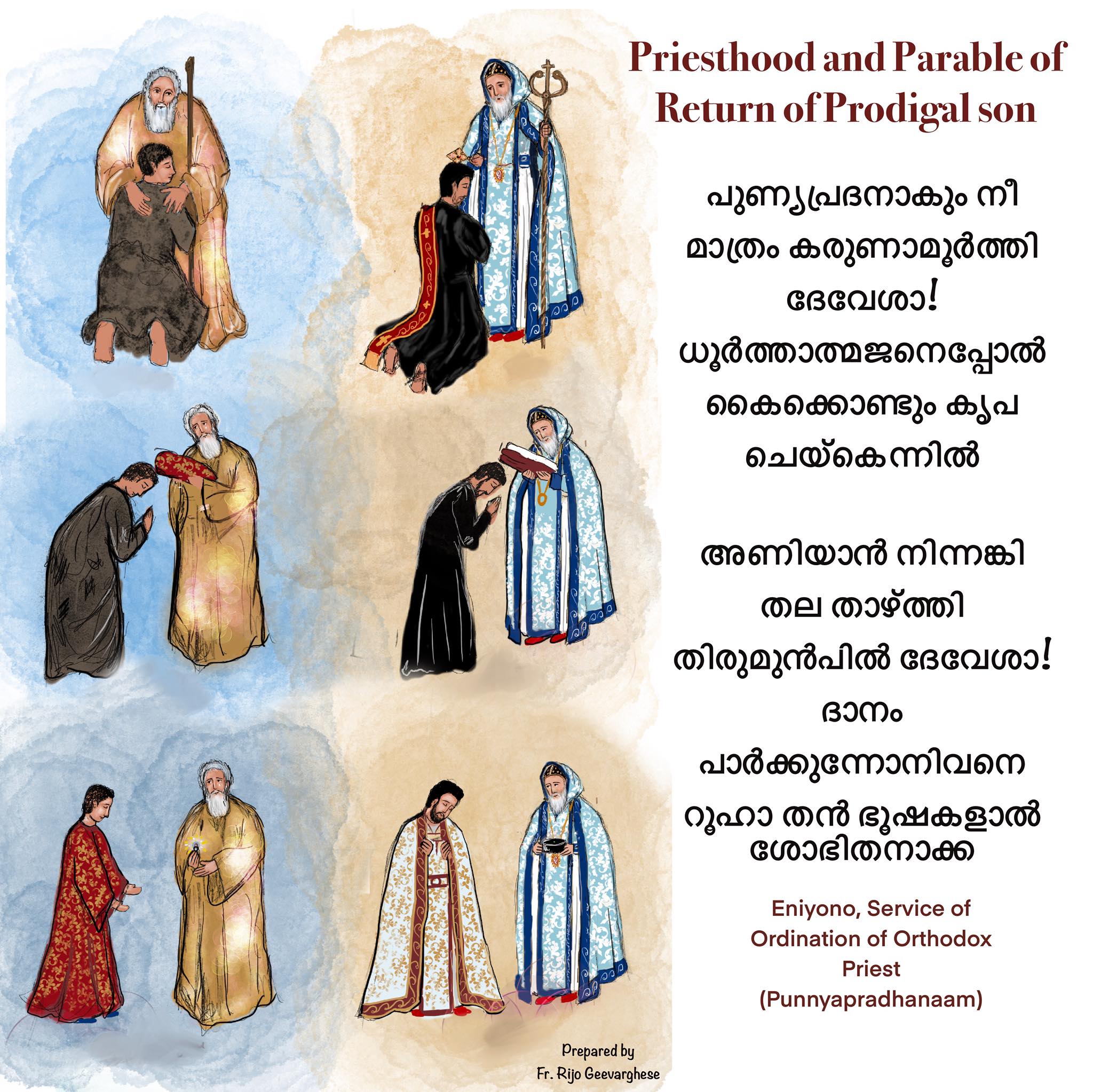
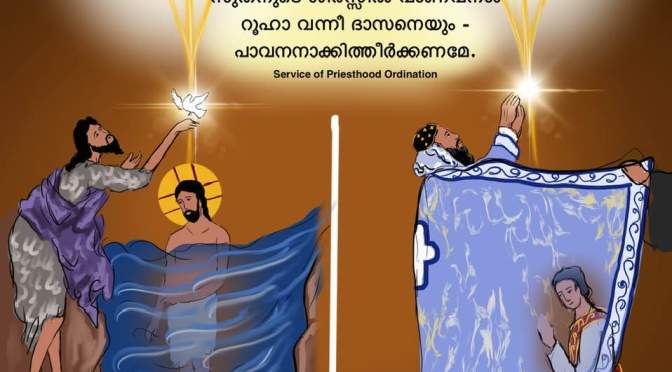
A contemplative illustration of Ordination and Return of the prodigal son. This illustration is based on the two stanza of Eniyono in the Service of Ordination.

Malayalam:

പുണ്യപ്രദനാകും നീ മാത്രം കരുണാമൂർത്തി ദേവേശാ!

ധൂർത്താത്മജനെപ്പോൽ കൈക്കൊണ്ടും കൃപ ചെയ്കെന്നിൽ

അണിയാൻ നിന്നങ്കി തല താഴ്ത്തി തിരുമുൻപിൽ ദേവേശാ!

ദാനം പാർക്കുന്നോനിവനെ റൂഹാ തൻ ഭൂഷകളാൽ ശോഭിതനാക്ക

English:

Be atonement – to me, you only are of great mercies O God ! receive me like the prodigal son, and have mercy on me.

Lord adorn him who bow his head before Your-majesty for Your – sacred robe Lord adorn him with the Holy-Spirit.

One parable which strikingly reflects Priesthood is the parable of the return of the Prodigal Son. The parallels between the two are striking — the son/candidate kneels in humility and repentance before the father/bishop, who embraces, blesses, and clothes him. The prodigal is adorned with the best robe, and the newly ordained is vested with sacred garments, both acts symbolizing restoration, acceptance, and a new beginning in the Father’s house.

I have used two prototypes for this illustration one is the painting by famous artist Rembrandt “The return of the prodigal” and the other is the gesture of the Bishop and Candidate(Full deacon) during the ordination of the Priest.

#graphē_illustrations#Ordination#ProdigalSon

Looking forward to making more children friendly illustrations based on #OrthodoxFaith. #IndianOrthodoxy#Artist

Fr Rijo Geevarghese

Diocese of Ahmedabad

For learning content visit:

website: projectgraphe.in

Graphē Channel: https://youtube.com/channel/UCKbdLPq5LDLk4IknB5fd

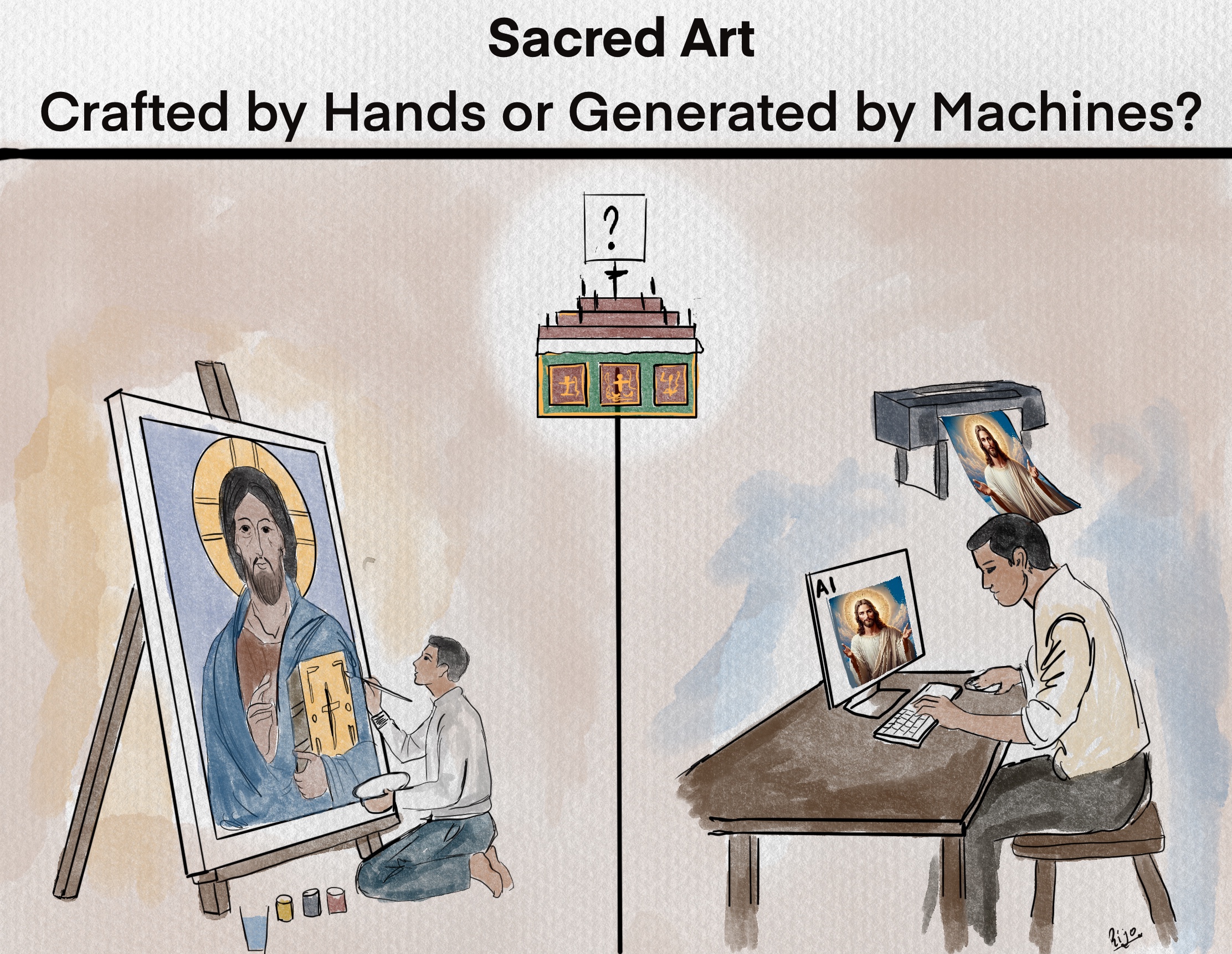
AI vs. Human Craftsmanship in Sacred Art

These days, discussions are ongoing about OpenAI allowing users to recreate images in the iconic style of Studio Ghibli. I find this deeply disrespectful to the art of creation itself and the dedication poured into it by artists. Art is not just aesthetics; it is a deeply human act of faith, devotion, and struggle—something that cannot be automated.

Similarly, I recently noticed some churches using AI-generated images within their altar. AI-generated images introduce artificiality into worship, lacking the depth and sanctity of true sacred art.

In the Orthodox Church, icons, murals, and carvings or any sacred art form within the church—especially in the altar—are to be created by human hands. This is not a mere tradition but a theological- liturgical necessity. As Exodus 31:2-3 recounts, God called Bezalel to create sacred art through human craftsmanship. But why insist on human craftsmanship? Human craftsmanship is essential because it reflects the very nature of our creation. As being made in the image and likeness of God, the creator. This creative capacity is not just a skill, it is the reflection of the divine image within us. Human craftsmanship in sacred art honours this divine gift of creativity. Fathers like John of Damascus and Theodore the Studite emphasized that icons are not mere images but spiritual windows, crafted with prayer. I remember my teacher once telling me to consider each brushstroke as a prayer.

AI-generated images, in contrast, are mechanical products devoid of spiritual intention or grace. They disrupt the sacred continuity of Orthodox tradition, reducing sacred art to mere data manipulation. The rise of AI in art risks stripping away the human effort, reducing creativity to mere data processing. This is not just about preserving tradition, it is about protecting what it means to be human.

While technology, like AI, can serve a purpose, it can never replace the real, lived experience of faith. Likewise, AI-generated images should never replace prayerfully created sacred art. The Church, as body of Christ, should be the last place where artificiality replaces authenticity.

Fr. Rijo Geevarghese
Diocese of Ahmedabad

SacredArt #TheologyOfArt #OrthodoxTradition #HumanCreativity #FaithAndArt #ArtIsHuman #KeepArtSacred

Desert Mothers and Fathers

Who were the Desert Mothers and Fathers?

In the fourth century, a few men and women in Egypt, Syria, Palestine, and other areas of the Middle East and Asia Minor felt a calling. They decided to follow it. They chose to leave their possessions and their families. They gave up their everyday life for an existence of extreme simplicity in the desert. They made their homes sometimes in caves, or in small huts or “cells” (kellia) which they built themselves. They lived on bread, water, and salt. They also consumed small amounts of herbs or vegetables. They earned their living from simple manual work such as weaving linen, or making baskets and ropes. They lived with the barest essentials. This allowed them to focus on what really mattered to them. Antony was one of the most famous pioneering desert fathers. One day in church, he heard a reading containing the words of Christ: “Go and sell everything you have, give the money to the poor, and come, follow me.” He heard these words as a personal call. He felt they were addressed to him. Soon he moved into the desert to spend the rest of his life in prayer and contemplation. He died in the year 356 at the age of over a hundred, after having inspired a large number of disciples.[1]

More and more people were attracted to this life in the desert. A few chose to live in solitude, meeting with other people only occasionally; others would gather as small groups of disciples to live near an elder. In some places, larger settlements grew up in the desert. The most important ones were Nitria, Scetis, and another known as Kellia. All these were situated in the North of Egypt. In the south of Egypt, Abba Pachomius gathered his disciples into a tightly-knit community, and so the first monastery came into existence.

They referred to each other as “brother” or “sister”. However, the words Abba (Father) or Amma (Mother) came to be used as a term of respect. These terms showed affection for the most experienced and wisest of them. A little later, more specific terms came into use: “monk” and “nun”, or, for those who lived alone, “hermit” or “anchoress”.

Many of the desert fathers and mothers took great care of the parts of the desert where they lived. They cultivated the land and made it fruitful. In some places, where they lived in community, this made it possible for them to provide for the poor who lived nearby or even to send grain to the cities for the relief of the destitute

The main concern of the desert fathers and mothers was the life of the heart: they wanted to be with God. When someone lives alone, they spend a lot of time in silence. They become aware of all the different thoughts and feelings that inhabit human nature. These include both good and bad aspects. Without help, it is easy to become confused. It can be difficult to distinguish what is life-giving from what is destructive. It is also hard to determine what really comes from God and what is just imagination. So the practice soon arose of sharing one’s thoughts and way of life with an elder. The elder’s experience was invaluable in discerning what was right from what was misleading. They helped differentiate the authentic from the false. Key moments from the conversations between an elder and their disciples were remembered and later written down as the “Sayings” (Apophthegms). They contain a remarkable blend of wisdom, challenges, psychological insight, realism, and humor.

Desert Mothers

While the Desert Fathers have often been the focus of early monasticism, the contributions of the Desert Mothers are equally significant, providing unique insights into early Christian spirituality and ascetic practice.

The Desert Mothers emerged alongside Christian monasticism as Christianity became the state religion of the Roman Empire. Seeking a deeper and more austere religious life, many believers withdrew to the desert’s harsh environment for solitude and focus on God. Known as “Ammas,” these women defied societal norms and domestic expectations, leading lives of discipline and becoming spiritual leaders and mentors.

Amma Sarah

Amma Sarah is one of the most well-known Desert Mothers. She lived by the river Nile for over sixty years, dedicating her life to prayer and asceticism. Amma Sarah is remembered for her profound wisdom and spiritual strength. She famously said, “If I prayed that all men should approve of my conduct, I should find myself a penitent at the door of each one. I shall rather pray that my heart may be pure towards all.” Her teachings emphasized the importance of inner purity and the avoidance of judgment. She resisted temptation with steadfast resolve, demonstrating that the path to spiritual enlightenment requires unwavering commitment and self-awareness.

Amma Syncletica

Another prominent Desert Mother, Amma Syncletica, hailed from a wealthy Alexandrian family but chose to renounce her riches to live an ascetic life. Her teachings, recorded in the Apophthegmata Patrum, highlight the struggles and rewards of the monastic life. She taught about the importance of perseverance, comparing the spiritual life to a flame that needs continuous fuel to keep burning. Amma Syncletica also spoke about the trials and tribulations that come with a life dedicated to God, advising her followers to remain vigilant and persistent in their spiritual journey. One of her famous sayings is, “Just as treasure is discovered through toil and pain, so also is spiritual health gained through suffering.”

Amma Theodora

Amma Theodora was a spiritual guide known for her wisdom and compassion. Her teachings often revolved around the theme of divine mercy and the importance of humility. She taught that one should always trust in God’s mercy and never despair, no matter how grave their sins. Amma Theodora offered practical advice for spiritual growth, emphasizing that one must constantly strive for humility and self-awareness. She said, “Let us strive to enter by the narrow gate. Just as the trees, if they have not stood before the winter’s storms, cannot bear fruit, so it is with us. This present age is a storm, and it is only through many trials and temptations that we can obtain the kingdom of heaven.”

Amma Melania the Elder

Amma Melania the Elder was an influential figure who established monastic communities and was deeply involved in theological discourse. She traveled widely, visiting the deserts of Egypt and engaging with both Desert Fathers and Mothers. Her life reflects a dedication to fostering monasticism and encouraging others in their spiritual journeys. Amma Melania’s legacy includes not only her own ascetic practices but also her role in supporting and mentoring others in the monastic life.

Amma Alexandra

She is known from the Lausiac History[2] written by Palladius[3]. He recounts that Alexandra was a servant-girl before her life in the desert; she lived as a recluse in a former Egyptian tomb, spending her whole time praying, spinning flax, and meditating on the Bible.

Amma Talida or Talis

She is mentioned by Palladius in his Lausiac History he met her when she was very elderly, having lived for eighty years in her community with sixty other women, who loved and respected her greatly. Her long experience of self-discipline gave her great freedom.

The Desert Mothers were pioneers of Christian asceticism who left an indelible mark on early monasticism. Figures like Amma Sarah, Amma Syncletica, Amma Theodora, and Amma Melania the Elder exemplify the profound spiritual wisdom and resilience of these women. Their lives and teachings continue to inspire and challenge contemporary Christians, offering valuable lessons on humility, perseverance, and the pursuit of a deeper relationship with God. The legacy of the Desert Mothers serves as a testament to the power of faith and the enduring relevance of their spiritual journey.


[1] https://www.taize.fr/IMG/pdf/21.12quietaientlesperesetmeres-en.pdf

[2] The Lausiac History a pivotal work documenting the lives of the Desert Fathers early Christian monks who resided in the Egyptian desert. It was composed between 419 and 420 AD by Palladius of Galatia, at the request of Lausus, a chamberlain in the court of Byzantine Emperor Theodosius II.

[3] He was a Christian chronicler and the bishop. He is venerated in the Orthodox Church as a saint.

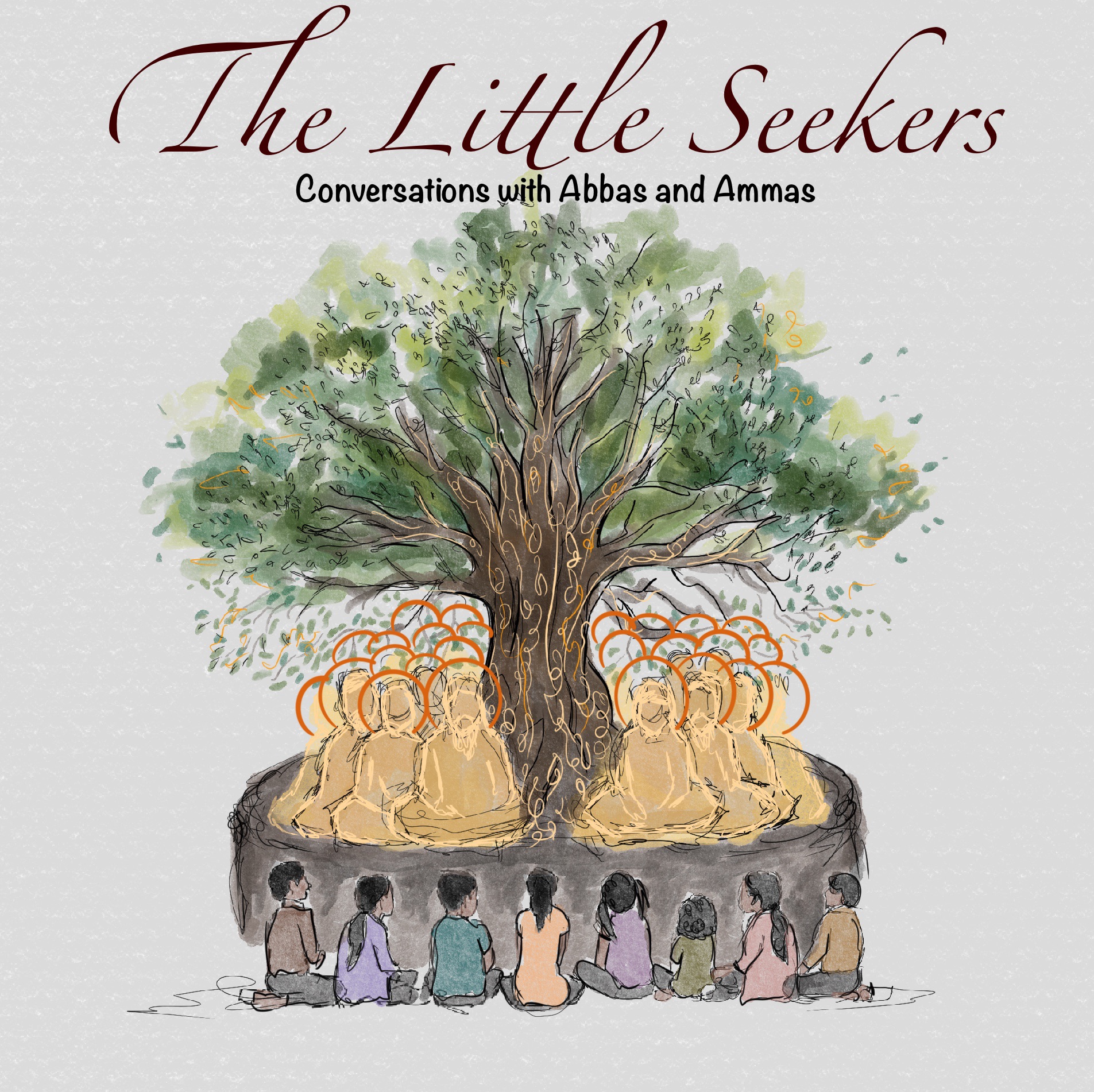
The Little Seekers: Conversations with Abbas and Ammas

The Little Seekers: Conversations with Abbas and Ammas

Dear Friends,

This is one of my long-awaited personal projects. Today, as we celebrate the feast of two great Fathers of the Church, St. Gregory and St. Basil, I am delighted to share the beginning of a new initiative close to my heart.

I have often reflected on how the timeless wisdom of the Fathers (Abbas) and Mothers (Ammas), including the more recent saints of the Church, has become overlooked in our modern world. Their profound insights hold answers to many of today’s pressing questions, yet these treasures remain distant for many, especially the younger generation. While we celebrate their feasts, we often remain unaware of their teachings. Abbas and Ammas were the titles of early desert fathers and mother who lived in the desert. They were perhaps the first pastoral counsellors. Such a tradition of having Abbas and Ammas is still very much active in many Orthodox Churches. In this project I am using this same title for all the Fathers and Mothers of the Church, ancient and recent both.

I want to bring this wisdom to life in a manner that is simple, engaging, and relatable. That’s when this idea was born: to present life’s concerns as questions asked by children, with the answers drawn directly from the writings, sermons, and testimonies of these saintly souls.

Through “The Little Seekers,” we aim to create a series of illustrations where curious children ask questions that resonate with all of us. The responses, drawn from the original teachings of the Fathers and Mothers, will provide timeless guidance and inspiration. Many of the questions will be real, asked by people from different walks of life, while the answers will reflect the wisdom of these saintly guides.

This is more than just a project for me—it’s a mission to bring ancient wisdom to the forefront of contemporary faith conversations. I hope you all will support and join us on this journey. Stay tuned for the first illustration!

Seeking your prayers, feedback, and encouragement.

Fr Rijo Geevarghese

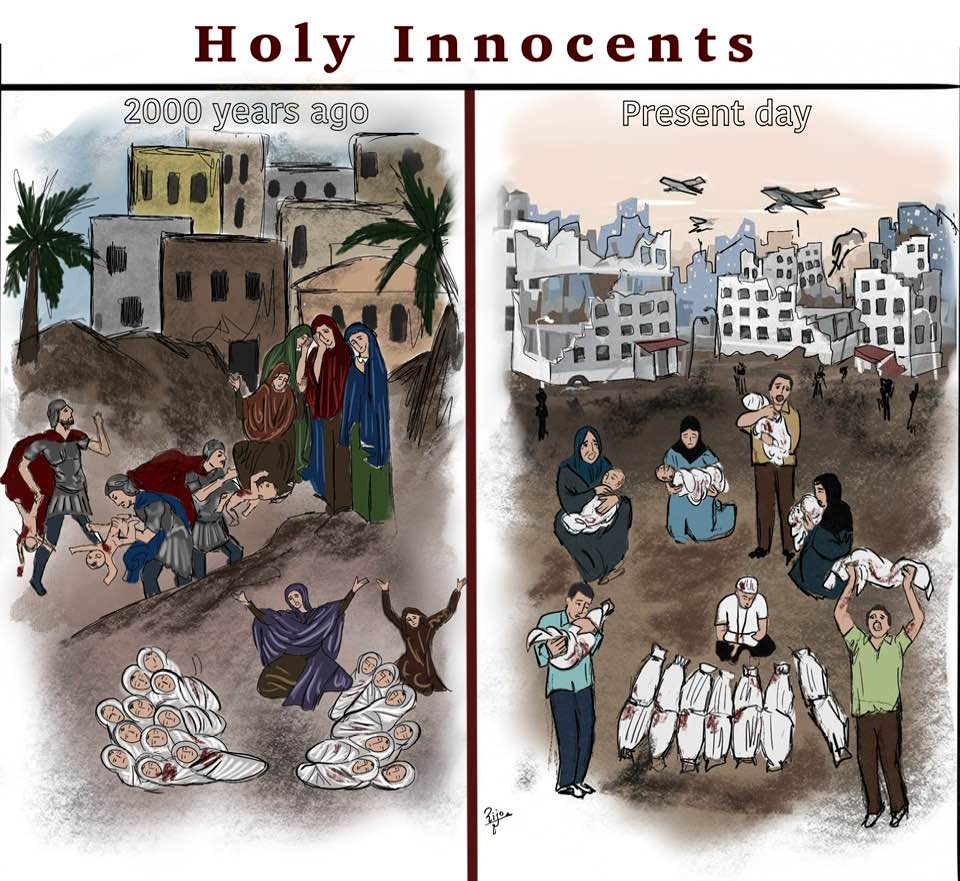
Innocence Lost: Lessons from Bethlehem to Gaza

The tragic Parallel: Death of Children in Gaza and the Massacre of Children in Bethlehem (The Holy Innocents)

On these days of Christmas, we celebrate the joyous event of the birth of Christ, the prince of peace. But Christmas also reminds us of the tragic event of the Massacre of Children in Bethlehem also known as Holy Innocents. December 27 we commemorate the feast of Holy Innocents.

The nativity story found in the gospel according to Matthew tells us that once the wise men notified Herod that Jesus was born in Bethlehem, he instructed them to find the baby and then come back to him to tell him where he was so that he may “worship” the new king. Later when wisemen were instructed by the Angel to not go back to Herod the King, Herod was infuriated and ordered the death of several children.

The recent loss of innocent children in Gaza has once again brought to the forefront the tragic echoes of the past. In present days also we see leaders directly and indirectly lending a hand in the massacre of children.

In contemplating the parallels between the tragedies in Bethlehem and Gaza, we are confronted with perplexing questions. How can the innocence of children become entangled in the web of human conflict and power struggles?

Herod’s killing of children did not help him in killing the prince of peace, Jesus. Neither will the present-day massacre of children. This Christmas we all are called to stand against such atrocities and not to stand with ‘the Herods of our time’.

Let us remember these Holy Innocents along with all the children who are suffering, in prayers.

Fr. Rijo Geevarghese

The Mystery of Nativity Explained: Light, Hope, and Salvation

𝐓𝐡𝐞 𝐌𝐲𝐬𝐭𝐞𝐫𝐲 𝐨𝐟 𝐭𝐡𝐞 𝐍𝐚𝐭𝐢𝐯𝐢𝐭𝐲

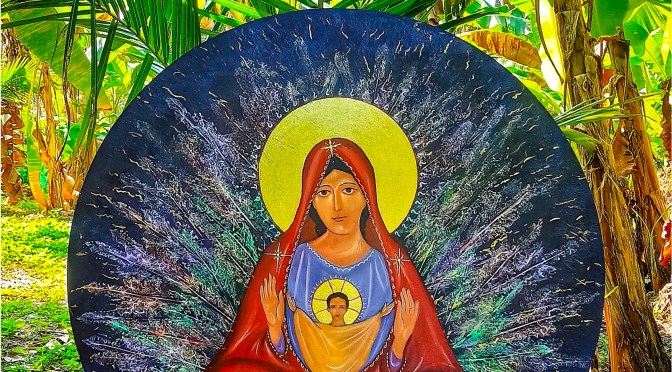
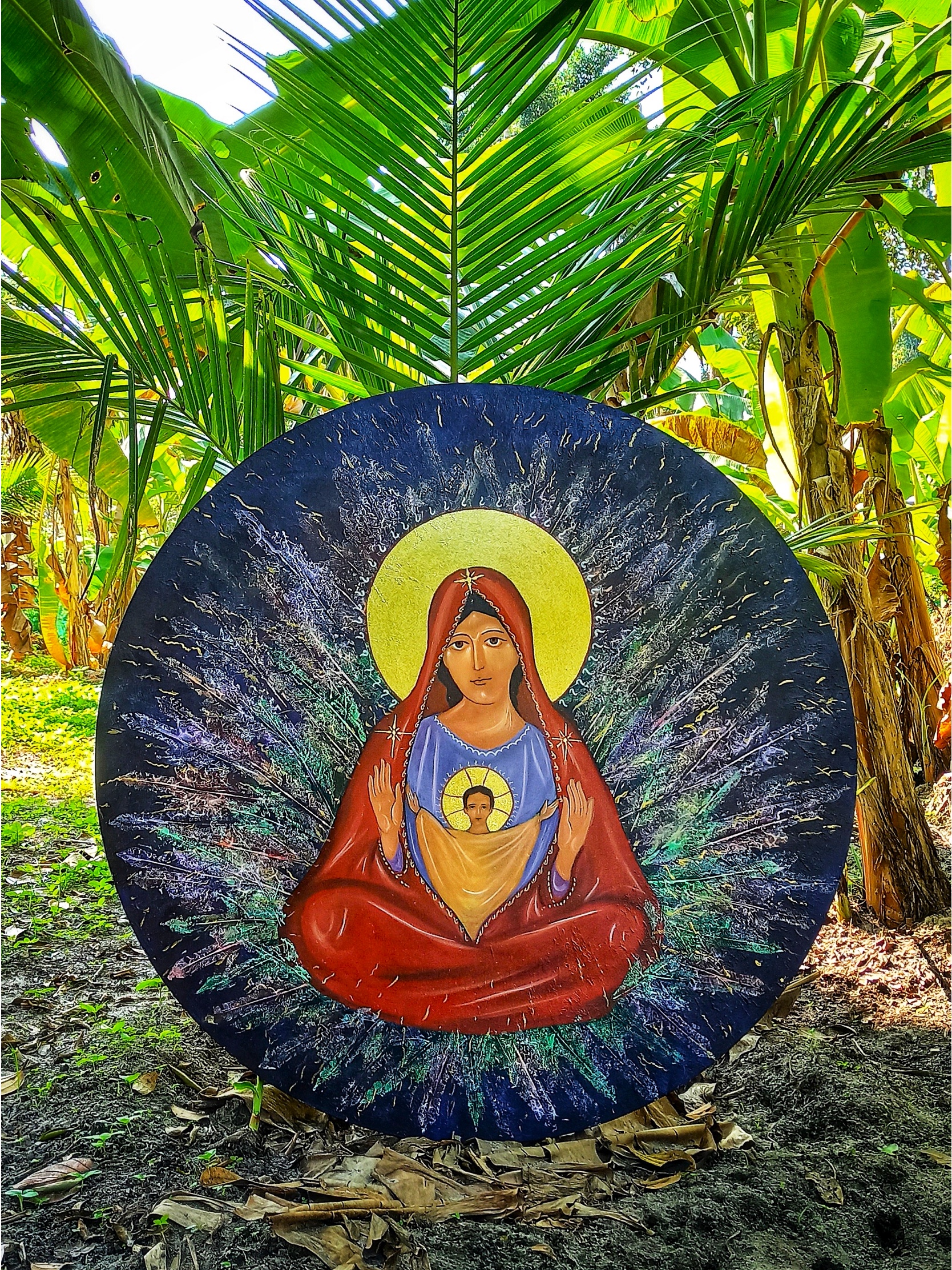
The mystery of Nativity/Christmas, where Virgin Mary becomes the living bush that bore the divine flame—Christ Himself—without being consumed. Just as God’s presence in the burning bush sanctified creation, Christ’s birth renews and illumines the world. The rays in the icon symbolize the light and hope of the Incarnation, dispelling darkness and bringing salvation.

𝘈 𝘩𝘺𝘮𝘯 𝘧𝘳𝘰𝘮 𝘚𝘢𝘵𝘶𝘳𝘥𝘢𝘺 𝘙𝘢𝘮𝘴𝘩𝘰 𝘸𝘩𝘪𝘤𝘩 𝘳𝘦𝘧𝘭𝘦𝘤𝘵𝘴 𝘰𝘯 𝘵𝘩𝘪𝘴 𝘮𝘺𝘴𝘵𝘦𝘳𝘺,

“Prophet Moses saw a fire,
Which rested on a bush, and it was
Not burned by the flames.
Like that bush, the Virgin was
Not burned by the flame of the Son of
God who dwelt in her.”

This Christmas, may we, like Mother Mary, prepare our hearts to receive the divine flame, allowing God’s presence to sanctify and transform us into vessels of His peace and love, bringing light to those around us.

Icon written by the unworthy hands of
Fr Rijo Geevarghese 

Bearing, Offering, Receiving, and Sharing the Mysteries

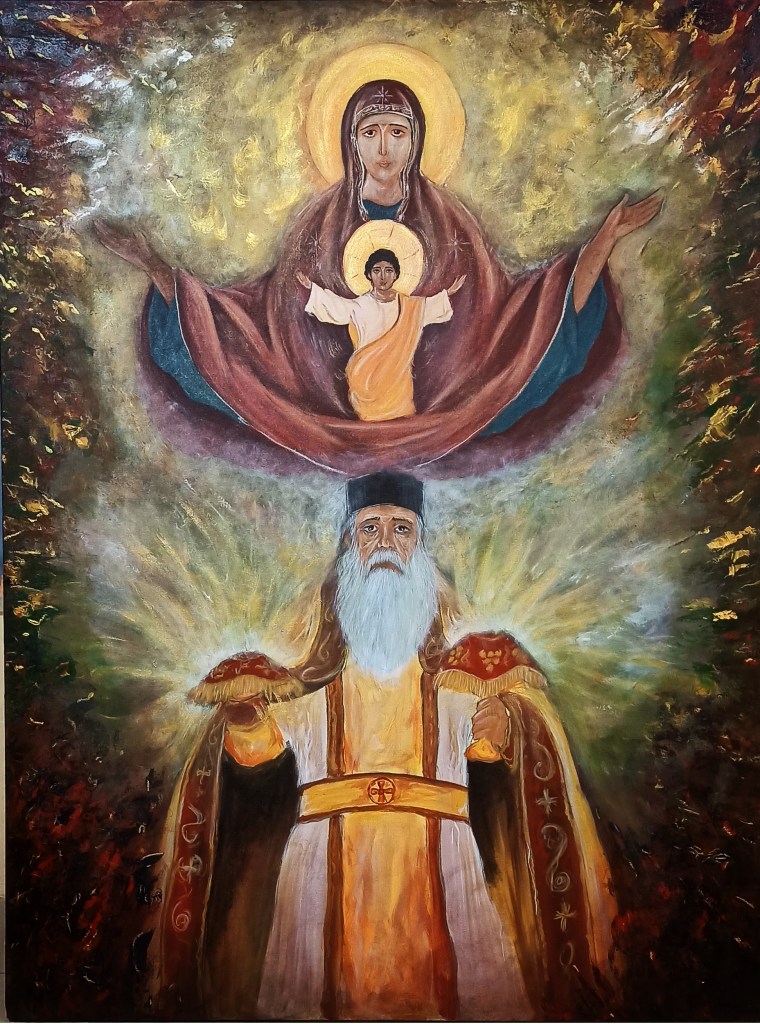
Sharing a liturgical painting, a visual meditation on the mystery of the Mother Mary bearing Jesus in her womb and the priest bearing the Holy Mysteries in his hands. I was inspired by the sacred moment in the liturgy when, accompanied by candles and Marvahasas, the priest processes westward toward the congregation while holding the Holy Mysteries, praying: ‘May the mercy of our great Lord and Redeemer, Jesus Christ, be upon the bearers of these mysteries, upon those who have offered them, upon those who receive them, and upon all who have labored and have shared and share in them.’

It is profound to see that the qualities of bearing, offering, receiving, labour and sharing the Holy Mysteries are perfectly embodied in the Mother of God, the Theotokos, who bore Christ Himself, and inspires us too to bear, offer, receive, and share in these Holy mysteries through the Holy Eucharist.

Here are some thoughts on these qualities, 

Bearing: Mary physically bore Christ in her womb, becoming the vessel through which the Word of God took on flesh. This is mentioned in Luke 1:31, where the angel Gabriel tells her, And behold, you will conceive in your womb and bear a son, and you shall call his name Jesus. (Luke 1:31). By bearing Christ, Mary becomes the first to carry the Divine Word, symbolizing the Church’s call to bear Christ.

Offering: Mother Mary offered Jesus to the world, presenting Him in the Temple, “When the time came for their purification according to the Law of Moses, they brought him up to Jerusalem to present him to the Lord.” (Luke 2:22). This symbolizes her offering of Christ for the redemption of the world, just as the faithful offer the Gifts during the Divine Liturgy.

Receiving: Mother Mary said, ‘Behold, I am the servant of the Lord; let it be to me according to your word.'” (Luke 1:38). Mother Mary received the message of the Incarnation with faith and obedience, as depicted in her response to the angel Gabriel. Expressing on this, St Ephrem writes, “He entered the womb through her ear.“ Through her acceptance, she inspires every believer who is called to receive Christ, through Holy Eucharist.

Labouring and Sharing: Mother Mary’s labor was not just in the physical sense of childbirth but also in her spiritual, emotional, and active participation in God’s salvific plan. She labored in her role as the Mother of Jesus, nurturing Him, and sharing in His ministry. Her presence and actions throughout Christ’s life demonstrate her deep engagement in His mission. At the foot of the cross, she stands as a witness to His sacrifice (John 19:25). This sharing in mystery of Christ exemplifies how every believer is invited to participate in the life, death, and resurrection of Jesus, sharing in His mission of salvation through the Eucharist and the life of the Church.

This sacred moment in the liturgy mirrors the mystery of the Theotokos, who bore Christ, and our call to receive Him in the Eucharist. In this context, St. John Chrysostom’s writes, ‘You do not see Him in a crib but on the altar; it is not the woman that holds Him but the standing priest.’ Similarly, Dionysius Bar Salibi writes, ‘As by the will of the Father and by His Holy Spirit the Word was incarnate from the Virgin without change, so by the will of the Father and the overshadowing of the Holy Spirit, He perfects the bread as His body and the wine as His blood.’

In this painting, I seek to explore the deep mysteries of Orthodox tradition, where the Divine Presence is made manifest both in the Church and in the arms of the Holy Mother.

Regards
Fr Rijo Geevarghese

Icon of Holy Innocents

Fr. Rijo Geevarghese

The Orthodox Icon of the Holy Innocents portrays the tragic event described in the Gospel according to Matthew (Matthew 2:16-18) when King Herod, upon learning from the Magi about the birth of a new king in Bethlehem, ordered the massacre of all male children under the age of two in Bethlehem and its vicinity. Here’s a detailed breakdown of the icon’s meaning:

1. Central Depiction: In the centre of the icon, one can see a group of infants or young children, often depicted with angelic faces and halos along with Christ. Christ is shown as embracing them. One can also notice the wounds in Christ’s hands showing His sharing with sufferings of the Children. It also symbolizes the sufferings of innocent victims throughout history across the world. Thus, this icon surpasses the spatial and temporal dimensions and exhibits the present reality as well. 

2. Mother Mary and Infant Jesus: Mother Mary and the Infant Jesus are depicted in the icon as well along with St Joseph. Their presence emphasizes the context of the massacre, and their flight to Egypt. 

3. Prophet Jeremiah: Jeremiah, an Old Testament prophet, is often depicted in the icon because of his prophecy regarding the massacre of the children by King Herod. In the Book of Jeremiah (Jeremiah 31:15), he foretold the weeping and lamentation of Rachel, for her children who were no more. Jeremiah’s presence emphasizes the prophetic aspect of the tragedy. He serves as a witness to the fulfilment of his own prophecy, underscoring the divine foreknowledge of the events and the significance of the Holy Innocents’ suffering in the grand narrative of salvation history.

4. First Martyrdom: In Christian tradition, the Holy Innocents are considered martyrs, even though they did not have the opportunity to consciously profess their faith. Their innocent deaths are seen as a witness to the truth of Christ and the cost of discipleship.

6. Hope and Redemption: Despite the darkness of the event, the presence of the Holy Family in the icon offers hope and redemption. In Christian theology, Jesus’s birth, life, death, and resurrection ultimately bring salvation and victory over sin and death.

7. Prayer and Reflection: For Orthodox Christians, icons are not merely decorative but are considered windows into the spiritual realm. It serves as a focal point for prayer, meditation, and reflection. The Icon of the Holy Innocents invites viewers to contemplate the meaning of suffering, innocence, and the divine presence amidst tragedy.  

8. Writings in the Icon:

  • Meaning of three-letters used behind the Halo of Christ in the Icon:
    The first letter ܐ and last letter ܬ in Estrangela (on either sides of the halo) means, He is the beginning and end, the Alpha and Omega. The third Estrangela letter (at the top) is the combination of the two letters: ܝ‎ (yodh) and ܗ‎ (heh). These two letters are equivalent to the Hebrew Tetragrammaton יהוה‎ (YHVH), with three points above signifying the three persons of the Trinity, and one point below signifying oneness forming ܞ. This was an ancient symbol used in the Old Syriac text as well as in sacred artforms like icons denoting the Divine name. This Symbol ܞ is scribal abbreviation of the Name of God as revealed to Moses on Mt Sinai (Exodus 3:14). 
  • Syriac script on either side of Christ is Yeshu Mashiho written in West Syriac script. Likewise on either side of Mother Mary is Yoldath Aloho, meaning Mother of God.
  • Scroll held by Prophet Jeremiah: It resembles the prophecy from the book of Jeremiah 31:15,

“A voice is heard in Ramah, lamentation and bitter weeping. Rachel is weeping for her children.”

The Orthodox Icon of the Holy Innocents communicates a profound message about the nature of innocence, suffering, martyrdom, and the redemptive power of Christ’s love. Contemplating this icon can evoke reflection on the innocence and vulnerability of children, the tragic consequences of human greed and power, and the ultimate triumph of good over evil. It can also inspire empathy and compassion for the innocent victims of violence throughout history and in contemporary times. It invites Christians to remember and honour the memory of the Holy Innocents while also inviting us to care for the vulnerable in society.

This icon is written on canvas (dimension: 6.8 x 4.2ft) by the unworthy hands of Fr. Rijo Geevarghese.