A Divine Paradox

A Divine Paradox

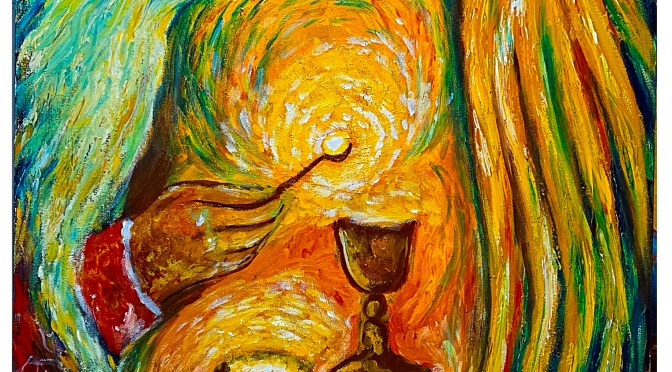
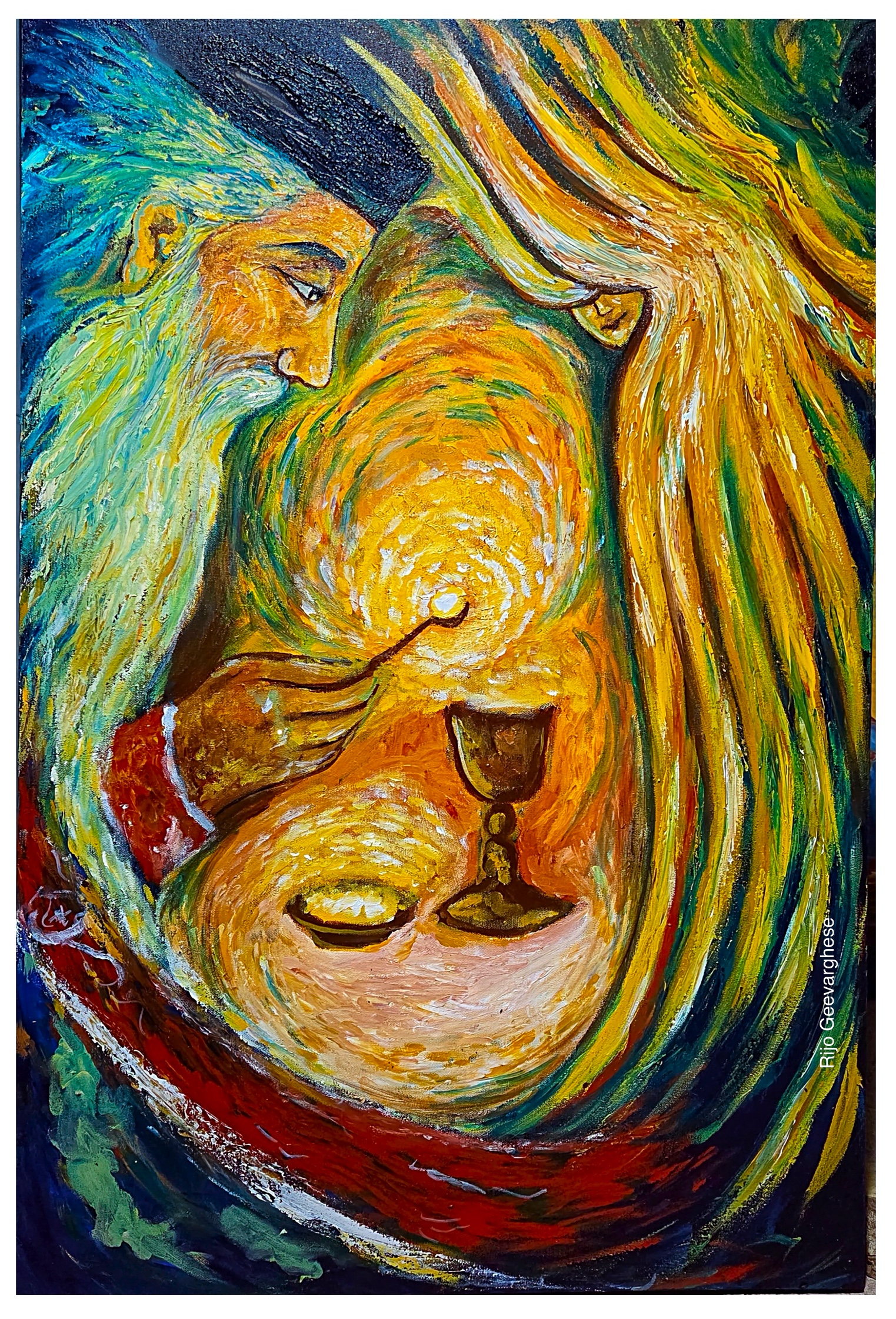
This liturgical painting, titled “A Divine Paradox,” is a visual contemplation drawn from a majestic moments in the Orthodox liturgy visually expreased in the post-communion hymn:

Fiery ones fear to gaze upon the Lord.
You have seen Him in Bread and Wine on the Altar.
If those clothed in lightning beheld Him, they would burn,
Yet shameful dust stands unveiled when they consume Him.


അഗ്നിമയന്മാർ ആരെ നോക്കിൽ വിറച്ചീടുന്നു
അവനെ മേശയിൽ അപ്പം വീഞ്ഞായ് നീ കാണുന്നു
ആരെ മിന്നലുടുത്തോർ നോക്കുകിലെരിയുന്നൂടനെ
അവനെ മണ്മയർ ഭക്ഷിച്ച് മുഖം തെളിയുന്നേറ്റം


The painting reflects the wondrous mystery that while the fiery angels dare not look upon the Lord, we—priests and laity alike—formed from dust, are invited to behold Him and partake of Him. The central image captures that sacred moment during the Holy Eucharist when the celebrant priest, lifting the Holy Mysteries with the Tharvodo (spoon), prays “I am holding You who hold the boundaries of creation.”
(അതിർത്തികളെ വഹിച്ചിരിക്കുന്നവനേ! നിന്നെ ഞാൻ എടുക്കുന്നു)

This visual meditation is also inspired by other liturgical hymns and prayers—such as the eighth Sedra of the Holy Qurbana, where the priest confesses: “I, who am despicable dust” (ഭൂമിയിലെ നിന്ദ്യ പൂഴിയായ എന്നെ), yet is granted the grace to stand in the radiant presence of the Shekinah and receive the Divine Mysteries.

Such imagery found throughout the Orthodox liturgy, revealing the paradox of divine mercy, that the unworthy are made worthy to stand before the Holy.

Painted by the unworthy hands of
Fr. Rijo Geevarghese
Diocese of Ahmedabad
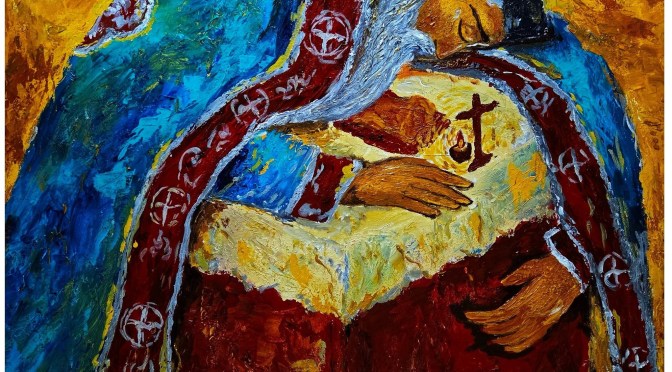
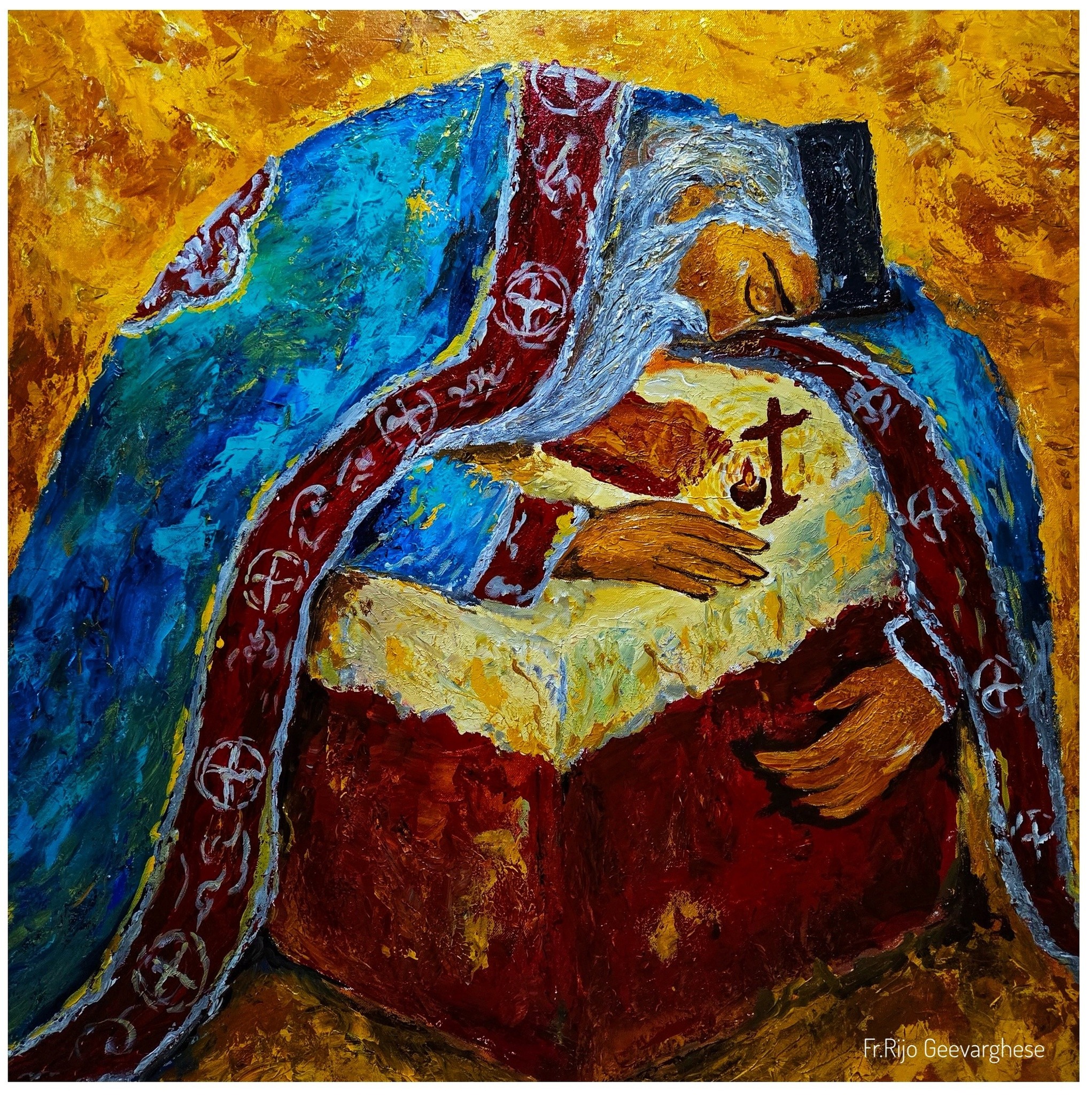
The Final Farewell: Liturgical painting Priest offering his final kiss to the Holy Altar

“Remain in Peace, O Holy Altar”
“പരിശുദ്ധമായ ബലിപീഠമേ! സമാധാനത്തോടെ വസിക്കുക.”

This liturgical painting, “The Final Farewell,” is a visual contemplation inspired by one of the most intimate moments in the Orthodox liturgy — the priest’s final farewell to the Holy Altar. It is a moment filled with sacred emotion and mystical significance, where the celebrant, having completed the Holy Qurbana, leans upon the altar, offering it a final kiss, a last farewell.

In the Orthodox tradition, as preserved in the Malankara Orthodox Syrian Church, the priest recites a farewell prayer that embodies both personal humility and eschatological hope:

“Remain in peace, Holy Altar of the Lord, for I do not know whether I shall return to you again.”

Malayalam:
കർത്താവിന്റെ പരിശുദ്ധവും ദിവ്യവുമായ ബലിപീഠമേ! സമാധാനത്തോടെ വസിക്കുക. ഇനി ഈ സന്നിധിയിലേക്കു ഞാൻ വരുമോ ഇല്ലയോ എന്ന് എനിക്ക് നിശ്ചയമില്ല.

In this painting, I have attempted to capture this sacred farewell as the priest embraces the altar (Thronos). This gesture might not be rubrically seen, but it is a personal contemplation of what this moment signifies.

Here, the altar — a symbol of the Cross and the Tomb, the Table of Life, and the Throne of God — becomes both a companion and a silent witness to the priest’s life and ministry.

The final words of the priest profoundly express the living reality of the altar, which continues to intercede for the priest:

“Remain in peace, Holy and Atoning Altar… beg for me from our Lord Jesus Christ that my remembrance may not cease from you henceforth and forever.”

Malayalam:
ജീവന്റെ മേശയാകുന്ന പരിശുദ്ധ ബലിപീഠമേ! സമാധാനത്തോടെ വസിക്കുക. ഇനി എന്നെന്നേക്കും എന്റെ സ്മരണ നിന്നിൽ നിന്ന് മാഞ്ഞുപോകുവാനിടയാകരുതേ. കർത്താവേശുമിശിഹായോട് എനിക്കുവേണ്ടി പ്രാർത്ഥിക്കണമേ.

I simply adore the beauty and depth of the Orthodox faith, where even a farewell to the altar becomes a mystical meeting place of love, memory, and eternal hope.

Fr. Rijo Geevarghese
Diocese of Ahmedabad